
Commercial real estate faces an optimization crisis that’s costing the industry billions. With national office vacancy rates soaring to 19.8% and energy costs consuming up to 30% of operating budgets, property managers are leaving massive value on the table through inefficient space utilization. The traditional architectural planning methods that served the industry for decades (somewhat slow, manual processes limited by human analysis capabilities) simply can’t keep pace with today’s demands for agility, efficiency, and data-driven decision making.

This crisis isn’t just about empty desks or unused conference rooms. It represents a fundamental disconnect between how commercial spaces are planned and how they’re actually used in our rapidly evolving business landscape. Every underutilized square foot translates directly to lost revenue, while every inefficiently planned area drives up operational costs through wasted energy, maintenance overhead, and tenant dissatisfaction.
The solution lies in artificial intelligence. Specifically, AI-powered space optimization that can analyze complex utilization patterns, predict future needs, and generate professional-grade planning solutions in minutes rather than months. This comprehensive guide reveals how forward-thinking property managers, office planners, and commercial real estate professionals are leveraging AI to unlock hidden potential, dramatically reduce costs, and maximize tenant satisfaction across office buildings, retail environments, and mixed-use commercial properties.
The transformation is already underway. AI adoption in property management surged from 21% to 34% between 2024 and 2025, with 60% of CRE executives now using AI for space planning. The results speak for themselves: 20-30% reductions in operational costs, 2-3x revenue increases through flexible space design, and 25% improvements in energy efficiency. The question isn’t whether AI will revolutionize commercial space optimization. It is now how quickly you can implement these technologies to stay competitive in an increasingly data-driven market.
The Hidden Cost of Inefficient Space Utilization
The numbers behind commercial real estate’s optimization crisis tell a sobering story that extends far beyond simple vacancy statistics. While the national office vacancy rate of 19.8% captures headlines, the deeper financial hemorrhaging occurs within occupied spaces where poor utilization patterns waste billions in operational resources.
Consider the typical commercial office building where only 60-70% of available space sees regular use during peak hours. This underutilization creates a cascading effect of inefficiencies that compound across every aspect of building operations. Empty or sparsely used areas still require heating, cooling, lighting, and maintenance, creating what industry experts call “phantom energy consumption”. These are costs that provide zero return on investment while driving up operational expenses.
The financial impact becomes staggering when viewed at scale. Underutilized commercial spaces waste an average of 30-40% of operational costs through inefficient HVAC systems that heat and cool unused areas, lighting systems that illuminate empty spaces, and maintenance protocols that service areas seeing minimal foot traffic. For a typical 100,000 square foot office building with annual operating costs of $3 million, this inefficiency represents $900,000 to $1.2 million in preventable waste annually.
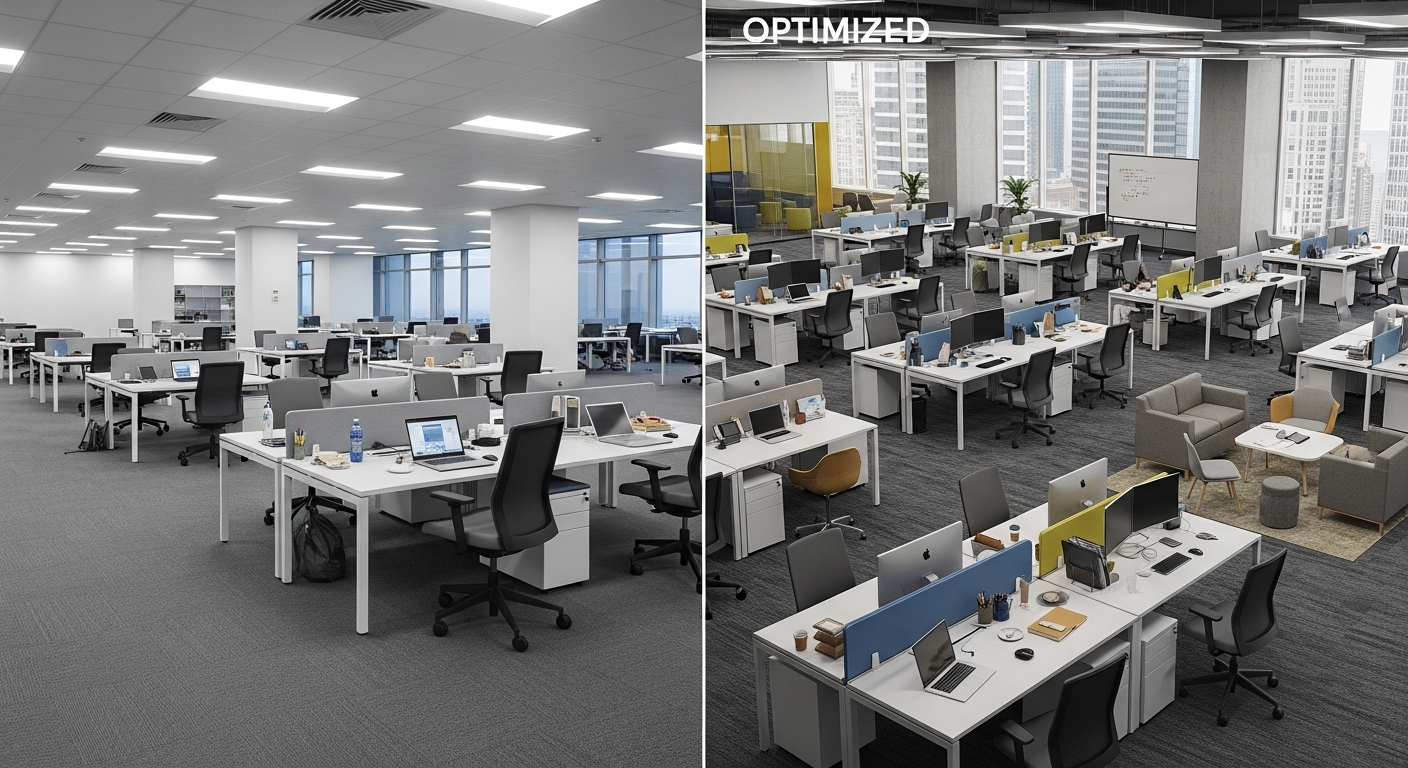
Energy consumption represents perhaps the most quantifiable drain on resources. Energy costs consume 25-30% of operating budgets, with much of this waste stemming from spaces that are conditioned but not actively utilized. Traditional building management systems operate on static schedules and uniform settings rather than responding to actual occupancy patterns, leading to massive overconsumption during low-usage periods.
But the hidden costs extend beyond utilities and maintenance. Poor space planning creates ripple effects that impact tenant satisfaction, retention rates, and ultimately, revenue generation. When common areas become overcrowded because of inefficient layouts, when conference rooms sit unused while teams struggle to find meeting spaces, when workstations are poorly distributed relative to actual usage patterns, tenant satisfaction plummets. This dissatisfaction translates directly to higher turnover rates, longer vacancy periods between leases, and reduced rental rates as properties struggle to compete against more efficiently managed alternatives.
The reactive nature of traditional space management compounds these problems by addressing issues only after they impact operations and tenant satisfaction. By the time overcrowding becomes apparent, or energy costs spike beyond budgeted levels, or tenant complaints escalate to management, significant value has already been lost. This reactive approach misses critical optimization opportunities that proactive analysis could have identified weeks or months in advance.
Property management teams operating without comprehensive utilization data often make space allocation decisions based on outdated assumptions or limited anecdotal evidence. A conference room might appear “always busy” during brief afternoon observations, leading to investment in additional meeting spaces, when detailed usage analysis would reveal peak demand occurs only 15% of operational hours. Conversely, seemingly underutilized areas might serve critical functions during specific times or for specific tenant activities that traditional observation methods fail to capture.
The cumulative effect of these inefficiencies creates what industry analysts term “value leakage”—a steady drain of potential revenue and operational efficiency that compounds over time. Properties that fail to optimize space utilization not only lose immediate operational savings but also fall behind in competitive positioning as more efficiently managed buildings offer better tenant experiences at comparable or lower costs.
Why Traditional Space Planning Falls Short in Today’s Market
The architectural and space planning methodologies that built the commercial real estate industry were designed for a different era. They are designed for an environment characterized by static business models, predictable occupancy patterns, and relatively slow market changes. Today’s dynamic business environment, with its emphasis on flexibility, data-driven decision making, and rapid adaptation to changing conditions, has exposed critical limitations in these traditional approaches that render them increasingly obsolete.
Manual space planning processes, still prevalent across much of the industry, operate on timescales that conflict fundamentally with modern business needs. A typical comprehensive space analysis and redesign project requires six to twelve weeks from initial assessment through final recommendations. During this extended timeframe, the business conditions that prompted the analysis often shift significantly, making the final recommendations less relevant or potentially counterproductive.
This temporal mismatch becomes particularly problematic in today’s hybrid work environment, where occupancy patterns can change dramatically within weeks or even days. A space planning exercise initiated during a period of high office utilization might recommend increased density and collaboration areas, only to deliver those recommendations during a shift toward remote work that has fundamentally altered space requirements.
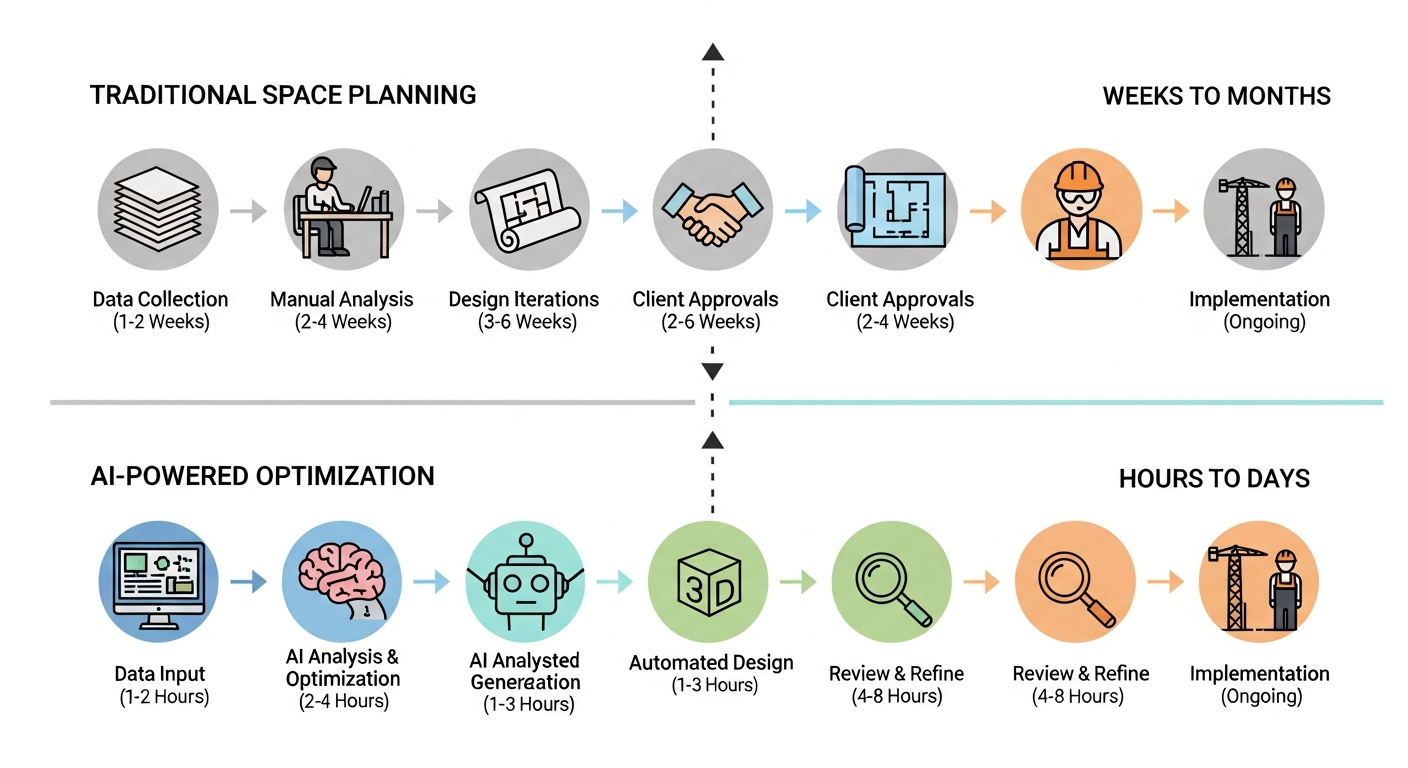
Human-only analysis, regardless of expertise level, faces inherent cognitive limitations when processing the complex, multidimensional data sets required for optimal space utilization. A skilled architect or space planner can analyze floor plans, observe usage patterns, and interview stakeholders, but cannot simultaneously process the thousands of variables that influence optimal space configuration: hourly occupancy fluctuations, seasonal usage patterns, interdepartmental collaboration frequencies, equipment utilization rates, energy consumption correlations, and tenant preference evolution over time.
These cognitive limitations become particularly apparent when analyzing large commercial portfolios or complex mixed-use properties. The mental bandwidth required to maintain awareness of optimization opportunities across dozens of different space types, hundreds of tenant requirements, and thousands of usage data points exceeds human analytical capacity. Critical patterns and optimization opportunities remain hidden within data sets that are simply too complex for manual analysis to uncover.
Traditional methodologies also suffer from static analysis frameworks that treat spaces as fixed entities rather than dynamic systems. Blueprint-based planning relies on snapshot observations and assumes relatively stable usage patterns, missing the temporal variations that often represent the greatest optimization opportunities. A retail space might appear optimally configured based on average foot traffic analysis, while detailed temporal analysis would reveal significant opportunities for dynamic layout adjustments during peak versus off-peak periods.
The scalability challenges facing traditional approaches become insurmountable when property management companies oversee multiple buildings across different markets. Each property requires individual analysis by qualified professionals, creating resource bottlenecks that delay optimization initiatives and increase costs. The expertise required for comprehensive space optimization remains concentrated in specialized roles, making it difficult for property management teams to access these capabilities consistently across their portfolios.
Perhaps most critically, traditional space planning operates on a reactive rather than predictive paradigm. Problems are addressed after they manifest in operational inefficiencies, tenant complaints, or budget overruns. This reactive approach misses the window for preventive optimization that could eliminate problems before they impact business operations. By the time traditional analysis identifies optimization needs, market conditions may have shifted, requiring entirely new approaches.
The lack of predictive capability extends to future space requirements and market trends. Traditional planning methods excel at addressing current conditions but struggle to anticipate how changing business practices, technological adoption, or demographic shifts will impact space utilization six months or two years into the future. This limitation leads to space configurations that become suboptimal shortly after implementation, requiring costly reconfiguration cycles.
Integration challenges with modern building technologies further limit traditional approaches. Today’s commercial properties generate vast amounts of data through IoT sensors, building management systems, access control systems, and tenant feedback platforms. Traditional planning methodologies lack the frameworks needed to synthesize this data into actionable optimization insights, leaving valuable intelligence unused while decisions are made based on incomplete information.
How AI Transforms Commercial Space Optimization
The integration of artificial intelligence into commercial space optimization represents more than an incremental improvement—it constitutes a fundamental transformation in how we understand, analyze, and optimize commercial real estate. Where traditional methods hit cognitive and temporal walls, AI breaks through with capabilities that seemed impossible just five years ago, processing vast data sets in real-time and identifying optimization opportunities that human analysis consistently misses.
The statistical evidence supporting AI’s transformative impact has reached a tipping point that validates early adopters’ investments while compelling broader industry adoption. AI adoption in property management surged from 21% to 34% between 2024-2025, with 60% of CRE executives now leveraging AI for space planning decisions. This rapid adoption reflects not just technological curiosity but measurable business impact that justifies implementation costs through demonstrable ROI.
Machine learning algorithms excel in areas where human analysis faces fundamental limitations, particularly in pattern recognition across complex, multidimensional data sets. Where a human analyst might observe that certain areas appear busy during specific times, AI can simultaneously process occupancy sensors, badge access data, HVAC system logs, lighting usage patterns, and tenant feedback to identify precise utilization rhythms down to fifteen-minute intervals across multiple seasonal and business cycles.
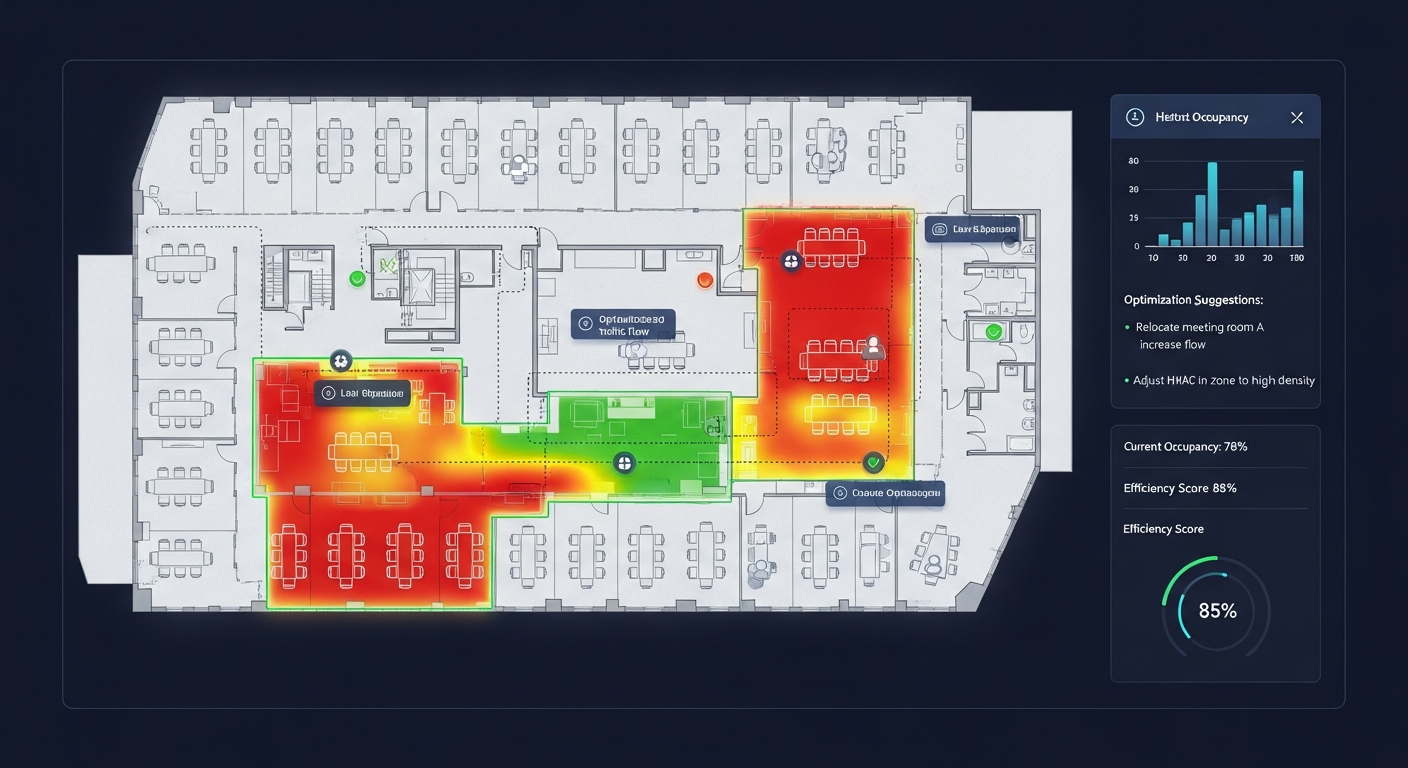
This analytical depth reveals optimization opportunities that remain invisible to traditional methods. Occupancy pattern analysis demonstrates how AI can identify that conference rooms appearing “fully utilized” during peak hours actually show significant availability during shoulder periods, enabling dynamic booking systems that increase effective capacity by 40-60% without adding physical space.
The predictive capabilities of AI-powered space optimization extend far beyond pattern recognition to forecast future needs with unprecedented accuracy. Advanced algorithms analyze historical usage data, business cycle patterns, market trends, and even external factors like transportation changes or demographic shifts to predict space requirements three to twenty-four months in advance. This predictive intelligence enables proactive space configuration that anticipates needs rather than reacting to problems after they impact operations.
Real-time optimization capabilities represent perhaps the most dramatic departure from traditional methodologies. Where conventional planning operates in project cycles measured in weeks or months, AI systems continuously analyze current conditions and can recommend or automatically implement optimization adjustments within minutes of detecting changing patterns. Dynamic HVAC controls, automated lighting systems, and intelligent space booking platforms respond to actual occupancy in real-time, eliminating the waste associated with static operational schedules.
The multi-variable processing power of AI enables simultaneous optimization across dimensions that traditional analysis must tackle sequentially. Energy efficiency, tenant satisfaction, operational costs, space utilization, and revenue generation can all be optimized simultaneously rather than through sequential trade-offs. This holistic optimization often reveals solutions that improve multiple metrics simultaneously—configurations that increase space efficiency while reducing energy consumption and improving tenant satisfaction.
AI-driven space utilization analysis has documented cases where comprehensive optimization achieved 25-30% reductions in energy consumption while simultaneously increasing effective space utilization by 35-45%. These improvements compound over time as AI systems learn from ongoing operations and refine optimization strategies based on actual results rather than theoretical models.
The democratization of sophisticated space optimization represents another transformational aspect of AI implementation. Traditionally, comprehensive space optimization required specialized expertise from architects, space planners, and facilities consultants. AI platforms make professional-grade optimization capabilities accessible to property management teams without requiring specialized training or external consultants for routine optimization decisions.
Automated architectural intelligence can generate multiple layout alternatives, evaluate them against optimization criteria, and present recommendations with detailed justification in formats that property management teams can immediately understand and implement. This accessibility enables optimization to become an ongoing operational capability rather than a periodic project requiring external resources.
The scalability of AI-powered optimization eliminates resource bottlenecks that limit traditional approaches. A single AI platform can simultaneously analyze dozens of properties across different markets, identifying optimization opportunities and generating implementation recommendations for entire portfolios. This scalability enables property management companies to maintain consistent optimization standards across their holdings while reducing the time and cost associated with individual property analysis.
Integration capabilities with existing building technologies amplify AI’s optimization impact. Modern commercial properties generate thousands of data points daily through sensors, access systems, energy management platforms, and tenant engagement tools. AI systems can synthesize this information in real-time, creating comprehensive optimization insights that would be impossible to generate through manual analysis of individual data streams.
Strategic AI-Powered Optimization for Different Commercial Spaces
The versatility of AI-powered space optimization becomes most apparent when examining its application across diverse commercial property types, each presenting unique challenges and opportunities that require tailored approaches. Rather than applying generic solutions, sophisticated AI systems adapt their analysis and recommendations to the specific operational dynamics, tenant requirements, and revenue models that characterize different commercial environments.
Office buildings represent the most mature application area for AI-powered space optimization, where the technology delivers some of its most dramatic results. Flexible workspace design strategies enabled by AI analysis can achieve 2-3x revenue per square foot through adaptable layouts that respond dynamically to usage patterns rather than static space allocations.
The transformation begins with granular analysis of actual workspace utilization patterns. AI systems process data from occupancy sensors, badge access logs, calendar bookings, and even video analytics to understand precisely how different space types are used throughout various time periods. This analysis often reveals that traditional office layouts dramatically overallocate space to individual workstations while underserving collaborative areas during peak usage periods.
AI-driven optimization addresses these imbalances through dynamic space allocation that can be adjusted based on actual demand patterns. Modular furniture systems controlled through AI recommendations enable spaces to transform from individual work areas during focused work periods to collaborative zones during team-intensive activities. This flexibility eliminates the waste associated with dedicated spaces that serve single functions while enabling higher overall space utilization.
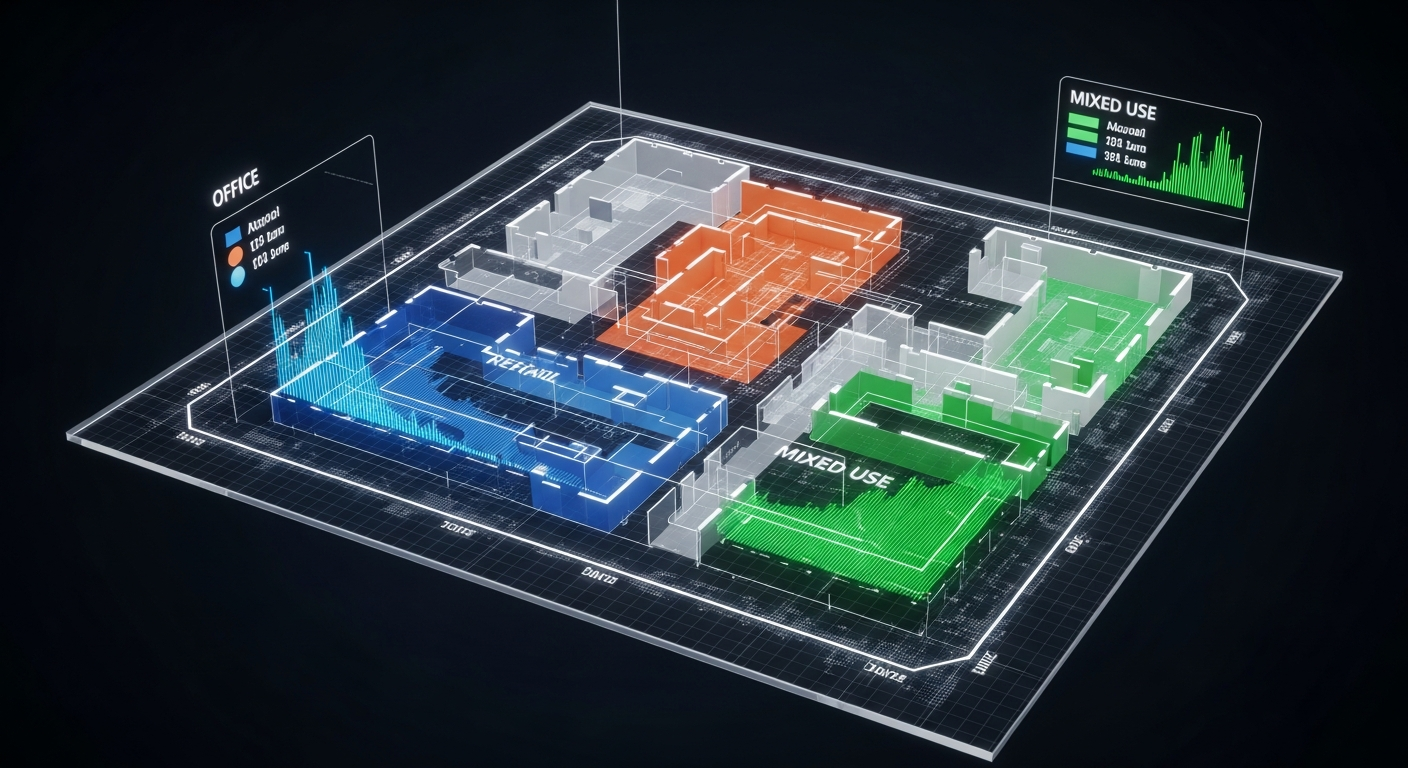
The energy optimization component of office building AI focuses on occupancy-based environmental controls that eliminate the massive waste of conditioning unused spaces. Smart HVAC and lighting systems integrated with AI occupancy analysis can reduce Energy Usage Index (EUI) by 20-25% while simultaneously improving comfort levels in actively used areas. These systems learn from usage patterns to pre-condition spaces before anticipated occupancy while reducing energy consumption in areas showing low utilization probability.
Retail environments present different optimization challenges that require AI systems specifically calibrated for customer experience and revenue generation rather than just operational efficiency. Foot traffic analysis using computer vision and sensor networks enables AI to understand customer movement patterns, dwell times, and product interaction behaviors with precision impossible through traditional observation methods.
This detailed behavioral analysis reveals optimization opportunities that can significantly impact retail performance. AI might identify that certain product placement strategies create bottlenecks during peak shopping periods, reducing overall store capacity and customer satisfaction. Alternative layouts tested through AI simulation can optimize both customer flow and product visibility, often increasing effective store capacity by 15-25% without physical expansion.
The temporal dimension of retail optimization becomes particularly important for AI analysis. Customer behavior patterns vary significantly by time of day, day of week, and seasonal factors. AI systems can recommend dynamic layout adjustments—such as expanding checkout areas during predicted peak periods or reconfiguring product displays based on seasonal shopping behaviors—that maximize revenue potential throughout varying demand cycles.
Mixed-use properties present the most complex optimization challenges, requiring AI systems to balance competing space demands across residential, office, retail, and common area functions. The interdependencies between different space types create optimization puzzles that exceed human analytical capacity but align perfectly with AI’s strengths in multi-variable optimization.
Predictive modeling for mixed-use properties focuses on understanding how different tenant types interact with various space functions throughout daily and seasonal cycles. AI analysis might reveal that retail tenants benefit from office worker foot traffic during specific periods, enabling common area configurations that optimize this beneficial interaction while maintaining appropriate separation during conflicting usage periods.
The maintenance efficiency component of AI optimization extends across all commercial space types but varies in application based on property-specific usage patterns. Predictive analytics can reduce emergency repair costs by up to 30% through proactive issue identification, but the specific maintenance challenges differ significantly between office buildings, retail spaces, and mixed-use properties.
In office environments, AI maintenance optimization focuses on HVAC systems, elevator usage patterns, and common area wear patterns based on occupancy density. Retail properties require optimization strategies centered on high-traffic flooring areas, lighting systems that support product visibility, and security system maintenance aligned with customer flow patterns. Mixed-use properties need integrated maintenance approaches that account for the diverse operational requirements of different tenant types while optimizing shared system efficiency.
Tenant satisfaction optimization represents another area where AI strategies must adapt to different commercial space types. Office tenants prioritize workspace flexibility, environmental comfort, and technology integration, while retail tenants focus on customer accessibility, visibility, and operational efficiency. AI systems analyzing tenant satisfaction must weight different factors appropriately for each space type while identifying optimization opportunities that improve satisfaction without compromising operational efficiency.
The amenity placement and common area optimization enabled by AI analysis varies dramatically across property types. Office buildings benefit from AI-optimized placement of shared facilities like conference rooms, break areas, and technology centers based on workflow analysis and collaboration patterns. Retail properties require optimization of customer service areas, rest facilities, and navigation systems that enhance customer experience while supporting tenant operations.
Measuring Success: Key Metrics for Space Optimization ROI
The quantification of space optimization success requires sophisticated measurement frameworks that capture both immediate operational improvements and longer-term strategic value creation. Traditional real estate metrics, while still relevant, prove insufficient for evaluating the multi-dimensional benefits that AI-powered optimization delivers. Property managers need comprehensive KPI systems that demonstrate ROI while providing actionable insights for ongoing optimization refinement.
Occupancy Rate Efficiency serves as a foundational metric but requires more nuanced analysis than simple vacancy statistics suggest. Advanced occupancy measurement tracks not just whether spaces are leased but how effectively leased spaces generate value through actual utilization. This efficiency metric reveals optimization opportunities that traditional vacancy analysis misses entirely.
Effective occupancy measurement considers temporal utilization patterns rather than static lease agreements. A conference room leased to a tenant but used only 20% of business hours represents significant optimization potential, while a flexible space showing 85% utilization across varied tenant uses demonstrates successful optimization implementation. AI-powered tracking systems can calculate true occupancy efficiency by measuring actual usage against available capacity across multiple time dimensions.
The Space Utilization Ratio extends beyond occupancy to measure how effectively available space serves its intended functions. This metric identifies consolidation opportunities where current layouts waste square footage through poor configuration, as well as expansion needs where high utilization indicates capacity constraints. Optimal space utilization typically ranges from 75-85% during peak periods, with lower utilization indicating consolidation potential and higher utilization suggesting expansion requirements.
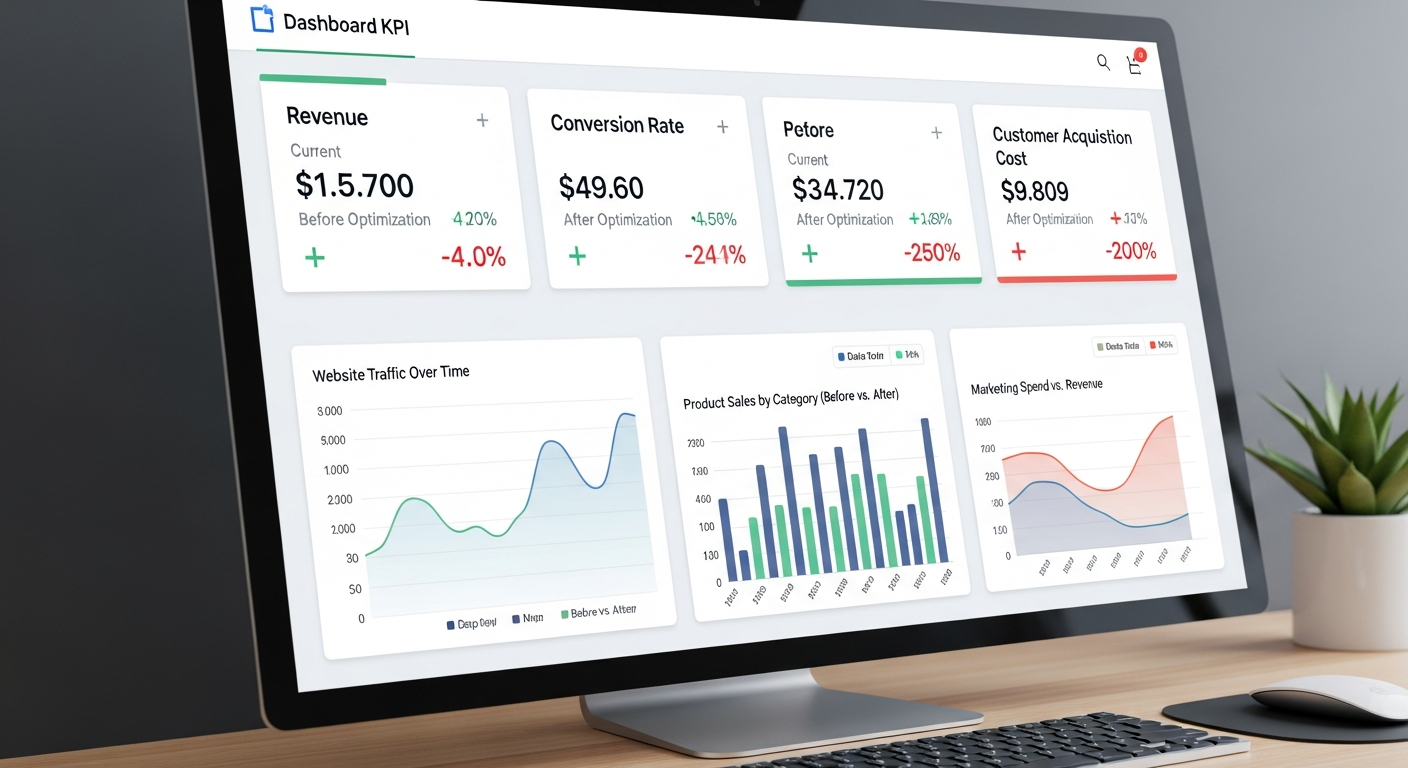
Advanced space utilization analysis considers the quality of utilization, not just quantity. A workspace showing 60% occupancy through productive individual and collaborative work represents better utilization than a space showing 80% occupancy through inefficient layouts that force overcrowding while leaving other areas underused. AI systems can distinguish between productive utilization and inefficient occupation, providing more actionable optimization guidance.
Energy Usage Index (EUI) measurement provides concrete data on operational efficiency improvements from space optimization. However, meaningful EUI analysis requires normalization for occupied hours rather than simple square footage calculations. A building reducing total energy consumption by 15% while increasing effective space utilization by 20% demonstrates significantly greater optimization success than raw energy reduction numbers suggest.
The temporal dimension of energy efficiency becomes crucial for optimization evaluation. AI-optimized buildings typically show more variable energy consumption patterns as systems respond dynamically to actual occupancy rather than maintaining static operational schedules. This variability represents efficiency improvement, not inconsistency, as energy consumption aligns more closely with actual space utilization needs.
Tenant Retention Rate measurement requires sophisticated analysis that distinguishes between retention improvements from space optimization versus other factors like market conditions or lease incentives. Properties implementing AI-powered optimization typically see 8-15% improvements in tenant retention, but attributing this improvement to specific optimization initiatives requires careful analysis of tenant satisfaction surveys, renewal negotiation feedback, and space utilization improvements.
The quality of tenant retention also merits consideration. Retaining tenants who expand their space requirements or accept rental increases during renewal negotiations indicates stronger satisfaction than retaining tenants who negotiate reduced rates or space requirements. AI optimization typically improves both retention rates and the quality of tenant relationships through enhanced space functionality.
Cost Per Square Foot analysis must account for the dynamic nature of optimized spaces. Traditional cost analysis assumes static space allocation, but AI-optimized buildings achieve efficiency improvements through flexible space utilization that serves multiple functions. A conference room that transforms into training space during low-demand periods effectively reduces the cost per square foot for both functions while improving overall building efficiency.
Revenue Per Square Foot measurement captures the ultimate financial impact of space optimization but requires careful analysis of the revenue attribution mechanisms. Properties implementing comprehensive optimization strategies often achieve revenue improvements through multiple channels: higher rental rates due to improved functionality, increased tenant density through flexible layouts, and premium pricing for optimized amenity access.
The revenue impact timeline varies significantly based on optimization strategies. Immediate improvements might come from dynamic space allocation that increases effective capacity, while longer-term revenue increases result from enhanced tenant satisfaction leading to premium renewal rates and reduced marketing costs for vacant spaces.
Operational efficiency metrics should include maintenance cost reduction, staff productivity improvements, and administrative efficiency gains from automated space management systems. These efficiency improvements often provide immediate ROI that justifies optimization investments while longer-term revenue improvements develop.
The compound effect of multiple optimization improvements often exceeds the sum of individual metric improvements. Properties achieving 15% energy reduction, 20% space utilization improvement, and 10% tenant retention improvement typically see overall value increases of 25-35%, demonstrating the synergistic effects of comprehensive optimization strategies.
Getting Started: Your AI-Powered Space Optimization Implementation Roadmap
The path from traditional space management to AI-powered optimization requires a structured approach that minimizes risk while maximizing early wins to build organizational confidence and justify continued investment. Successful implementation follows a proven roadmap that addresses technical integration, staff preparation, and performance measurement while maintaining operational continuity throughout the transformation process.
The Assessment Phase establishes the foundation for optimization success through comprehensive baseline measurement and opportunity identification. This phase requires more than simple space inventory—it demands detailed analysis of current utilization patterns, operational costs, tenant satisfaction levels, and technology infrastructure capabilities that will support AI implementation.
Baseline space utilization auditing should begin immediately, even before AI platform selection, using available occupancy analytics and energy consumption data. Many buildings already generate substantial utilization data through existing access control systems, HVAC logs, and basic occupancy sensors that can provide initial insights. This preliminary analysis often reveals low-hanging fruit optimization opportunities while establishing baseline metrics for measuring AI implementation success.
The assessment phase should also include tenant feedback collection focused specifically on space functionality and satisfaction rather than general property management topics. AI optimization systems require understanding of tenant priorities and preferences to generate recommendations that improve satisfaction rather than simply improving efficiency metrics. This feedback provides crucial input for AI training while establishing tenant engagement that supports optimization implementation.
Technology infrastructure assessment determines integration requirements and identifies necessary upgrades to support AI implementation. Modern AI platforms require data integration across multiple building systems, creating requirements for sensor networks, building management system connectivity, and data processing capabilities that may require infrastructure investment.
Technology selection should prioritize platforms that integrate seamlessly with existing property management systems while providing transparent optimization logic that building teams can understand and act upon. The most sophisticated AI algorithms provide little value if their recommendations cannot be efficiently implemented by existing staff using current operational frameworks.
Platform evaluation should focus on implementation support, training resources, and ongoing optimization capabilities rather than just initial feature sets. AI optimization systems improve through usage and data accumulation, making vendor support for system training and performance optimization crucial for long-term success.
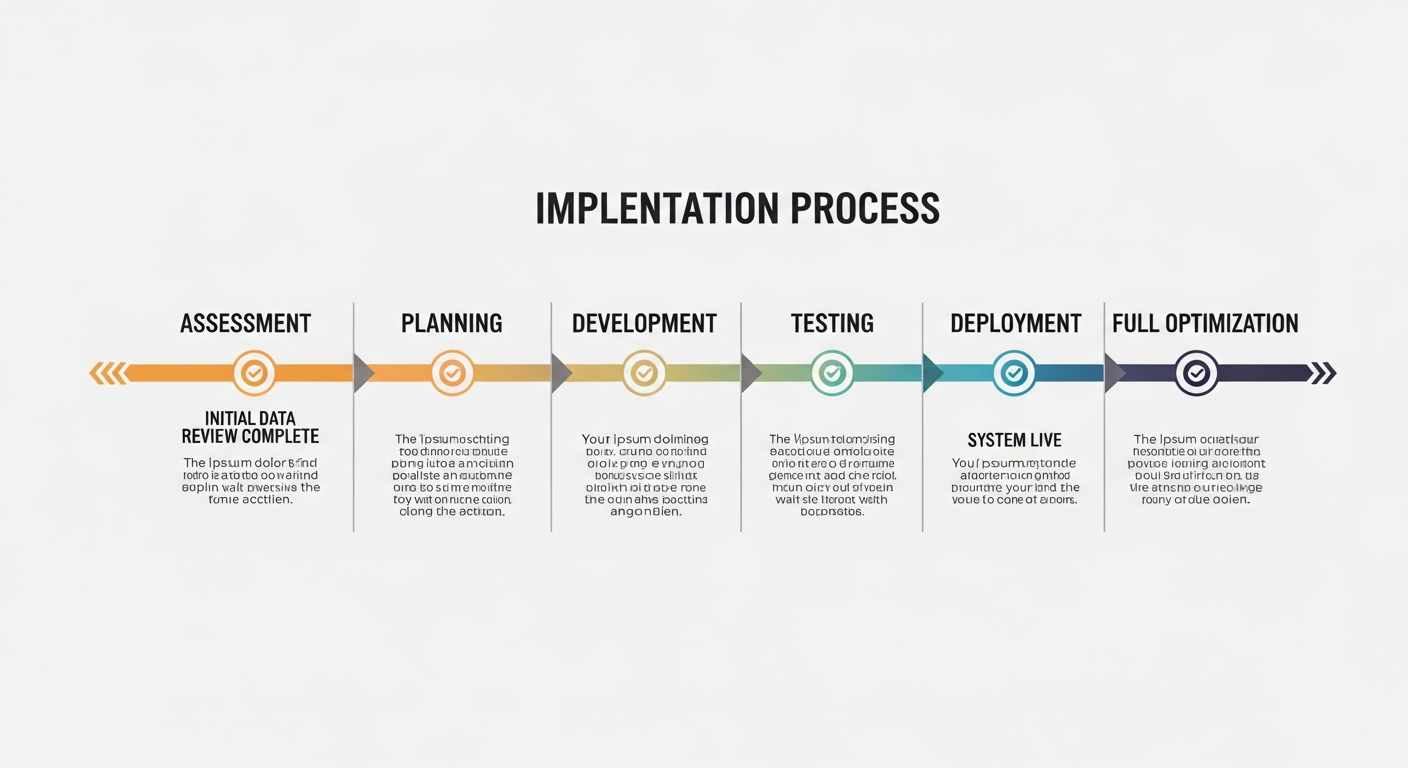
Pilot Implementation represents the critical bridge between assessment and full-scale optimization, providing proof of concept while building organizational expertise and confidence. Successful pilots focus on high-impact, low-risk areas where optimization benefits are immediately visible and measurable without requiring complex integration or significant operational changes.
Common pilot targets include conference room optimization through intelligent booking systems, energy management for specific building zones, or flexible workspace allocation in easily reconfigurable areas. These pilots provide immediate value while building staff familiarity with AI-driven recommendations and implementation processes.
Pilot success criteria should include both quantitative metrics (energy reduction, space utilization improvement, cost savings) and qualitative factors (staff adoption, implementation ease, recommendation quality). This comprehensive evaluation provides the data needed for full-scale implementation planning while identifying potential challenges before they impact broader operations.
Data Integration extends beyond simple system connectivity to ensure AI platforms receive comprehensive, high-quality information that enables accurate analysis and actionable recommendations. This phase typically requires coordination across multiple building systems and may involve sensor deployment, system upgrades, or data formatting changes to ensure optimal AI performance.
Occupancy sensors, HVAC system integration, and tenant feedback mechanisms should be calibrated to provide consistent, accurate data that AI systems can process effectively. Data quality directly impacts recommendation accuracy, making this integration phase crucial for optimization success.
The integration timeline should account for building operational schedules and tenant impact, implementing new data collection systems during low-impact periods while maintaining full building functionality. Most integration work can occur during normal maintenance windows without disrupting tenant operations.
Staff Training ensures that property management teams understand AI insights and can efficiently implement optimization recommendations. This training should focus on practical application rather than technical system operation, enabling staff to act confidently on AI recommendations while understanding the logic behind optimization suggestions.
Training should include change management support that helps staff transition from traditional reactive space management to proactive optimization based on predictive insights. This transition represents a significant operational shift that requires ongoing support rather than one-time training events.
Continuous Optimization establishes the framework for ongoing improvement through regular review cycles, performance analysis, and strategy refinement based on actual results rather than initial projections. AI systems improve through usage and feedback, making this ongoing optimization phase crucial for long-term success.
Regular review cycles should evaluate optimization performance against established metrics while identifying new opportunities for improvement. These reviews often reveal optimization potential that becomes apparent only after initial implementation provides baseline performance data and staff familiarity with AI capabilities.
The optimization timeline should establish clear milestones for expanding AI implementation across additional building areas, property portfolio integration, and advanced feature adoption as staff expertise and system performance demonstrate readiness for increased complexity.
Performance monitoring should include both automated system tracking and periodic manual validation to ensure AI recommendations continue providing value while identifying potential system calibration needs or changing conditions that require strategy adjustments.
Moving Forward with AI in CRE
AI-powered space optimization represents the most significant advancement in commercial real estate efficiency since the advent of computer-aided design. The convergence of advanced analytics, real-time data processing, and predictive intelligence has created opportunities for value creation that were simply impossible with traditional space management approaches. The statistical evidence is overwhelming: properties implementing comprehensive AI optimization strategies achieve 20-30% reductions in operational costs, 2-3x revenue increases through flexible space design, and 25% improvements in energy efficiency while simultaneously enhancing tenant satisfaction and retention.
The transformation extends far beyond simple cost savings or efficiency improvements. AI-powered optimization fundamentally changes how commercial real estate creates value by enabling dynamic, responsive space management that adapts continuously to changing conditions rather than relying on static configurations that become obsolete within months of implementation. This adaptive capability provides competitive advantages that compound over time as market conditions evolve and tenant expectations increase.
The industry inflection point has arrived. With 60% of CRE executives already leveraging AI for space planning and adoption rates accelerating rapidly, the question isn’t whether to implement AI-powered optimization—it’s how quickly your organization can capture the competitive advantages that early adoption provides. Properties that delay implementation risk falling behind competitors who are already achieving superior operational efficiency and tenant satisfaction through AI-enabled space management.
The implementation roadmap outlined in this guide provides everything needed to begin this transformation immediately. From assessment and pilot implementation through full-scale optimization, the path forward is clear and achievable with existing technology and proven methodologies. The financial justification is compelling, the technical requirements are manageable, and the competitive necessity is undeniable.
Your commercial spaces hold untapped potential that traditional analysis methods cannot detect. The patterns hidden within usage data, the optimization opportunities buried in operational inefficiencies, and the revenue enhancement possibilities that emerge from intelligent space allocation all await discovery through AI-powered analysis. The tools, strategies, and measurement frameworks exist today to unlock this potential and transform your approach to commercial space management.
The future of commercial real estate belongs to organizations that embrace data-driven decision making, predictive optimization, and adaptive space management. That future is available now through AI-powered space optimization platforms that make professional-grade analytical capabilities accessible to property management teams without requiring specialized expertise or massive technology investments.
Ready to unlock your commercial space’s hidden potential? Experience the power of AI-driven architectural planning with qbiq’s automated spatial intelligence platform. Discover optimization opportunities in minutes, not months, and transform your approach to commercial space management.
See the power of qbiq’s AI in CRE
See how qbiq’s AI can reimagine your spaces and reveal optimization opportunities you never knew existed. Join the 60% of CRE executives already leveraging AI for smarter space planning and position your properties for success in the data-driven future of commercial real estate.






.png)


