
There can be lots of ideas about what defines good CRE design. But after hearing the design leaders from JLL Design (Guzman Yarza Blache), Unispace (Antonia Walmsley), Studio Alliance (Clive Lucking), and AI design company, qbiq (Danny Weber), the answer starts to become clear.
Their conclusions are rooted in decades of experience and reflect something tested repeatedly in practice. Across their work, one idea continues to surface: design is not primarily a visual discipline. It is a functional one.
“If it doesn’t function well, it doesn’t matter how beautiful it is.”
That statement is not theoretical. It reflects what happens after a space is occupied. When function is weak, users adapt. Circulation routes are informally rewritten. Certain areas are avoided altogether. Meeting rooms sit empty because they are poorly located. What appeared resolved in drawings reveals itself as unresolved in use.
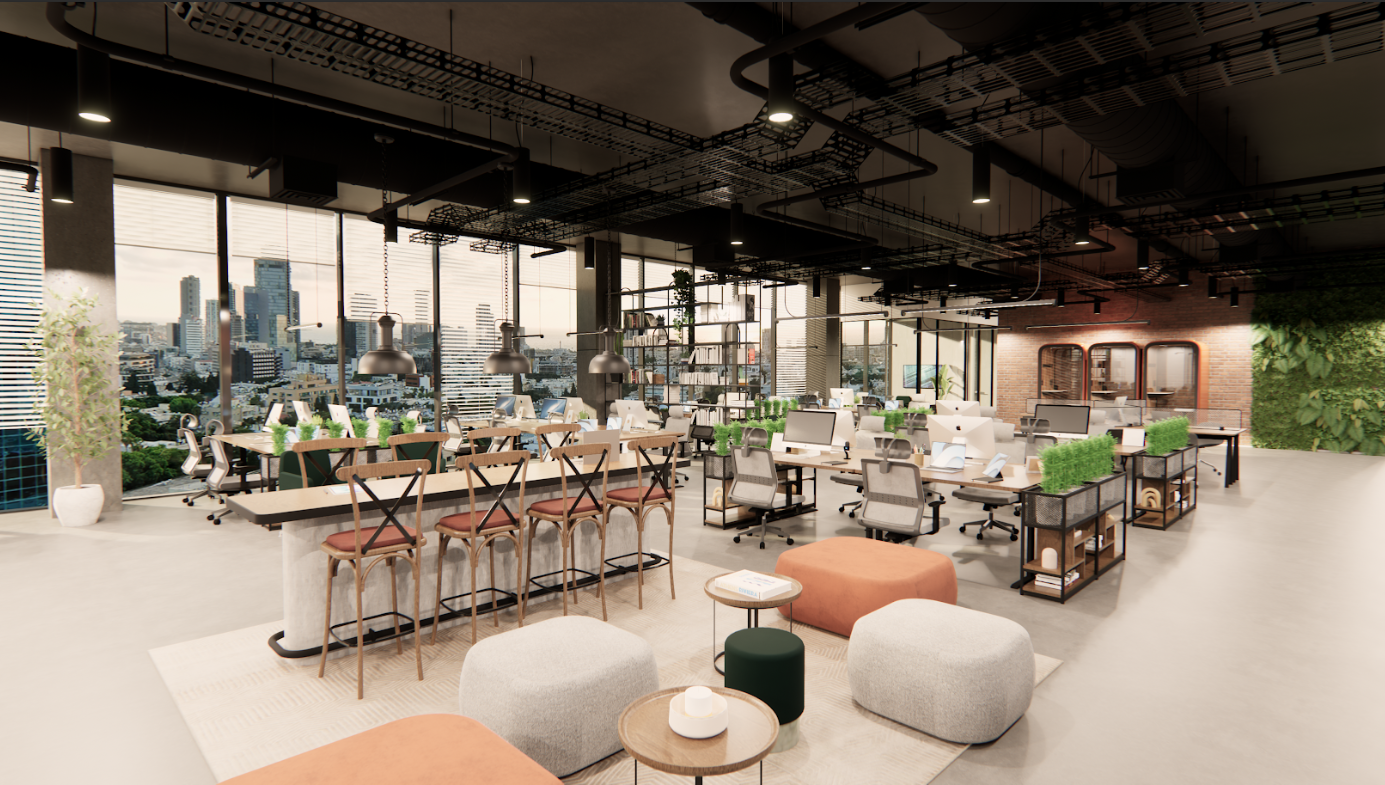
In a lively discussion between some of the world’s leading design experts, they reframed the question of ‘what is good design’ to “how do you make a space work?”
That question shifts the entire process upstream. It requires understanding behavior before defining form.
- How do people enter and orient themselves?
- Where do interactions naturally occur?
- Which adjacencies reduce effort, and which introduce it?
These are not aesthetic considerations. They are operational ones.
Another key point to consider is that design must consider the relationship between places, not just the aesthetics of those elements. As they wisely noted
“It’s not just about placing things… it’s about understanding relationships.”
A layout is not a collection of objects. It is a system. And systems either support behavior or create friction.
Enter AI’s impact on CRE. AI is beginning to change how design decisions are made. Instead of relying solely on experience, teams can test layouts against real conditions. They can evaluate circulation paths, measure distances, and identify inefficiencies before construction. This introduces a level of visibility that was previously unavailable.
The implication is not that intuition disappears. It is that it is supplemented with evidence.
When function is resolved at this level, aesthetics tend to follow. Materials and form reinforce a system that already works. The result is not simply a well-designed space, but a reliable one.
Continue the conversation
To hear how these ideas are being applied in practice, watch the full discussion with leaders from JLL, Unispace, Studio Alliance, and qbiq.
If you want to experience how leading firms are using advanced technologies to improve performance, you can experience it here.






.png)


