
The commercial real estate industry is experiencing its most significant technological transformation in decades. According to recent industry analysis, 68% of commercial real estate professionals are now actively using or exploring AI tools, representing a dramatic surge from just 23% in 2021. This isn’t merely adoption for innovation’s sake—it’s driven by competitive necessity and measurable business outcomes.
The numbers tell a compelling story. Early adopters are seeing substantial returns on their AI investments: 68% have saved at least $50,000, while nearly half have reclaimed 500-1,000 hours through automated processes. Perhaps most striking, 63% of property companies and 53% of facility managers reported revenue increases following AI implementation.

But here’s the challenge facing CRE professionals today: with dozens of AI architecture tools flooding the market, each promising revolutionary capabilities, how do you identify which features actually matter for commercial real estate success? The gap between marketing promises and practical utility has never been wider, making informed tool selection increasingly critical.
This guide cuts through the noise to provide a practical framework for evaluating AI architecture solutions. We’ll examine the specific features that drive measurable business outcomes, explore real-world applications across different property types, and outline implementation strategies that maximize ROI while minimizing risk. Whether you’re a property developer evaluating feasibility studies, a facility manager optimizing space utilization, or a CRE professional seeking competitive advantage, this analysis will help you make confident technology decisions.
The Business Case: Why AI Architecture Tools Matter Now
The urgency surrounding AI adoption in commercial real estate isn’t driven by technological fascination—it’s propelled by fundamental market pressures that make traditional approaches increasingly unsustainable. The data reveals a clear competitive divide emerging between firms that have embraced AI-powered workflows and those still relying on manual processes.
Consider the dramatic shift in adoption rates. The jump from 23% to 68% of CRE professionals using or exploring AI represents more than statistical growth—it signals a market inflection point where AI capabilities have moved from experimental to essential. This acceleration reflects the technology’s maturation from promising concept to proven business tool.
The return on investment data provides compelling evidence for immediate action. AEC industry research shows that 68% of early adopters saved at least $50,000, with many reporting significantly higher savings through process automation and efficiency gains. More importantly, the time savings translate directly to competitive advantage: nearly half of implementing firms reclaimed 500-1,000 hours annually, freeing senior professionals to focus on strategic decision-making rather than routine analysis.
Revenue impact extends beyond cost savings into growth acceleration. When 63% of property companies report revenue increases post-AI implementation, it demonstrates AI’s capacity to enhance deal flow, improve client service, and enable rapid response to market opportunities. Facility managers, traditionally focused on operational efficiency, are discovering revenue-generating applications through optimized space planning and enhanced tenant experiences.
The competitive landscape shift is particularly pronounced in deal speed and decision-making accuracy. AI-powered firms can complete feasibility studies in hours rather than weeks, enabling them to respond to opportunities before traditional competitors complete initial assessments. This advantage compounds over time, as faster deal cycles generate more opportunities and improved market positioning.
Space planning efficiency represents another critical business driver. Advanced AI tools can analyze complex spatial requirements, zoning constraints, and building codes simultaneously, producing optimized layouts that maximize usable square footage while ensuring compliance. This capability particularly benefits mixed-use developments and adaptive reuse projects where traditional planning methods struggle with optimization complexity.
Client presentation quality has become a significant differentiator in competitive markets. AI-enhanced visualization tools enable firms to produce photorealistic renderings and immersive experiences that dramatically improve stakeholder engagement and project approval rates. The ability to instantly iterate design options during client meetings transforms traditional presentation dynamics and accelerates decision-making processes.
Risk mitigation through predictive analytics provides another compelling business case. AI systems can identify potential issues in early design stages, preventing costly modifications during construction or operation. This capability is particularly valuable for complex commercial projects where design changes can trigger significant schedule delays and budget overruns.
The window for competitive advantage continues narrowing as AI adoption accelerates across the industry. Firms that delay implementation risk falling behind competitors who are already leveraging AI to deliver superior service, faster response times, and more accurate analyses. Early adopters are establishing market positions that will become increasingly difficult for traditional firms to challenge.
Market data suggests that AI implementation has shifted from “nice to have” to “business critical” for maintaining competitive position. The firms achieving the most significant benefits are those implementing comprehensive AI strategies rather than isolated point solutions, indicating the importance of strategic technology planning in capturing maximum value from these investments.
Understanding these business drivers provides the foundation for evaluating specific AI architecture tool capabilities that deliver measurable commercial real estate outcomes.
Core Automation Features: Space Optimization and Generative Design
The foundational value proposition of AI architecture tools lies in their ability to automate the most computationally intensive aspects of commercial space planning. Generative design capabilities represent a paradigm shift from traditional trial-and-error approaches to data-driven optimization that can explore thousands of design variations in minutes rather than months.
Modern generative design systems, exemplified by tools can fundamentally transform feasibility analysis by accepting basic parameters (site dimensions, zoning requirements, parking ratios, and program needs) and rapidly producing multiple optimized layout options. This automation replaces weeks of manual iteration with instant scenario testing, enabling development teams to explore significantly more possibilities within compressed timelines.
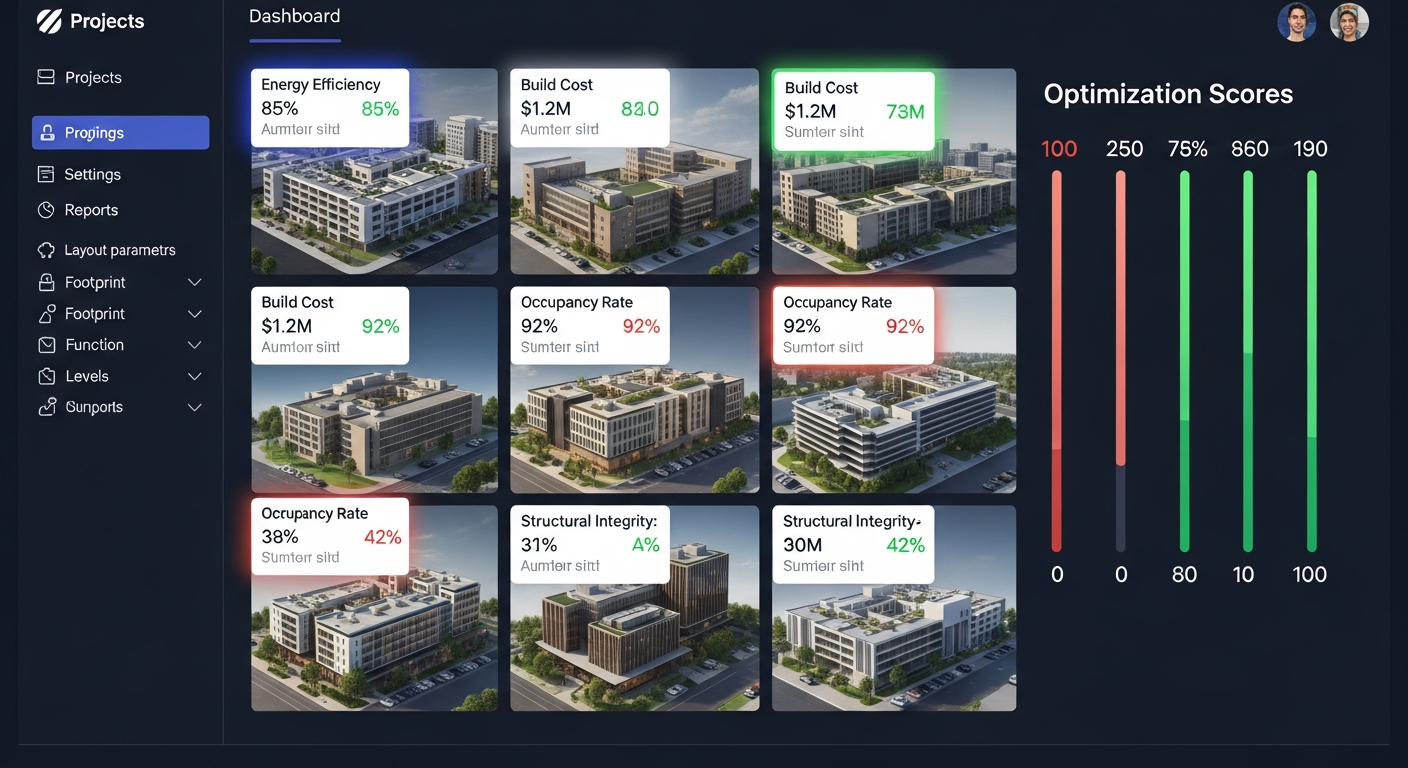
Space optimization algorithms go beyond simple area calculations to consider complex interrelationships between functional requirements, circulation patterns, and regulatory constraints. Advanced systems simultaneously optimize for multiple objectives: maximizing rentable square footage, ensuring code compliance, minimizing construction costs, and enhancing operational efficiency. This multi-objective optimization produces solutions that human designers might never discover through traditional methods.
Real-time feasibility analysis represents another critical automation capability. Contemporary AI tools can instantly calculate unit counts, parking requirements, floor area ratios, and construction cost estimates as design parameters change. This real-time feedback enables development teams to understand financial implications immediately, streamlining pro forma development and investment decision-making.
Automated compliance checking eliminates one of the most time-intensive aspects of commercial design development. AI systems can integrate local zoning codes, building regulations, accessibility requirements, and fire safety standards, flagging potential violations before they become costly design changes. Tools like Autodesk Forma excel at this integration, analyzing regulatory constraints alongside design optimization to ensure compliant solutions.
The iteration speed enabled by these automation features transforms client engagement and stakeholder collaboration. Instead of presenting a single design concept developed over weeks, teams can demonstrate multiple options generated in hours, facilitating more informed decision-making and reducing approval cycles. This capability proves particularly valuable for complex mixed-use projects where balancing competing requirements demands extensive iteration.
Integration capabilities ensure that automated design solutions translate effectively into construction-ready documentation. Modern AI architecture tools maintain compatibility with industry-standard software platforms including Revit, SketchUp, and Rhino, preserving design intent throughout the development process. This seamless integration prevents the disconnect between AI-generated concepts and buildable solutions that plagued early generative design implementations.
Parametric flexibility allows automated systems to respond dynamically to changing project requirements. When site constraints evolve or program requirements shift, AI tools can regenerate optimized solutions instantly rather than requiring manual redesign. This adaptability proves essential for commercial projects where market conditions and leasing requirements frequently change during development.
The sophistication of contemporary automation extends to considering construction logistics and phasing strategies. Advanced systems can optimize layouts not just for final occupancy but for construction efficiency, considering factors like crane placement, material delivery access, and temporary facilities requirements. This holistic optimization reduces both construction time and costs while maintaining design quality.
Quality control mechanisms ensure that automated solutions meet professional standards. AI systems incorporate built-in validation routines that check for spatial conflicts, circulation adequacy, and code compliance, preventing the generation of technically infeasible solutions. This quality assurance enables teams to trust automated outputs while maintaining professional oversight of design decisions.
While automation handles computational complexity, successful implementation requires clear understanding of project parameters and constraints. The quality of AI-generated solutions depends directly on the accuracy and completeness of input data, making proper project setup critical for achieving optimal results.
These foundational automation capabilities establish the framework for more sophisticated AI features that enhance analytical depth and decision-making intelligence.
Intelligence & Analysis: Data-Driven Decision Making
Beyond automation, the most valuable AI architecture tools provide analytical intelligence that transforms raw data into actionable insights for commercial real estate decision-making. This analytical layer enables property professionals to move from intuition-based choices to evidence-driven strategies backed by comprehensive market data and predictive modeling.
AI-driven property intelligence represents a fundamental advancement in investment analysis. Modern systems analyze vast datasets encompassing market trends, demographic patterns, comparable sales, and economic indicators to provide nuanced assessments of property potential. Other tools leverage machine learning algorithms to deliver valuations with accuracy rates exceeding 95%, far surpassing traditional appraisal methods while providing instant results.
Predictive analytics capabilities extend beyond current market conditions to forecast future performance scenarios. AI systems can model how changing demographics, transportation infrastructure, or economic conditions might impact property values and operational performance over time. This forward-looking analysis enables developers and investors to make decisions based on anticipated market evolution rather than historical data alone.
Market trend analysis through AI platforms provides granular insights that manual research cannot practically achieve. These systems continuously monitor rental rates, vacancy patterns, absorption rates, and tenant mix across comparable properties, identifying emerging opportunities and potential risks before they become apparent through traditional market observation. The speed and comprehensiveness of this analysis enables more agile investment strategies and competitive positioning.
Risk assessment algorithms evaluate multiple dimensions of project risk simultaneously, considering factors ranging from environmental conditions and regulatory changes to market volatility and construction complexity. This comprehensive risk modeling helps development teams anticipate potential challenges and implement appropriate mitigation strategies during early project phases when modifications are least expensive.
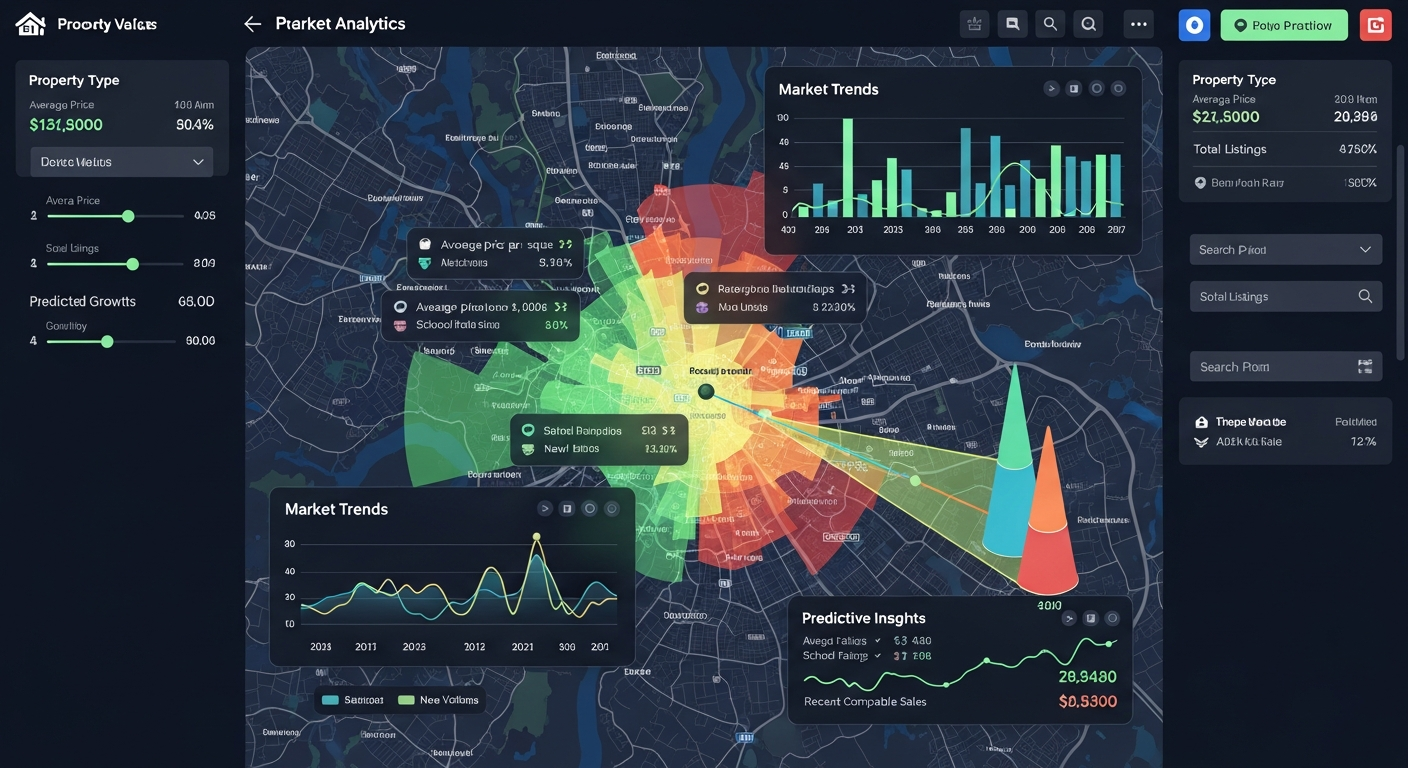
Automated compliance analysis extends beyond basic code checking to provide strategic regulatory guidance. AI systems can identify zoning opportunities, entitlement risks, and regulatory trends that might impact project feasibility or timeline. This intelligence proves particularly valuable for complex commercial developments where regulatory navigation significantly influences project success.
Performance benchmarking capabilities enable continuous improvement through comparative analysis. AI tools can evaluate proposed designs against similar successful projects, identifying optimization opportunities and potential performance gaps. This benchmarking extends beyond basic metrics to consider operational efficiency, tenant satisfaction, and long-term maintenance requirements.
Demographic and market intelligence integration provides context for design decisions that extends beyond immediate site considerations. AI systems can analyze population trends, employment patterns, transportation accessibility, and competitive landscape data to inform programming decisions and market positioning strategies. This comprehensive market intelligence ensures that design solutions align with actual demand patterns rather than assumptions.
Financial modeling enhancement through AI enables more sophisticated pro forma development and sensitivity analysis. Advanced systems can model various financial scenarios, considering factors like construction cost escalation, lease-up velocity, and operating expense trends to provide robust financial projections. This enhanced modeling capability supports more informed investment decisions and funding strategies.
Operational optimization analysis helps property managers maximize performance of existing assets. AI systems can identify patterns in energy consumption, space utilization, maintenance requirements, and tenant behavior that reveal optimization opportunities. This ongoing intelligence enables proactive management strategies that improve both financial performance and tenant satisfaction.
Due diligence acceleration through automated analysis reduces both time and cost for property acquisitions. AI systems can rapidly analyze property records, market conditions, regulatory status, and physical condition data to identify potential issues and opportunities that might be missed through manual review processes. This comprehensive analysis capability enables more confident acquisition decisions within compressed due diligence timeframes.
Integration with real-time data sources ensures that analytical insights remain current and relevant. Modern AI platforms continuously update their analyses based on new market data, regulatory changes, and performance metrics, providing decision-makers with the most current intelligence available. This real-time capability proves essential in dynamic commercial real estate markets where conditions change rapidly.
The analytical intelligence provided by AI tools transforms commercial real estate from a relationship-driven industry to a data-informed profession where decisions are supported by comprehensive evidence and predictive insights.
Visualization & Collaboration: Enhancing Stakeholder Communication
The evolution of AI-powered visualization tools has fundamentally transformed how commercial real estate professionals communicate design concepts and project value to stakeholders. These advanced platforms bridge the gap between technical drawings and stakeholder understanding, enabling more effective collaboration and accelerated decision-making processes.
Contemporary AI rendering capabilities produce photorealistic visualizations from basic architectural inputs, eliminating the weeks traditionally required for professional renderings. Tools like qbiq integrate seamlessly your testfits and create compelling 3D virtual tours and flythroughs in hours. This speed enables real-time design iteration during stakeholder meetings, dramatically improving collaborative design processes.
Virtual staging and space visualization technologies address one of commercial real estate’s most persistent challenges: helping stakeholders envision potential in empty or underutilized spaces. AI-powered virtual staging can instantly populate commercial spaces with appropriate furniture, finishes, and branding elements, creating compelling marketing materials for leasing and sales presentations. These visualizations consistently demonstrate higher engagement rates and faster leasing velocity compared to traditional photography.
Advanced AI visualization platforms incorporate market intelligence into their outputs, ensuring that rendered spaces reflect current design trends and target demographic preferences. This market-aware rendering capability helps ensure that visualizations not only look appealing but also represent commercially viable design directions that align with target tenant expectations and market positioning strategies.

Real-time collaboration features enable distributed teams to work together effectively on complex commercial projects. Modern AI platforms support simultaneous editing and commenting capabilities that allow architects, developers, engineers, and stakeholders to collaborate efficiently regardless of location. This distributed collaboration capability has become essential for commercial projects involving multiple stakeholders across different time zones.
BIM integration capabilities ensure that AI-enhanced visualizations maintain technical accuracy while providing marketing appeal. Leading platforms preserve dimensional accuracy, material specifications, and spatial relationships while enhancing visual quality for presentation purposes. This integration prevents the disconnect between marketing materials and buildable designs that can create problems during construction phases.
Interactive visualization experiences enable stakeholders to explore spaces more completely than traditional static renderings. AI-powered platforms can generate virtual tours, interactive floor plans, and immersive 3D experiences that allow stakeholders to understand spatial relationships and design concepts more intuitively. These interactive experiences prove particularly valuable for complex commercial projects where spatial understanding impacts leasing and operational decisions.
Automated presentation generation streamlines the creation of stakeholder communications by automatically formatting AI-generated visualizations into professional presentations with customizable branding and messaging. This automation ensures consistent presentation quality while reducing the time investment required for stakeholder communication, enabling more frequent and effective project updates.
Version control and iteration tracking capabilities ensure that stakeholder feedback integrates effectively into design development. AI platforms can maintain visual histories of design evolution, enabling teams to compare options and understand the impact of changes over time. This historical tracking proves essential for complex commercial projects where multiple stakeholders provide input throughout development phases.
Cost visualization capabilities help stakeholders understand the relationship between design decisions and financial implications. Advanced AI tools can generate visualizations that highlight the cost impact of different material choices, space configurations, or finish levels, enabling more informed decision-making about design investments and value engineering opportunities.
Customization for different stakeholder audiences ensures that visualizations communicate effectively with diverse groups. AI platforms can automatically adjust rendering styles, detail levels, and presentation formats to match the needs of different stakeholders, from technical team members who require accuracy to investors who prioritize market appeal and financial performance.
Quality assurance mechanisms ensure that AI-generated visualizations maintain professional standards appropriate for commercial real estate applications. These systems include automatic checking for lighting consistency, material accuracy, and spatial correctness to prevent the distribution of technically flawed marketing materials that could impact stakeholder confidence.
The integration of advanced visualization capabilities with collaborative tools transforms stakeholder engagement from a sequential approval process to an interactive design development experience that improves both project outcomes and stakeholder satisfaction.
Evaluation Framework: Choosing the Right AI Architecture Tool
Selecting the optimal AI architecture tool for commercial real estate applications requires a systematic evaluation approach that balances technical capabilities, business impact potential, and implementation feasibility. The proliferation of AI platforms in the market makes informed selection increasingly critical for maximizing return on investment and avoiding costly implementation failures.
Technical evaluation begins with processing speed and accuracy assessments. The most effective AI architecture tools deliver results that meet or exceed traditional design methods while operating within practical time constraints for commercial project deadlines. Evaluation should include testing with representative project types and complexity levels to ensure that performance scales appropriately with actual usage requirements.
Integration capability assessment focuses on compatibility with existing software ecosystems and data management practices. Commercial real estate firms typically operate complex technology environments involving BIM platforms, project management systems, financial modeling tools, and client databases. AI tools must integrate seamlessly with these existing systems to avoid creating data silos or workflow disruptions that could undermine adoption success.
User experience evaluation considers both learning curve requirements and ongoing usability for different team member skill levels. The most successful AI implementations balance sophisticated capabilities with intuitive interfaces that enable effective utilization across diverse professional backgrounds. This evaluation should include testing with actual team members rather than relying solely on vendor demonstrations.
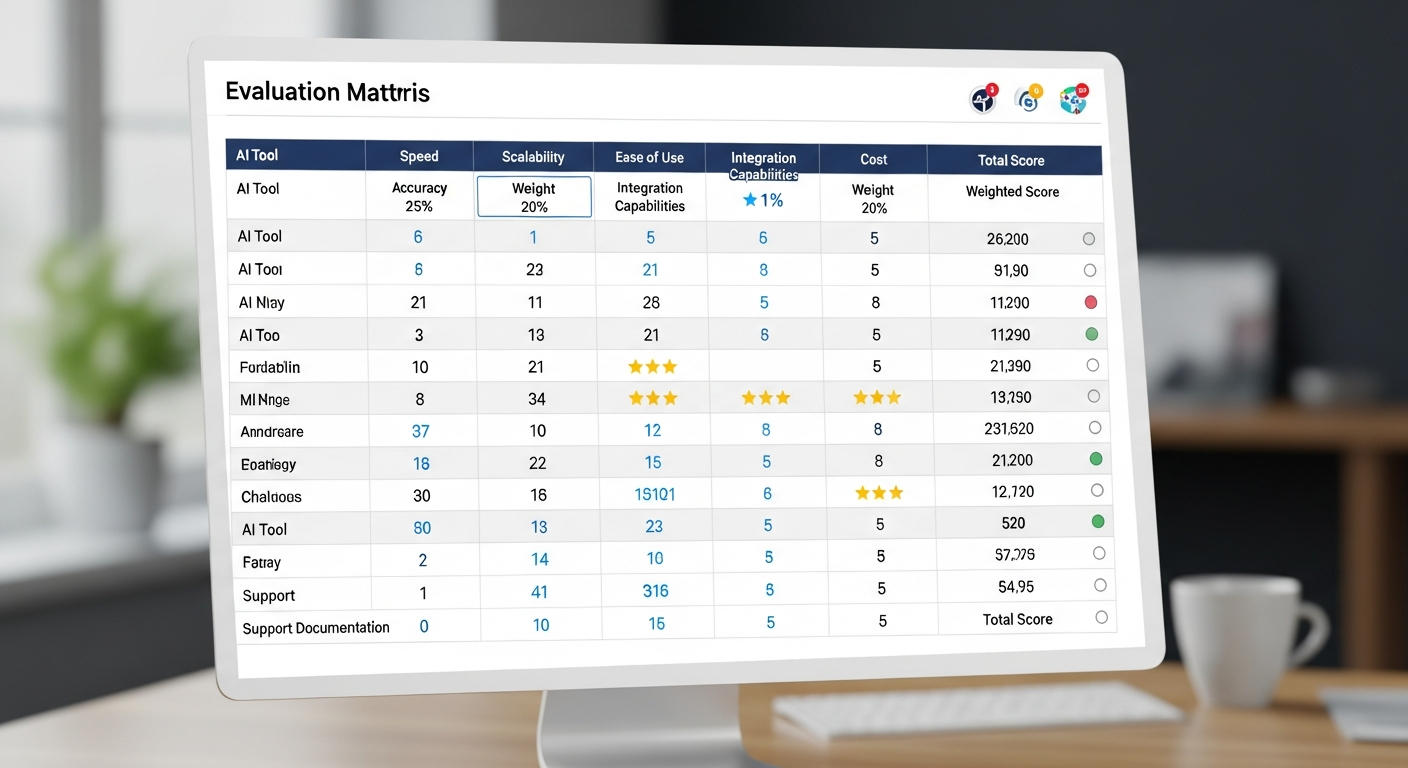
Business impact assessment examines the potential for measurable improvements in key performance indicators relevant to commercial real estate operations. This analysis should consider time savings potential, accuracy improvements, cost reduction opportunities, and revenue enhancement possibilities specific to the firm’s business model and project types. Quantifying these benefits enables objective comparison between alternatives and supports investment justification.
Scalability and flexibility evaluation ensures that selected tools can grow with business needs and adapt to evolving project requirements. Commercial real estate firms often experience significant variation in project scale, type, and complexity over time. AI tools should demonstrate capability to handle this variation without requiring complete system replacement or extensive reconfiguration.
Data security and compliance requirements demand particular attention in commercial real estate applications where project information often includes sensitive financial data, proprietary design concepts, and confidential client information. Evaluation should examine security protocols, data handling practices, compliance certifications, and backup/recovery capabilities to ensure appropriate protection of critical business information.
Total cost of ownership analysis extends beyond initial licensing fees to consider training expenses, integration costs, ongoing support requirements, and potential productivity impacts during implementation. This comprehensive cost analysis enables more accurate comparison between alternatives and supports realistic budget planning for successful deployment.
Vendor stability and support quality evaluation protects against risks associated with emerging technology providers. Assessment should examine vendor financial stability, customer support responsiveness, product development trajectory, and user community strength. These factors significantly influence long-term success with AI tool implementations.
Performance benchmarking capabilities enable ongoing optimization of AI tool utilization. The most effective platforms provide analytics and reporting features that allow teams to measure actual benefits achieved and identify opportunities for improved utilization. This ongoing optimization capability helps ensure continued value from AI investments over time.
Customization and configuration flexibility accommodate the specific requirements of different commercial real estate business models and project types. Evaluation should examine the ability to modify workflows, adjust output formats, and integrate custom data sources to ensure that AI tools can adapt to unique business requirements rather than forcing process changes.
Trial and pilot program opportunities provide essential validation before full implementation commitments. Effective evaluation strategies include structured pilot programs that test AI tools with representative projects and team members to validate expected benefits and identify potential implementation challenges before broader deployment.
Training and change management requirements significantly influence implementation success. Evaluation should consider vendor training resources, documentation quality, and change management support to ensure that teams can effectively adopt and utilize new AI capabilities without excessive disruption to ongoing operations.
Reference customer validation provides insight into real-world performance and implementation experiences with different AI platforms. Speaking with existing customers who have similar business models and project types provides valuable perspective on actual benefits achieved and challenges encountered during implementation.
Success metrics definition ensures that AI tool selection aligns with specific business objectives and enables meaningful performance measurement. Clear metrics established during evaluation provide the foundation for ongoing success assessment and optimization of AI tool utilization over time.
Implementation Considerations: Setting Your Team Up for Success
Successful AI architecture tool implementation requires careful attention to organizational readiness, data quality, team preparation, and systematic change management. The difference between transformative success and costly failure often lies in implementation strategy rather than tool selection, making thoughtful deployment planning essential for realizing expected benefits.
Data readiness represents the most critical foundation for AI tool success. Industry research reveals that only 14% of real estate companies currently have “AI-ready” data, requiring significant investment in data organization and quality improvement before AI tools can deliver optimal results. This preparation includes standardizing file naming conventions, establishing consistent data formats, and ensuring comprehensive project documentation.
Thankfully, qbiq’s platform has hundreds of millions of validated floorplans which enable quick comparison and benchmarking. Furthermore, advanced digitization techniques mean that empty floorplates can be easily added and then key architectural components are automatically detected and categorized to ensure coherent and buildable solutions.
In many other AI initiatives and platforms, teams must invest a significant effort in order to prepare and train to use AI. For example:
Data quality improvement initiatives should begin well before AI tool deployment. Commercial real estate firms must audit existing project records, identify gaps in documentation standards, and establish protocols for maintaining data consistency moving forward. This foundational work directly impacts AI tool accuracy and effectiveness, making it a prerequisite for successful implementation rather than an optional enhancement.
Team training and skill development address the significant competency gaps that exist between current practices and AI-enhanced workflows. Effective training programs combine technical instruction on tool operation with strategic education about AI capabilities and limitations. This comprehensive approach ensures that team members can both operate AI tools effectively and make informed decisions about when and how to apply AI-generated insights.
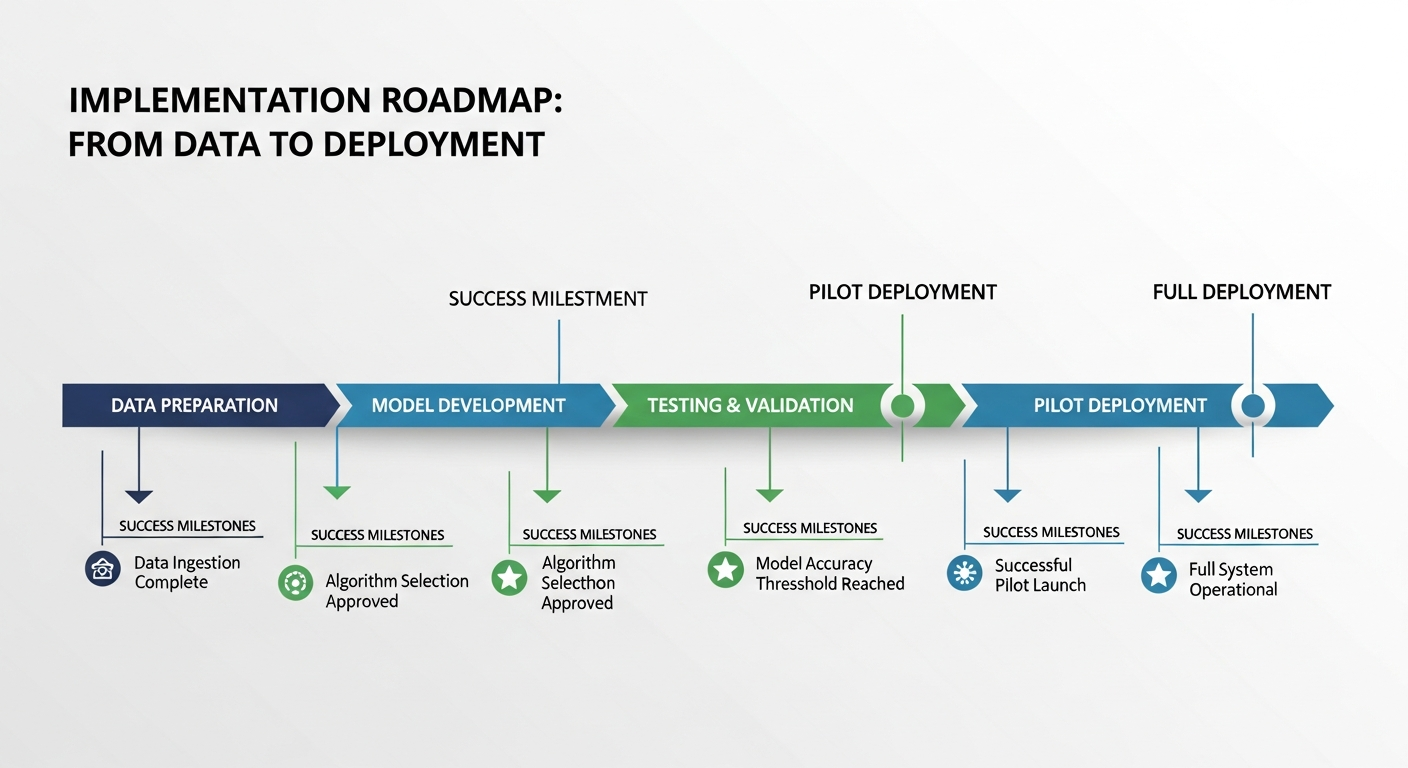
Change management strategies must address both technical and cultural aspects of AI adoption. Many commercial real estate professionals have developed successful careers using traditional methods and may initially resist AI-enhanced approaches. Effective change management acknowledges these concerns while demonstrating clear benefits and maintaining respect for existing expertise and relationships.
Pilot program design provides controlled validation of AI tool benefits while limiting implementation risks. Successful pilot programs select representative projects that can demonstrate clear value while avoiding mission-critical applications where problems could significantly impact business operations. These pilots should include specific success metrics and defined evaluation criteria to guide broader deployment decisions.
Integration planning ensures that AI tools enhance rather than disrupt existing business processes and software systems. This planning includes technical integration with current platforms as well as workflow modification to incorporate AI-generated insights into established decision-making processes. Effective integration maintains business continuity while gradually introducing enhanced capabilities.
Success measurement frameworks enable ongoing optimization of AI tool utilization and return on investment tracking. These frameworks should include both quantitative metrics—such as time savings, accuracy improvements, and cost reductions—and qualitative assessments of team satisfaction and client response. Regular measurement enables continuous improvement and validates implementation investments.
Resource allocation planning addresses both initial implementation requirements and ongoing support needs. AI tool deployment typically requires dedicated project management, technical integration support, and extended training periods that impact normal operational capacity. Realistic resource planning prevents implementation delays and ensures adequate support for successful adoption.
Risk mitigation strategies anticipate potential implementation challenges and establish response protocols. Common risks include data security concerns, integration difficulties, user adoption resistance, and vendor support issues. Proactive risk assessment and mitigation planning prevents minor issues from becoming major implementation obstacles.
Governance structure establishment ensures appropriate oversight and decision-making authority for AI tool deployment and ongoing utilization. This governance includes defining roles and responsibilities, establishing approval processes, and creating escalation procedures for addressing implementation challenges or optimization opportunities.
Communication strategy development maintains stakeholder support and manages expectations throughout implementation phases. Effective communication addresses both internal team concerns and external client or partner questions about AI tool utilization. Transparent communication about capabilities, limitations, and implementation progress builds confidence and support for AI initiatives.
Performance monitoring systems enable early identification of implementation challenges and optimization opportunities. These systems should track both technical performance metrics and business impact indicators to ensure that AI tools deliver expected benefits and identify areas requiring adjustment or additional support.
Vendor relationship management establishes effective partnerships with AI tool providers that support successful implementation and ongoing optimization. This includes defining support expectations, establishing communication protocols, and negotiating appropriate service level agreements that ensure responsive assistance when needed.
Long-term optimization planning recognizes that AI tool implementation is an ongoing process rather than a one-time deployment. Effective firms establish regular review cycles, continuous training programs, and systematic evaluation of new capabilities to ensure that AI investments continue delivering value as technology evolves and business needs change.
Security protocol implementation protects sensitive project and client information while enabling effective AI tool utilization. This includes establishing data access controls, implementing secure communication protocols, and maintaining compliance with relevant industry regulations and client requirements.
The Path Forward: Transforming Commercial Real Estate Through AI
The commercial real estate industry stands at a transformative inflection point where AI architecture tools have evolved from experimental technology to essential business infrastructure. The data confirms this transition: with 68% of professionals actively using or exploring AI solutions and proven ROI demonstrating significant cost savings and operational improvements, the question has shifted from whether to implement AI to how quickly and effectively it can be integrated.
The firms achieving the greatest success are those approaching AI implementation strategically rather than opportunistically. They recognize that sustainable competitive advantage requires selecting tools with the right combination of automation capabilities, analytical intelligence, and collaborative features that align with their specific business models and market focus. These leading firms invest in proper data preparation, comprehensive team training, and systematic change
management to maximize their technology investments.
Looking ahead, the competitive landscape will increasingly favor organizations that can leverage AI to deliver superior client service, faster response times, and more accurate analyses. The traditional advantages of relationships and market knowledge remain important, but they must now be augmented with technological capabilities that enable rapid response to market opportunities and sophisticated analysis of complex development scenarios.
The implementation approach that consistently delivers success begins with clear business objectives and realistic expectations about AI capabilities and limitations. Rather than seeking revolutionary transformation overnight, the most effective firms start with specific, high-impact applications where AI can demonstrate clear value, then gradually expand their utilization as they build expertise and confidence.

For property developers, this means beginning with AI tools that enhance feasibility analysis and space optimization, enabling faster response to development opportunities while ensuring comprehensive consideration of regulatory and financial constraints. For facility managers, the priority should be tools that optimize operational efficiency and tenant experience through predictive analytics and automated systems management. For CRE professionals focused on transactions, AI-enhanced visualization and market analysis tools provide the competitive edge necessary for success in increasingly sophisticated markets.
The key to sustainable success lies in viewing AI implementation as an ongoing strategic initiative rather than a technology deployment project. This perspective emphasizes continuous learning, regular evaluation of new capabilities, and systematic optimization of AI utilization to ensure that technology investments continue delivering value as both tools and business requirements evolve.
The window for achieving first-mover advantages continues narrowing as AI adoption accelerates across the industry. However, firms that approach implementation thoughtfully—with proper preparation, realistic expectations, and commitment to ongoing optimization—will establish sustainable competitive positions that become increasingly difficult for traditional operators to challenge.
The future belongs to commercial real estate professionals who can combine traditional industry expertise with advanced AI capabilities to create superior client experiences, more efficient operations, and better investment outcomes. The tools and strategies outlined in this analysis provide the foundation for building that competitive advantage in an AI-enhanced commercial real estate landscape.
Ready to Transform Your Commercial Real Estate Operations?
The evidence is clear: AI architecture tools have moved from experimental to essential for commercial real estate success. The firms that master this transition now will define the industry’s competitive landscape for years to come. Early adopters are already capturing significant advantages through time savings, cost reductions, and revenue growth that compound over time.
Ready to explore how AI architecture tools can transform your commercial real estate operations? Discover how qbiq’s automated architectural intelligence helps property developers, facility managers, and CRE professionals unlock the potential of any space in minutes, not weeks. Our platform combines human expertise with AI-powered spatial intelligence to deliver the speed, accuracy, and insight you need to stay ahead in today’s competitive market.
See what’s possible when you combine your commercial real estate expertise with AI-enhanced spatial intelligence. Learn more about qbiq’s capabilities or schedule a demonstration to experience the future of commercial space planning today.






.png)


