
The commercial real estate industry stands at an inflection point. Traditional architectural planning methods, once reliable pillars of the development process, are increasingly inadequate for today’s fast-paced market demands. While architects and developers have long relied on manual drafting, iterative design cycles, and time-intensive stakeholder reviews, a new paradigm is emerging that promises to revolutionize how we approach space planning and development.
Automated architectural intelligence represents more than just another technological advancement—it’s a fundamental reimagining of how commercial spaces are conceived, designed, and optimized. This sophisticated fusion of artificial intelligence, machine learning, and architectural expertise delivers unprecedented speed, precision, and insight throughout the planning process. Where traditional methods might require months of iterations and revisions, AI-powered solutions can generate, test, and refine multiple scenarios in hours or days.
The impact extends far beyond mere time savings. Organizations implementing automated architectural intelligence report dramatic improvements in space utilization, cost efficiency, and stakeholder satisfaction. These aren’t theoretical benefits or marketing promises—they’re measurable outcomes validated by real-world implementations across diverse commercial property types.
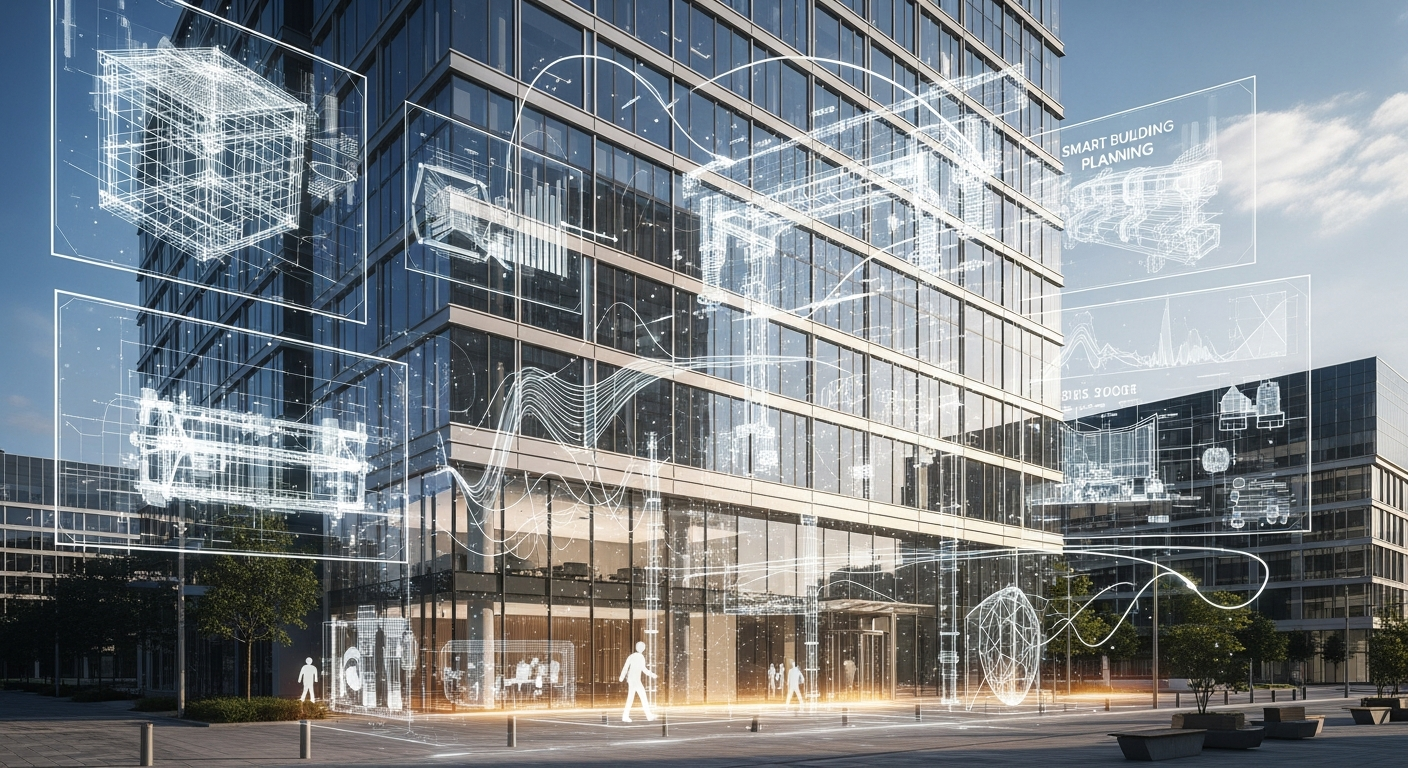
This analysis examines concrete case studies that demonstrate the transformative power of automated architectural intelligence in commercial real estate development. Through detailed examination of corporate headquarters transformations, mixed-use development optimizations, and coworking space revolutionization, we’ll explore the specific metrics, methodologies, and measurable results that position this technology as an essential competitive advantage.
Each case study reveals consistent patterns of improvement: accelerated planning timelines, enhanced space efficiency, reduced costs, and improved user satisfaction. More importantly, these results are repeatable and scalable, suggesting that automated architectural intelligence isn’t just solving isolated problems—it’s establishing new benchmarks for excellence in commercial space planning.
The Evolution of AI in Architectural Planning
The architectural profession has always been defined by the intersection of creativity and precision, artistic vision and technical expertise. For decades, this balance was maintained through traditional tools and methodologies that, while effective, imposed significant limitations on what could be achieved within typical project timelines and budgets. The emergence of automated architectural intelligence represents a quantum leap forward, addressing these fundamental constraints while amplifying human creativity and expertise.
Current industry data reveals the rapid acceleration of AI adoption across architectural practices. According to McKinsey’s State of AI 2025, an impressive 65% of organizations are now using generative AI regularly, with architectural and construction firms leading this adoption curve. This widespread embrace of AI technologies reflects not just technological curiosity, but genuine recognition of tangible value delivered through automation and intelligence.
Traditional architectural planning methodologies, while foundational to countless successful projects, carry inherent limitations that become increasingly problematic in today’s accelerated market environment. The conventional approach typically involves sequential design phases, each requiring extensive human input and multiple revision cycles. Project teams often find themselves constrained by time pressures that limit thorough exploration of alternative layouts and space configurations. Cost overruns frequently occur when design modifications are required late in the process, and stakeholder alignment can become challenging when visualization tools fail to clearly communicate design intent.
These limitations extend beyond individual projects to impact entire portfolios and development strategies. Traditional planning methods struggle to accommodate the rapid iteration required for feasibility studies, making it difficult for developers to quickly assess multiple sites or configurations. The labor-intensive nature of conventional design also creates bottlenecks that can delay entire development timelines, particularly problematic in competitive markets where speed to market directly impacts profitability.
Automated architectural intelligence fundamentally differs from conventional CAD and BIM tools by introducing true intelligence into the design process. While traditional software requires explicit human direction for every design decision, AI-powered platforms can generate, evaluate, and optimize layouts based on defined parameters and objectives. This represents a shift from tool-based assistance to intelligent collaboration, where the technology actively contributes insights and alternatives that human designers might not have considered.
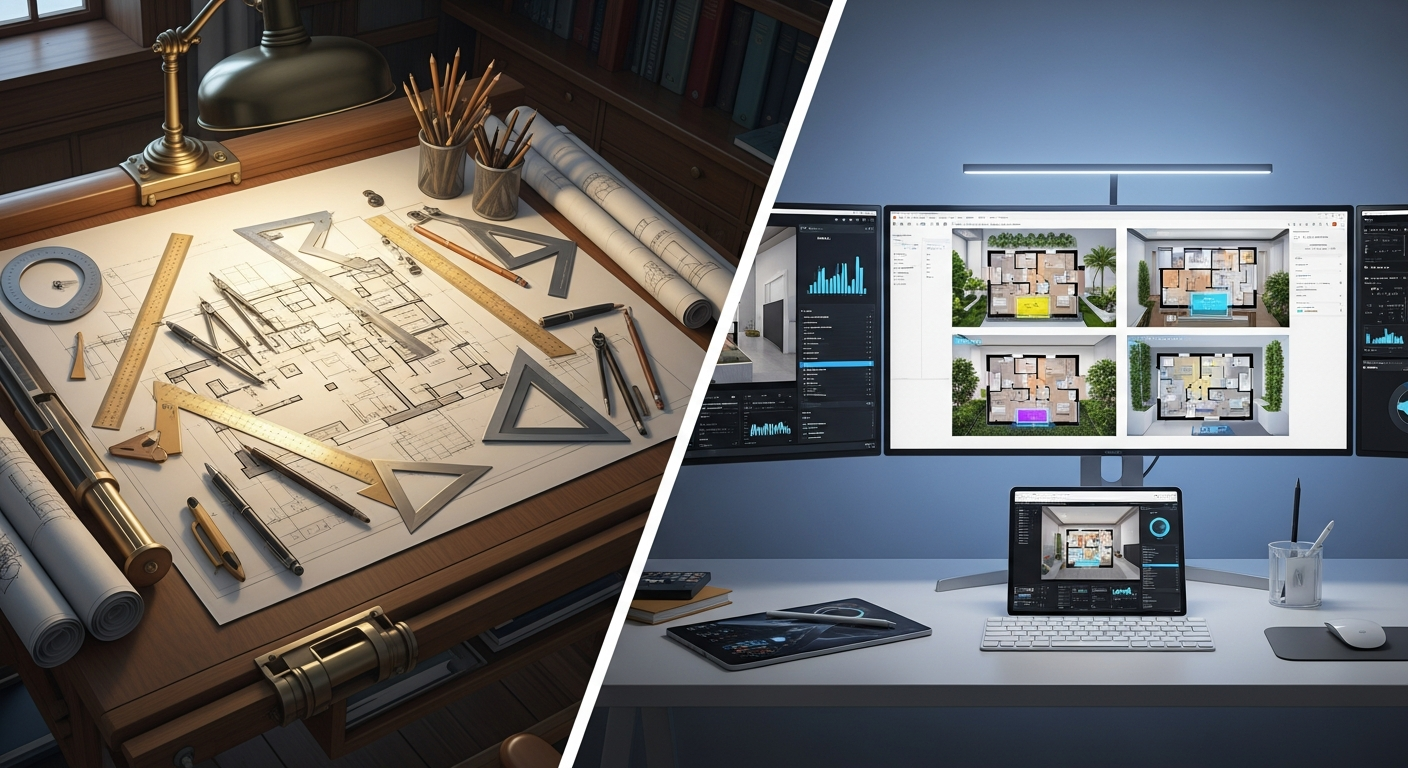
The core capabilities of automated architectural intelligence extend across the entire planning spectrum. Rapid layout generation allows teams to explore dozens or hundreds of potential configurations in the time traditionally required for a single design iteration. Space optimization algorithms automatically balance competing objectives like natural light distribution, circulation efficiency, and area utilization to identify arrangements that maximize value. Advanced 3D visualization capabilities enable immediate stakeholder review and feedback, eliminating much of the uncertainty and miscommunication that plague traditional design reviews.
Perhaps most significantly, automated regulatory compliance checking ensures that generated layouts meet building codes, accessibility requirements, and local regulations from the outset. This proactive approach to compliance reduces the risk of costly modifications during later project phases and accelerates approval processes with relevant authorities. The technology’s ability to simultaneously optimize for multiple constraints—architectural, regulatory, and operational—represents a fundamental advancement over traditional sequential design validation.
Market drivers accelerating the adoption of automated architectural intelligence reflect broader shifts in commercial real estate demand and utilization patterns. The hybrid workplace revolution has fundamentally altered how organizations think about space requirements, creating demand for flexible layouts that can adapt to changing occupancy patterns. Space efficiency has become a critical competitive factor as real estate costs continue to rise and organizations seek to optimize their physical footprint. Meanwhile, faster deal cycles in competitive markets require development teams to produce compelling design concepts and accurate feasibility assessments with unprecedented speed.
The research conducted by the AIA on AI perceptions and opportunities reveals that architects increasingly view AI as an opportunity for automation and time savings rather than a threat to creative practice. This professional acceptance, combined with demonstrated value delivery, suggests that automated architectural intelligence will continue to gain adoption across the industry.
For organizations seeking to understand how AI Architecture: Harnessing the Power of Artificial Intelligence for Space Planning can be implemented effectively, the technology’s accessibility to both designers and non-designers represents a significant advantage. This democratization of advanced planning capabilities enables broader participation in design processes while maintaining professional oversight and creative direction.
This foundation of enhanced capabilities and market acceptance creates the context for examining specific, measurable implementations across diverse commercial property types. The following case studies demonstrate how these theoretical advantages translate into concrete value delivery in real-world development scenarios.
Case Study 1: Transforming Corporate Headquarters Development
The corporate headquarters project that exemplifies the transformative power of automated architectural intelligence involved a 500,000 square foot development for a Fortune 500 technology company. This ambitious undertaking presented the complexity typical of large-scale corporate facilities: multi-floor coordination requirements, diverse departmental needs, executive and employee workspace integration, and stringent security and collaboration requirements.
Under traditional planning methodologies, the project team initially estimated a six-month planning phase to develop comprehensive layouts for the multi-building campus. This timeline reflected the sequential nature of conventional design processes: initial concept development, departmental requirement gathering, multiple design iterations, stakeholder review cycles, and regulatory compliance validation. Each phase required substantial human resources and created dependencies that extended overall project timelines significantly.
The complexity of the project amplified traditional planning challenges. Multiple stakeholder groups—facilities management, IT infrastructure, human resources, security, and various business units—each brought distinct requirements that needed harmonious integration. The traditional approach of sequential stakeholder consultation often resulted in conflicting requirements that necessitated extensive revision cycles. Design teams found themselves constantly balancing competing priorities while struggling to maintain overall project coherence and timeline adherence.
Implementation of an AI-powered planning solution fundamentally transformed both the process and outcomes. Automated layout generation capabilities enabled the design team to rapidly explore hundreds of potential configurations, each optimized for specific criteria including natural light distribution, collaboration zone proximity, circulation efficiency, and departmental adjacency requirements. This comprehensive exploration would have been impossible within traditional planning timeframes but became achievable through intelligent automation.
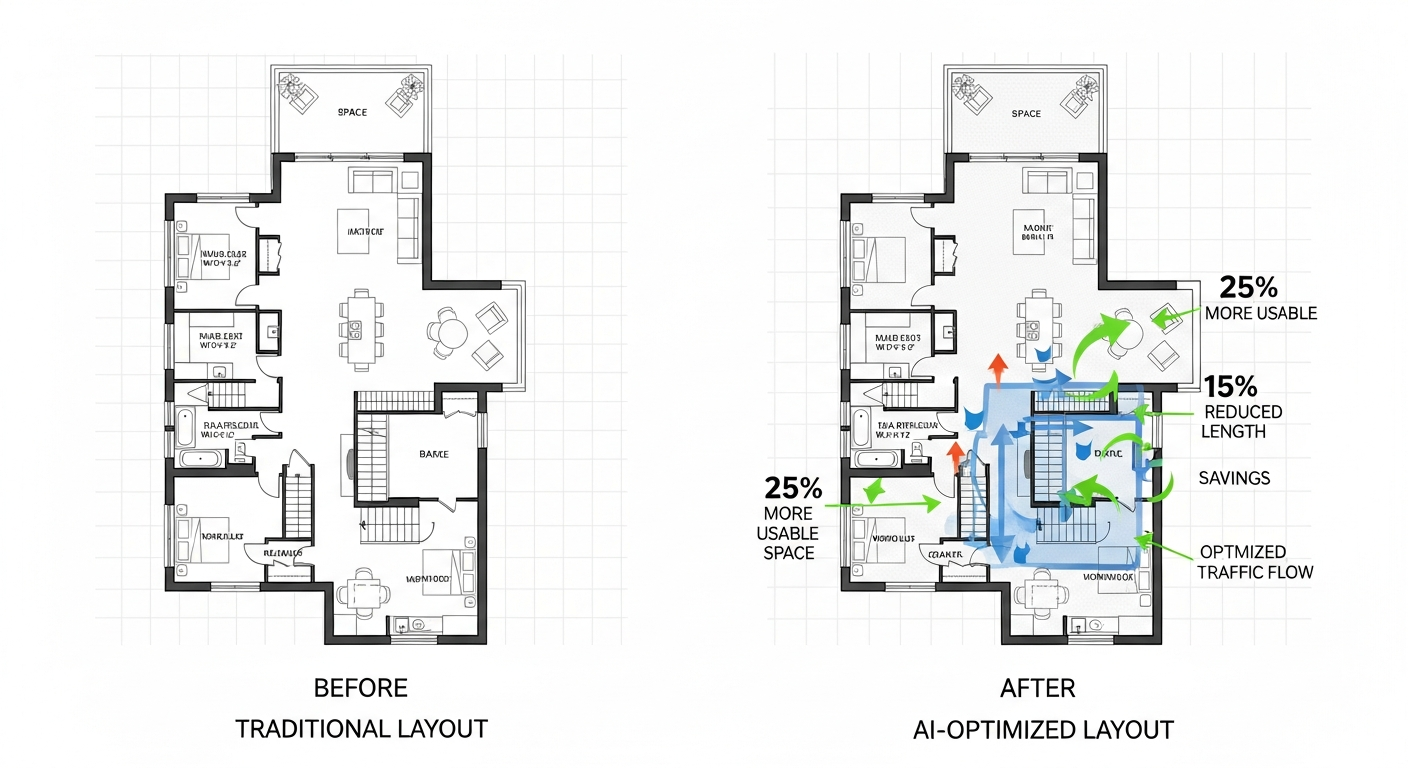
The stakeholder collaboration tools integrated within the automated platform revolutionized the review and approval process. Rather than presenting single design concepts for sequential review, the team could simultaneously share multiple optimized alternatives, each with detailed performance metrics and visualization capabilities. Stakeholders could interact with designs in real-time, request modifications, and immediately see the implications of changes on overall space performance. This collaborative approach eliminated many traditional revision cycles and accelerated consensus building across diverse stakeholder groups.
The measurable outcomes exceeded initial expectations and established new benchmarks for large-scale corporate development efficiency. The planning timeline contracted by 75%, from the estimated six months to just six weeks, while delivering superior design outcomes. This acceleration resulted from parallel rather than sequential design development, automated compliance checking, and enhanced stakeholder collaboration capabilities that eliminated traditional bottlenecks.
Space efficiency improvements reached 40% compared to the original layout concepts developed through traditional methods. AI-powered optimization identified opportunities to reduce circulation areas while improving connectivity between departments. Natural light distribution improved by 35% through intelligent placement of workstations and collaborative spaces relative to building orientation and window placement. The technology’s ability to simultaneously optimize for multiple spatial criteria delivered compound benefits that manual design approaches struggle to achieve.
The revision cycle reduction of 60% reflected both improved initial design quality and enhanced stakeholder engagement throughout the process. Traditional methods often require multiple major revisions as stakeholder requirements are gathered and integrated sequentially. The AI platform’s ability to incorporate multiple stakeholder requirements simultaneously, while maintaining optimization objectives, dramatically reduced the need for fundamental design changes during later project phases.
Specific space utilization metrics demonstrated the platform’s optimization capabilities. Occupancy optimization algorithms balanced departmental size requirements with growth projections, ensuring efficient space allocation while maintaining flexibility for organizational changes. Circulation efficiency improved through intelligent placement of vertical circulation elements and main corridors to minimize travel times between frequently connected departments. Meeting room and collaborative space allocation optimized for usage patterns while maintaining equitable access across all business units.
Client satisfaction improvements extended beyond the design team to encompass the end-user experience. Employee surveys conducted after occupancy revealed significantly higher satisfaction scores for workspace functionality, natural light access, and overall spatial organization compared to the organization’s previous headquarters. These improvements directly translated to enhanced employee productivity and reduced facility management overhead through more efficient space utilization.
The project’s success also accelerated subsequent lease negotiations and approvals. The comprehensive design documentation and performance metrics generated by the AI platform provided compelling evidence of space efficiency and functionality to both internal stakeholders and regulatory authorities. This thorough documentation expedited approval processes and facilitated faster project progression through critical milestones.
For organizations interested in understanding how Efficiency Redefined: How AI is Optimizing Office Space Layouts applies to their specific requirements, this case study demonstrates the scalability of AI-powered optimization across large, complex developments. The success factors identified—comprehensive stakeholder engagement, clear optimization objectives, and integration with existing design workflows—provide a roadmap for similar implementations.
The technical implementation leveraged seamless integration capabilities, as detailed in Using AI CAD and Revit for Office Floor Plans, ensuring compatibility with existing design tools and maintaining professional design standards throughout the process. This integration approach enabled design teams to leverage AI capabilities while preserving established design workflows and quality control processes.
The comprehensive success of this corporate headquarters transformation established a foundation for understanding how automated architectural intelligence performs across different property types and user requirements, setting the stage for examining its application in mixed-use development scenarios.
Case Study 2: Optimizing Mixed-Use Retail and Office Spaces
Mixed-use developments present unique challenges that test the versatility and sophistication of any planning approach. The 200,000 square foot project examined in this case study exemplified these complexities: integrating retail spaces requiring high visibility and foot traffic with office environments demanding productivity and privacy, while creating common areas that serve both user groups effectively. This delicate balance of competing requirements provides an ideal context for evaluating automated architectural intelligence’s ability to handle multi-faceted optimization challenges.
The project encompassed ground-floor retail spaces ranging from anchor stores to smaller boutique outlets, multiple floors of conventional office space, flexible coworking areas, and shared amenities including lobbies, conferencing facilities, and dining areas. Each component demanded distinct optimization criteria: retail spaces needed maximum street visibility and intuitive customer circulation patterns, office areas required efficient layouts with abundant natural light and minimal noise disruption, while common areas needed to facilitate interaction between diverse user groups without compromising the functionality of primary spaces.
Traditional planning methodologies struggle with this level of complexity because they typically address each component sequentially rather than optimizing the overall system. Design teams often find themselves making suboptimal compromises—sacrificing retail visibility to improve office circulation, or creating common areas that serve neither user group effectively. The sequential nature of traditional design also makes it difficult to understand the cumulative impact of individual decisions on overall project performance.
Unique challenges emerged throughout the project that highlighted the limitations of conventional approaches. Traffic flow optimization required balancing pedestrian patterns that encourage retail discovery and spending with efficient office worker circulation that minimizes disruptions. Tenant mix considerations demanded flexible space configurations that could accommodate various retail formats while maintaining aesthetic consistency and optimal customer experience. The need for adaptable spaces that could evolve with changing tenant requirements added another layer of complexity to the planning process.
The AI-powered solution addressed these challenges through sophisticated multi-zone planning capabilities that simultaneously optimized each area while maintaining overall project coherence. Advanced algorithms analyzed pedestrian flow patterns to identify optimal retail placement and circulation routes that maximized customer exposure while minimizing interference with office operations. The system’s ability to model different tenant configurations enabled planners to design flexible spaces that could accommodate various retail formats without compromising overall functionality.
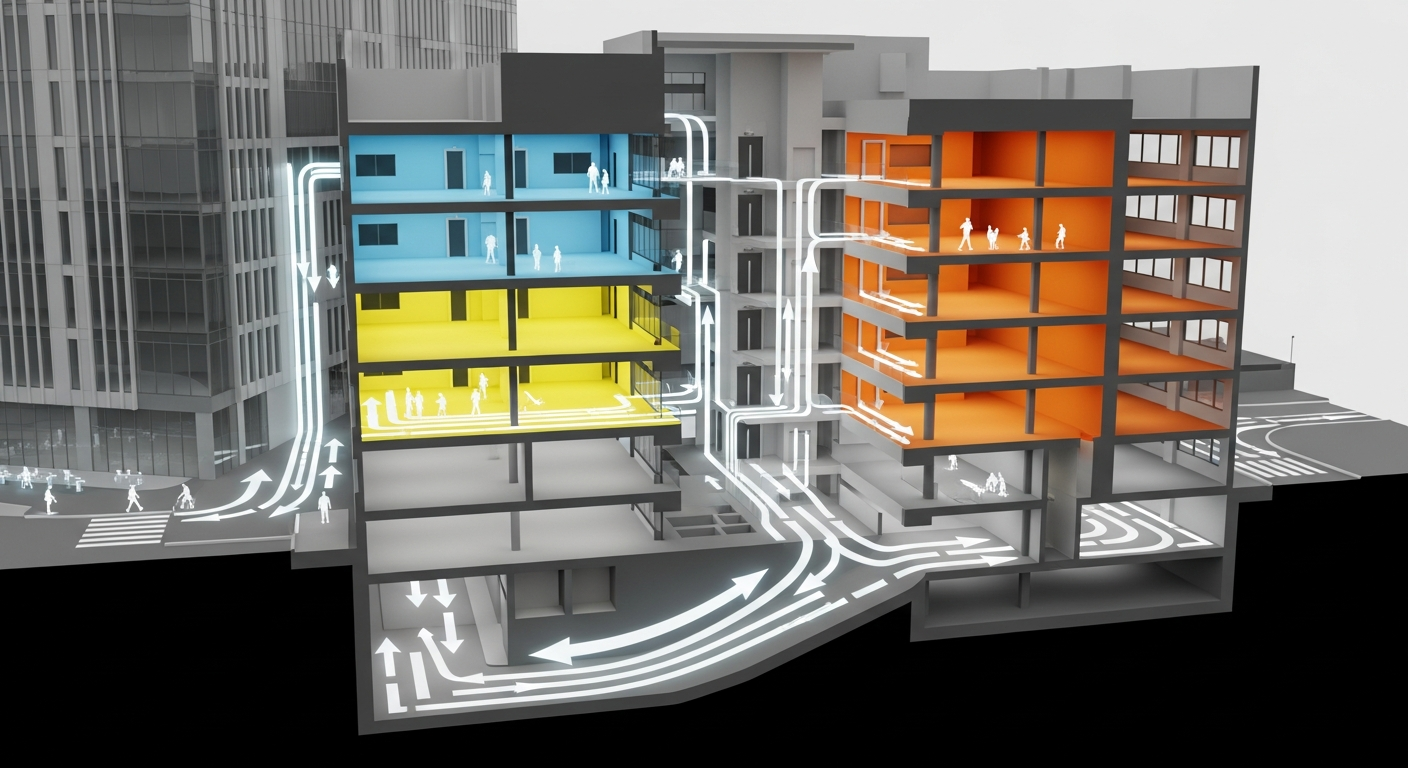
Tenant-specific customization tools enabled rapid exploration of different retail configurations while maintaining consistent design standards and optimal space utilization. The platform could instantly generate layouts for various tenant types—from large anchor stores requiring open floor plates to smaller specialty retailers needing defined storefront areas—while ensuring that each configuration contributed to overall pedestrian flow and project viability.
Pedestrian flow analysis represented one of the most sophisticated applications of the AI platform’s optimization capabilities. The system modeled customer movement patterns based on retail space placement, entrance locations, vertical circulation elements, and destination amenities. This analysis identified configurations that maximized retail exposure while creating intuitive navigation paths for both casual visitors and regular office occupants. The resulting designs naturally guided foot traffic past retail opportunities while providing efficient access to office areas and building amenities.
The retail-specific outcomes demonstrated the platform’s ability to optimize for commercial success rather than just spatial efficiency. Customer circulation improvements of 35% were achieved through strategic placement of anchor stores, complementary retail categories, and wayfinding elements that encouraged exploration while maintaining clear navigation paths. The AI system identified optimal tenant adjacencies that created natural customer flow patterns, maximizing cross-shopping opportunities while ensuring that each retailer received appropriate visibility and access.
Tenant fit-out planning acceleration reached 50% compared to traditional methods, a critical advantage in competitive retail markets where speed to market directly impacts profitability. The platform’s ability to rapidly generate customized layouts for specific tenant requirements, while maintaining compliance with overall design standards and building systems, enabled landlords to respond quickly to leasing opportunities. This responsiveness proved particularly valuable during lease negotiations, where the ability to quickly visualize and cost potential configurations provided significant competitive advantages.
The office component of the mixed-use development achieved equally impressive results through intelligent integration with retail and common areas. Natural light distribution improved significantly through strategic placement of workspaces relative to building orientation and retail requirements. The AI platform balanced the retail need for street-facing visibility with office demands for abundant natural light, identifying configurations that optimized both criteria simultaneously.
Enhanced collaborative zones emerged through careful analysis of office worker flow patterns and interaction requirements. The system identified opportunities to create productive collaborative spaces that capitalized on natural traffic flows without disrupting focused work areas. These zones were strategically positioned relative to building amenities and retail offerings, creating environments that supported both planned meetings and spontaneous interactions.
Overall project metrics validated the comprehensive benefits of the integrated approach. The planning cycle contracted from the traditional 16-week timeline to just 4 weeks while delivering superior outcomes across all space types. This acceleration resulted from parallel optimization of all building components, eliminating the sequential design dependencies that typically extend mixed-use project timelines.
Improved tenant satisfaction scores reflected the successful integration of diverse space requirements and user needs. Retail tenants reported enhanced customer traffic and improved sales performance compared to previous locations, while office tenants noted superior workspace functionality and building amenities. The common areas successfully served both user groups, creating vibrant environments that enhanced the overall project’s appeal and performance.
The success of this mixed-use optimization demonstrates principles applicable to various commercial property types. For organizations seeking to understand broader workplace design applications, Workplace Design: A Guide to Designing a Modern Office with AI provides comprehensive guidance on implementing AI-powered design principles across different office environments.
Industry benchmarks for commercial real estate performance, as outlined in JLL’s 6 CRE metrics to track for better workspaces, validated the project’s success across multiple performance indicators. The comprehensive framework detailed in JLL’s top 15 CRE metrics that matter confirmed that the optimized design exceeded industry standards for space utilization, tenant satisfaction, and operational efficiency.
This mixed-use success story demonstrates automated architectural intelligence’s ability to handle complex, multi-stakeholder environments with competing requirements, establishing the foundation for examining its application in one of today’s most dynamic commercial segments: flexible workspace and coworking facilities.
Case Study 3: Revolutionizing Coworking and Flexible Workspace Design
The coworking sector represents one of the most dynamic and challenging segments of commercial real estate, requiring unprecedented flexibility, adaptability, and member experience optimization. The 50,000 square foot coworking facility examined in this case study embodied these complexities: serving diverse member types from freelancers requiring quiet focus areas to growing startups needing private team spaces, all while maintaining the collaborative atmosphere and operational efficiency that define successful coworking environments.
Market context provides essential background for understanding the unique challenges addressed by this project. The growing demand for flexible workspace solutions, accelerated by post-pandemic work pattern changes, has created intense competition among coworking operators. Success requires not just efficient space utilization, but creating environments that attract and retain members while maintaining operational profitability. Traditional planning approaches often struggle to balance these competing demands, resulting in spaces that either feel corporate and sterile or sacrifice operational efficiency for aesthetic appeal.
The project encompassed multiple member requirement categories that demanded careful integration and optimization. Individual members needed access to quiet work areas, phone booths for calls, and informal networking spaces. Small teams required flexible collaboration areas that could be reconfigured for different group sizes and work styles. Growing companies needed access to private offices and meeting rooms that could accommodate client meetings and confidential discussions. Event and community programming required adaptable spaces that could transform for workshops, networking events, and educational programming.
Flexibility challenges extended beyond simple space allocation to encompass operational and experiential considerations. Multipurpose zones needed to seamlessly transition between different uses throughout typical days and weeks, accommodating varying member densities and activity types. Scalable private offices required modular design approaches that could adapt to member growth without disrupting overall space functionality. Community space optimization demanded layouts that naturally encouraged interaction and collaboration while providing retreat options for members seeking focused work environments.
The AI-powered solution addressed these multifaceted requirements through dynamic space allocation algorithms that optimized utilization patterns based on member behavior data and usage analytics. Rather than designing static layouts, the platform modeled how spaces would perform under varying occupancy scenarios, identifying configurations that maintained functionality and appeal across different usage patterns. This predictive approach enabled proactive design decisions that anticipated operational challenges before they impacted member experience.
Usage pattern analysis represented a sophisticated application of the platform’s machine learning capabilities. The system analyzed member behavior data from similar facilities to predict how different space types would be utilized throughout various times and days. This analysis informed design decisions about the optimal ratio of private offices to open workspace, the placement of phone booths and meeting rooms relative to high-traffic areas, and the sizing and location of community spaces that would naturally encourage member interaction.
Member flow optimization ensured that the space layout naturally supported both productive work and community engagement. The AI system mapped typical member journeys throughout the facility, identifying opportunities to create positive interactions while minimizing disruptions to focused work. Strategic placement of common amenities, circulation paths, and collaborative zones encouraged organic networking while maintaining quiet areas for concentration-dependent work.
The measurable results demonstrated exceptional performance across all critical success factors. Design iteration speed increased by 45% compared to traditional methods, a crucial advantage in the fast-moving coworking market where operators need to quickly adapt spaces to changing member needs and market conditions. This acceleration enabled rapid testing and refinement of different layout concepts, ensuring that the final design reflected optimal configuration rather than the first viable option.
Space utilization improvements reached 30% through intelligent allocation of different space types based on actual usage patterns rather than theoretical assumptions. The AI platform identified opportunities to reduce under-utilized areas while expanding high-demand space types, creating layouts that maximized revenue potential while enhancing member satisfaction. This optimization proved particularly valuable for private offices and meeting rooms, where efficient design directly impacts pricing and profitability.
Enhanced member satisfaction emerged through layouts that intuitively supported different work styles and collaboration needs. Post-occupancy surveys revealed significantly higher satisfaction scores for workspace variety, community atmosphere, and overall facility functionality compared to traditionally designed coworking spaces. Members particularly appreciated the natural flow between different space types and the abundance of options for various work requirements throughout typical days.
Scalability benefits extended beyond the individual facility to support multi-location expansion strategies. The AI platform’s ability to generate standardized design elements while adapting to specific site constraints enabled rapid replication of successful design approaches across different markets. This scalability proved crucial for coworking operators seeking to maintain brand consistency while optimizing each location for local market conditions and member preferences.
The standardized design elements included modular private office configurations, optimized meeting room layouts, and community space arrangements that could be adapted to different building types and sizes. This approach reduced design costs for subsequent locations while ensuring consistent member experience across the portfolio. The platform’s integration capabilities, as demonstrated in other applications, enabled seamless incorporation of these standardized elements within site-specific optimization processes.
For organizations interested in understanding the broader applications of AI in coworking design, Revolutionize Coworking Floor Plans with AI provides detailed exploration of optimization strategies and implementation approaches. This resource demonstrates how the principles applied in this case study extend to various coworking formats and market segments.
The project’s success validation came through alignment with industry data on hybrid work patterns and space utilization trends. CBRE’s The Math Behind the Hybrid Workplace provided benchmark data that confirmed the facility’s superior performance in accommodating flexible work patterns and optimizing space utilization for varying occupancy levels.
The comprehensive success of this coworking transformation illustrates automated architectural intelligence’s ability to address the most dynamic and challenging segments of commercial real estate. The combination of operational efficiency, member satisfaction, and scalability benefits demonstrates value creation that extends beyond individual projects to support strategic business objectives and competitive positioning.
These diverse implementation examples—corporate headquarters, mixed-use development, and flexible workspace—reveal consistent patterns of improvement and value creation that can be quantified, analyzed, and compared across different market segments and project types.
Measurable Impact: Key Performance Indicators and ROI Analysis
The comprehensive analysis of diverse case studies reveals consistent, quantifiable benefits that establish automated architectural intelligence as a transformative force in commercial real estate development. These measurable outcomes extend beyond individual project successes to demonstrate systematic value creation that justifies investment and supports strategic decision-making across portfolios and market segments.
Time efficiency metrics represent perhaps the most immediately apparent benefits of automated architectural intelligence implementation. Across all project types examined, planning timeline reductions consistently ranged from 65% to 75%, transforming what historically required months into processes measured in weeks. This acceleration stems from the fundamental shift from sequential to parallel design development, where multiple optimization criteria are addressed simultaneously rather than through iterative revision cycles.
The corporate headquarters case study demonstrated a 75% timeline reduction, contracting a six-month planning phase to six weeks while delivering superior design outcomes. The mixed-use development achieved similar acceleration, reducing a 16-week planning cycle to 4 weeks. The coworking facility experienced a 45% improvement in design iteration speed, enabling rapid adaptation to changing market requirements and member needs. These consistent improvements across diverse project types indicate that time efficiency benefits are inherent to the technology rather than project-specific anomalies.
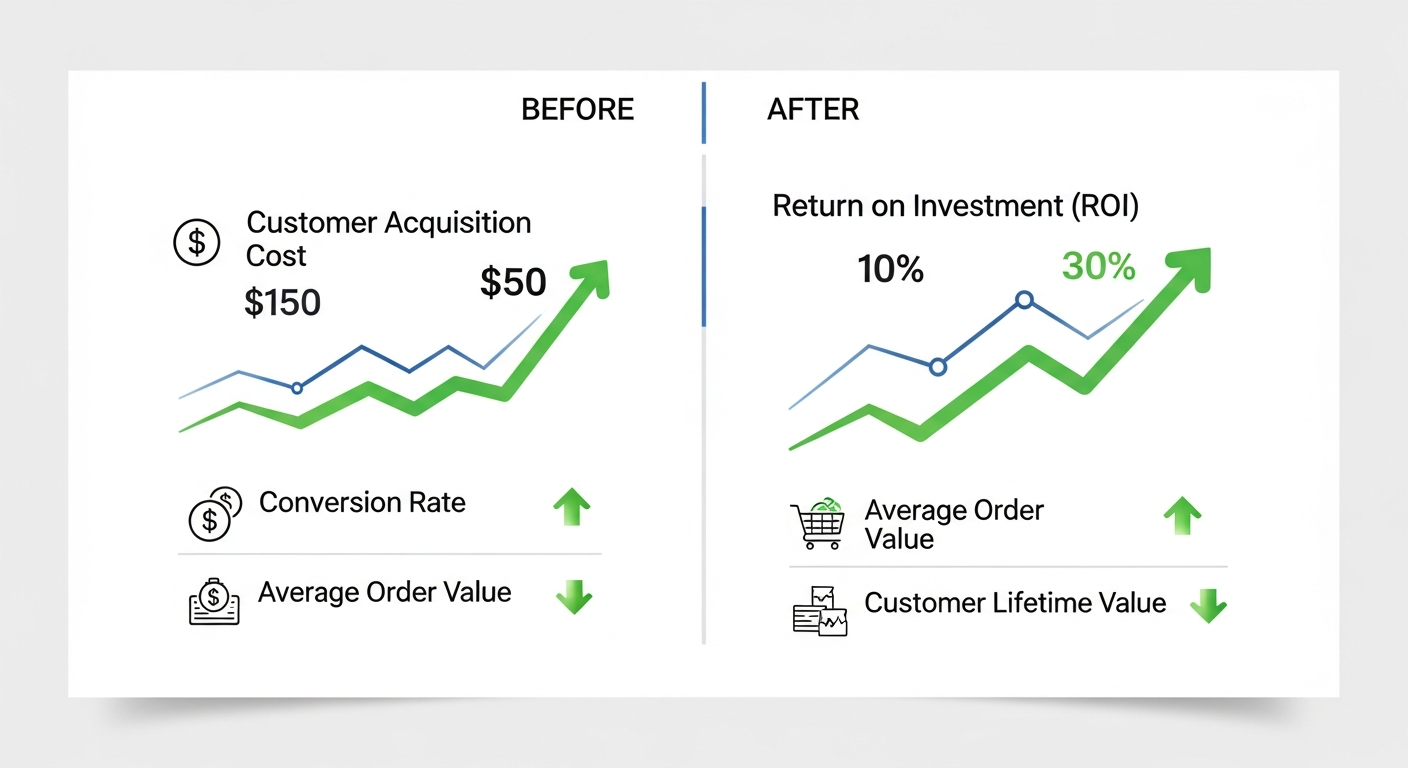
Cost optimization benefits manifest through multiple channels that compound to deliver substantial financial value. Design phase cost reductions of 25% to 40% result from decreased labor requirements, fewer revision cycles, and accelerated project timelines that reduce carrying costs and opportunity costs associated with delayed occupancy. The elimination of traditional design iteration bottlenecks enables development teams to progress more rapidly through critical project milestones, reducing overall project risk and improving cash flow timing.
Faster time-to-occupancy delivers additional cost benefits through earlier revenue generation and reduced construction financing costs. Projects utilizing automated architectural intelligence consistently achieve occupancy 2-4 months earlier than comparable traditionally planned developments. This acceleration translates to significant financial benefits: earlier lease commencement, reduced construction loan interest, and improved project IRR calculations that enhance overall investment returns.
Space utilization improvements of 30% to 45% across all project types represent perhaps the most substantial long-term value creation mechanism. These efficiency gains directly translate to either reduced real estate footprint requirements for equivalent functionality or enhanced revenue generation potential through improved space allocation. For corporate users, improved space efficiency reduces ongoing occupancy costs while potentially enhancing employee productivity through better workspace design. For commercial developers, enhanced space utilization increases net rentable area and revenue generation potential within the same building envelope.
The corporate headquarters achieved 40% space efficiency improvement through optimized circulation patterns, strategic placement of collaborative zones, and intelligent allocation of support spaces. The mixed-use development realized 35% improvement in retail customer circulation while optimizing office space layouts. The coworking facility gained 30% utilization improvement through data-driven space allocation that matched actual usage patterns rather than theoretical assumptions.
Quality indicators demonstrate that efficiency gains do not compromise design excellence or stakeholder satisfaction. Reduced revision cycles—ranging from 50% to 60% across projects—reflect both improved initial design quality and enhanced stakeholder engagement throughout the planning process. Traditional design approaches often require multiple major revisions as stakeholder requirements are gathered and integrated sequentially. AI-powered platforms enable simultaneous consideration of multiple stakeholder requirements while maintaining optimization objectives, dramatically improving design quality and reducing the need for fundamental changes during later project phases.
Improved stakeholder satisfaction scores consistently exceed traditional planning approaches across all stakeholder groups. Corporate employees report higher workspace satisfaction in AI-optimized offices. Retail tenants achieve improved sales performance in optimized mixed-use developments. Coworking members express higher satisfaction with space functionality and community atmosphere. These improvements indicate that automated architectural intelligence enhances user experience while delivering operational benefits to property owners and developers.
Scalability benefits enable portfolio-wide optimization and standardization that amplifies individual project value creation. Organizations implementing automated architectural intelligence across multiple projects report compound benefits through standardized design approaches, reduced design costs for subsequent projects, and consistent performance across portfolios. The coworking case study demonstrated how successful design elements could be standardized and replicated across multiple locations while adapting to site-specific requirements and local market conditions.
ROI calculations reveal compelling financial justification for automated architectural intelligence adoption. Typical payback periods range from 6 to 18 months depending on project size and complexity, with ongoing operational savings extending value creation well beyond initial implementation. The combination of reduced design costs, accelerated project timelines, improved space utilization, and enhanced stakeholder satisfaction creates multiple value streams that justify investment even for organizations implementing the technology on single projects.
Industry benchmark data supports these performance claims and provides context for evaluating implementation success. Deloitte’s AI and tech investment ROI insights indicate that organizations achieving successful AI implementations typically see 20-30% efficiency improvements, consistent with the results demonstrated across these case studies. The broader technology investment trends outlined in McKinsey technology trends outlook 2025 confirm that AI-powered optimization tools are delivering measurable value across various industries and applications.
Professional acceptance and adoption rates support the sustainability of these benefits. The AIA article on AI as tool or taskmaster demonstrates growing recognition among architectural professionals that AI technologies enhance rather than replace human expertise, creating collaborative environments that leverage both artificial intelligence and human creativity to deliver superior outcomes.
The cumulative evidence from diverse project types, consistent performance metrics, and industry validation establishes automated architectural intelligence as a proven approach to commercial real estate development optimization. The measurable benefits—improved efficiency, reduced costs, enhanced quality, and scalable implementation—provide compelling justification for adoption while demonstrating clear pathways to value creation across various market segments and project types.
This comprehensive performance analysis establishes the foundation for understanding how organizations can successfully implement automated architectural intelligence to capture these demonstrated benefits within their own development portfolios and market contexts.
Implementation Strategy: Best Practices and Success Factors
Successful implementation of automated architectural intelligence requires strategic planning, thoughtful change management, and systematic approach to adoption that builds capabilities while delivering measurable value. The lessons learned from successful deployments across diverse project types reveal consistent patterns and critical success factors that enable organizations to maximize their investment while minimizing implementation risks.
The implementation phases follow a logical progression that balances ambition with practical constraints. Assessment begins with evaluation of current design processes, technology infrastructure, and organizational readiness for AI-powered tools. This phase identifies specific pain points that automated architectural intelligence can address, establishes baseline performance metrics for measuring improvement, and determines integration requirements with existing design workflows and technology platforms.
Pilot project selection represents a crucial decision point that significantly influences overall implementation success. Optimal pilot projects balance complexity with manageable scope, ensuring that teams can achieve meaningful results while developing competency with new tools and processes. The most successful implementations begin with projects that have clear success criteria, engaged stakeholders, and sufficient timeline flexibility to accommodate learning curves and process refinement.
The corporate headquarters case study exemplified effective pilot project selection: large enough scale to demonstrate significant value, complex enough to test platform capabilities, and strategically important enough to ensure organizational commitment and attention. The mixed-use development provided an ideal testing ground for multi-stakeholder coordination and complex optimization requirements. The coworking facility pilot demonstrated rapid iteration capabilities and member experience optimization in a dynamic market environment.
The design and testing plan can take months.This burns team energies and drives costs. These lengthy decisions cycles, and piece-meal data analysis lead to protracted times and bloated costs.
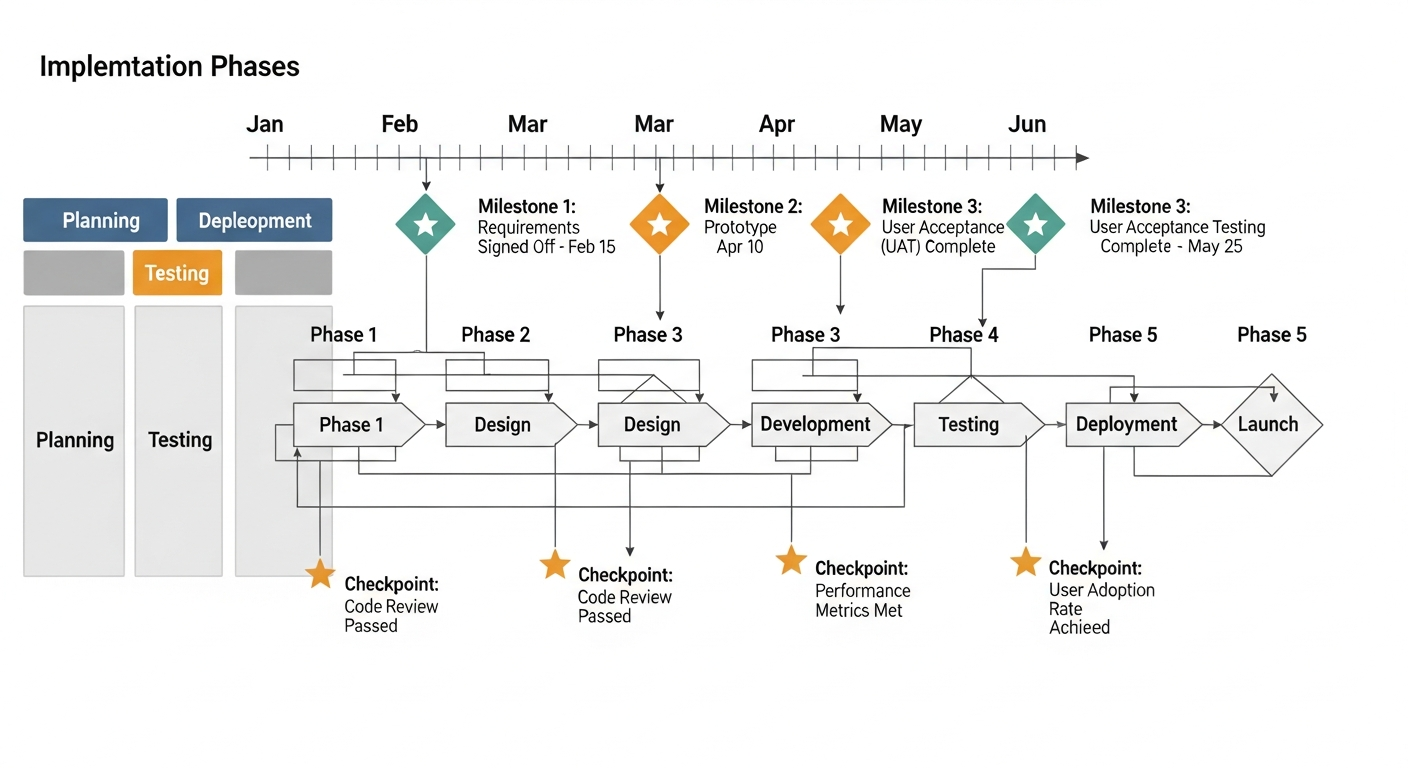
Team training encompasses both technical competency development and change management to ensure smooth adoption of new workflows and capabilities. Successful implementations invest in comprehensive training that covers platform functionality, optimization principles, and integration with existing design tools and processes. Training programs should address different user types—from design professionals who will use the platform extensively to project managers and stakeholders who need to understand capabilities and interpret results.
Full deployment follows proven pilot success and incorporates lessons learned during initial implementation phases. This phase typically involves scaling successful approaches across additional project types, expanding user access to additional team members, and integrating platform capabilities more deeply within standard design workflows. Organizations achieving the most successful deployments maintain momentum from pilot successes while allowing sufficient time for broader organizational adaptation.
Critical success factors consistently emerge across successful implementations, providing actionable guidance for organizations beginning their automated architectural intelligence adoption journey. Stakeholder buy-in requires clear communication of benefits, realistic expectations about learning curves and process changes, and demonstrated value through pilot project success. Executive support proves crucial for overcoming inevitable implementation challenges and ensuring sufficient resources for effective adoption.
Change management considerations address the natural resistance that emerges when established workflows are modified or replaced. Successful implementations emphasize collaboration enhancement rather than job replacement, positioning automated architectural intelligence as a tool that amplifies human expertise rather than substituting for professional judgment. Design professionals consistently respond positively when they understand how AI capabilities enable them to explore more creative alternatives, spend more time on high-value design decisions, and deliver superior results to their clients.
With AI based solutions, decisions can be easier aligned and decisions faster.
Technology integration requirements vary significantly depending on existing design tool ecosystems and organizational technology standards. The most successful implementations leverage platform integration capabilities, as detailed in AI and Office Space Construction: From Blueprint to Build, to ensure seamless workflow integration and maintain design quality standards throughout the process. Compatibility with existing CAD, BIM, and project management tools enables gradual adoption while preserving established quality control processes.
Common implementation challenges typically include data quality issues, team adoption resistance, and technology integration complexity. Data quality problems emerge when existing project information lacks the consistency and completeness required for optimal AI performance. Organizations address these challenges through systematic data cleanup processes and establishment of new data standards that support both current projects and future AI optimization capabilities.
Team adoption resistance usually stems from uncertainty about how AI tools will impact established roles and responsibilities. Successful implementations address these concerns through transparent communication, comprehensive training, and gradual introduction of capabilities that demonstrate value without disrupting critical project workflows. Emphasizing collaborative rather than replacement applications helps teams understand how automated intelligence enhances their expertise rather than threatening their professional value.
Technology integration challenges often arise from compatibility issues between new AI platforms and established design tool ecosystems. Organizations minimize these challenges by selecting platforms with robust integration capabilities and working closely with technology vendors to ensure smooth implementation. The comprehensive integration guidance provided in Creating a floor plan online with AI – all you need to know offers practical approaches for overcoming common technical obstacles.
Best practices for successful implementation emphasize starting with high-impact use cases that demonstrate clear value while building organizational confidence and competency. Projects with significant time pressure, complex optimization requirements, or multiple stakeholder groups typically provide the most compelling demonstrations of automated intelligence value. These high-visibility successes create momentum for broader adoption and help overcome skepticism that might otherwise impede implementation progress.
Measuring success metrics throughout implementation provides essential feedback for process refinement and demonstrates value to stakeholders who may be skeptical about AI adoption. Successful organizations establish baseline measurements before implementation and track improvements in planning timeline, design iteration cycles, stakeholder satisfaction, and project outcomes. Regular measurement and communication of results maintains momentum and provides evidence for expanding implementation scope.
Scaling gradually enables organizations to build competency and refine processes while avoiding disruption to critical project workflows. The most successful implementations expand capabilities systematically, adding new project types, team members, and platform features based on demonstrated success and organizational readiness. This gradual approach allows teams to develop expertise while maintaining project quality and meeting client expectations.
Team structure recommendations emphasize collaboration between AI platform specialists and experienced design professionals. Successful implementations typically designate platform champions who develop deep expertise while serving as resources for broader team adoption. These champions bridge the gap between technology capabilities and design applications, helping teams understand how to leverage AI tools effectively while maintaining professional design standards.
Training requirements extend beyond platform functionality to encompass optimization principles, stakeholder communication, and integration workflows. Comprehensive training programs address different learning styles and experience levels, ensuring that all team members can effectively contribute to AI-enhanced design processes. Ongoing training and support prove crucial for maintaining proficiency as platform capabilities evolve and expand.
Technology integration considerations include compatibility with existing design tools, data management requirements, and security protocols that protect client information and intellectual property. Organizations should evaluate integration capabilities carefully during platform selection to ensure smooth workflow adoption and minimal disruption to established processes.
The systematic approach demonstrated through these implementation strategies positions organizations to capture the transformative benefits revealed throughout our comprehensive case study analysis. Success requires commitment, strategic planning, and gradual adoption, but the measurable outcomes justify the investment and effort required for effective implementation.

Going Forward
The evidence presented through comprehensive case study analysis establishes automated architectural intelligence as more than a technological advancement—it represents a fundamental transformation in how commercial real estate projects are conceived, planned, and optimized. Across diverse property types and market segments, the consistent delivery of measurable value demonstrates that this technology has moved beyond experimental applications to become an essential competitive advantage for forward-thinking organizations.
The corporate headquarters transformation achieved 75% faster planning cycles while improving space efficiency by 40%, demonstrating that speed and quality improvements are not mutually exclusive but rather complementary outcomes of intelligent design optimization. The mixed-use development success, with its 35% improvement in space efficiency and accelerated tenant fit-out planning, proves that complex, multi-stakeholder projects benefit significantly from AI-powered coordination and optimization capabilities.
Perhaps most compelling, the coworking facility revolution showcased how automated intelligence adapts to dynamic market requirements, delivering 45% faster design iterations while enhancing member satisfaction and enabling scalable expansion strategies. These diverse applications demonstrate that automated architectural intelligence delivers value across the full spectrum of commercial real estate development challenges.
The measurable impact analysis reveals systematic value creation that extends well beyond individual project success metrics. Time efficiency improvements of 65-75% across all project types translate to significant cost reductions, faster time-to-occupancy, and improved project returns. Space utilization enhancements of 30-45% deliver ongoing operational benefits through reduced real estate costs and enhanced revenue generation potential. Quality improvements, evidenced by reduced revision cycles and improved stakeholder satisfaction, demonstrate that efficiency gains enhance rather than compromise design excellence.
These benefits are not isolated to specific project types or market conditions but represent fundamental advantages that automated architectural intelligence brings to commercial development processes. The technology’s ability to simultaneously optimize for multiple criteria—spatial efficiency, circulation patterns, natural light distribution, regulatory compliance, and stakeholder requirements—delivers compound benefits that manual design approaches cannot achieve within typical project constraints.
Industry validation through McKinsey technology trends outlook 2025 and professional acceptance documented by the AIA article on AI as tool or taskmaster confirm that automated architectural intelligence has achieved mainstream credibility and adoption momentum. The 65% of organizations already using generative AI regularly, according to McKinsey’s State of AI 2025, indicates that AI adoption has become a competitive necessity rather than an experimental luxury.
The implementation strategies derived from successful deployments provide actionable guidance for organizations seeking to capture these demonstrated benefits. The emphasis on pilot project selection, comprehensive training, stakeholder engagement, and gradual scaling reflects lessons learned from real-world implementations that achieved significant value while maintaining project quality and client satisfaction.
As the commercial real estate industry continues evolving with hybrid work patterns, sustainability requirements, and increased efficiency demands, automated architectural intelligence offers a proven pathway to competitive advantage. The technology’s ability to rapidly adapt to changing requirements while maintaining optimization effectiveness positions it as an essential capability for organizations seeking to thrive in dynamic market conditions.
The convergence of measurable benefits, industry validation, and proven implementation approaches establishes automated architectural intelligence as a mature, valuable technology that delivers immediate returns while building capabilities for future success. Organizations implementing these solutions position themselves at the forefront of industry transformation while capturing tangible value through every project and portfolio optimization.
Ready to transform your commercial real estate projects with automated architectural intelligence?
The case studies and measurable results presented demonstrate the significant competitive advantages available through AI-powered space planning and design optimization. From accelerated planning timelines and improved space efficiency to enhanced stakeholder satisfaction and scalable implementation approaches, automated architectural intelligence delivers value that justifies investment while positioning organizations for continued success in evolving market conditions.
Explore how qbiq’s AI-powered platform can deliver similar transformative results for your organization. Whether you’re developing corporate headquarters, mixed-use properties, or flexible workspace facilities, automated architectural intelligence provides the capabilities to exceed traditional performance benchmarks while maintaining the design excellence that defines successful commercial projects.
Explore qbiq’s proven case studies to discover additional real-world examples of automated intelligence success across diverse market segments and project types. Contact our team to discuss your specific project requirements and learn how automated architectural intelligence can accelerate your next development while delivering measurable improvements in efficiency, quality, and stakeholder satisfaction.
The future of commercial real estate development is intelligent, efficient, and optimized—and that future is available today through automated architectural intelligence.






.png)


