.webp)
Commercial real estate professionals know the frustration all too well: a promising client wants to see office layouts for a 15,000 square foot space, but getting architectural plans takes weeks. By the time you have something to show, the deal has moved on, the client has found another option, or market conditions have shifted. In an industry where speed often determines success, traditional space planning methods have become a significant bottleneck.
The landscape is changing rapidly. Artificial intelligence is revolutionizing how commercial real estate professionals approach space planning, transforming weeks-long processes into hours-long solutions. This isn’t just about faster drawings—it’s about fundamentally changing how quickly you can respond to opportunities, serve clients, and close deals.
For commercial real estate brokers, property managers, landlords, and developers, understanding and leveraging space planning automation isn’t just an advantage—it’s becoming essential for staying competitive in today’s fast-moving market. The question isn’t whether AI will transform commercial real estate space planning, but how quickly forward-thinking professionals will embrace these powerful new capabilities to outpace their competition.
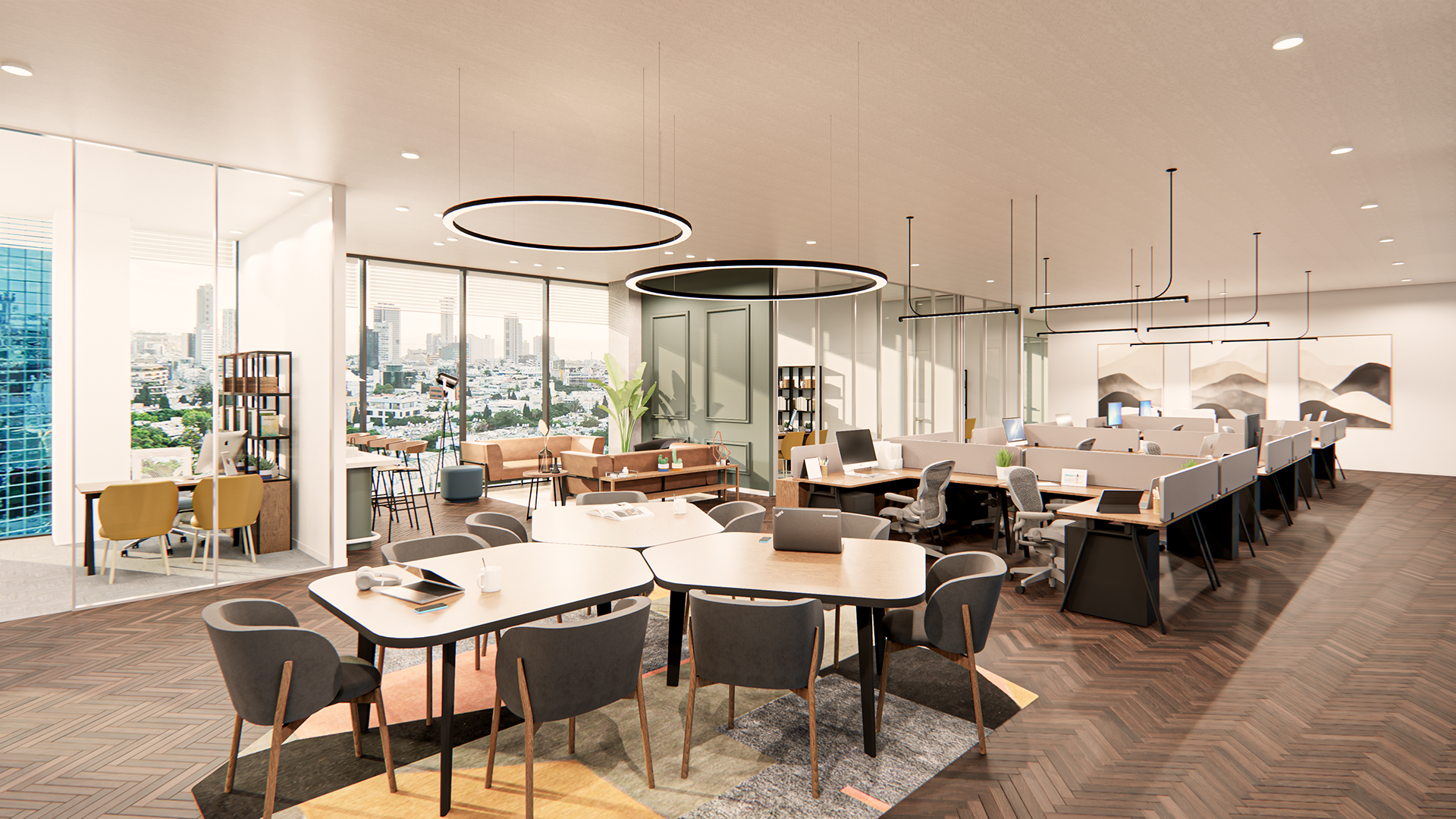
The Traditional Space Planning Bottleneck: Why Speed Matters in Commercial Real Estate
Picture this scenario: It’s Tuesday morning, and you receive a call from a potential tenant interested in a 25,000 square foot office space. They’re expanding rapidly, need to move within 90 days, and want to see multiple layout options by Friday. Under traditional workflows, this seemingly reasonable request becomes a logistical nightmare that often ends in lost opportunities.
Traditional architectural planning creates a perfect storm of delays that commercial real estate professionals face daily. The process typically requires 2-4 weeks for initial layouts and test-fits, a timeline that rarely aligns with the urgency of modern business decisions. When clients are evaluating multiple properties simultaneously, the first broker to deliver comprehensive space plans often secures the deal, while others are still waiting for their architects to complete initial sketches.
The manual nature of traditional space planning creates an inherent dependency on limited architectural resources. Most commercial real estate firms rely on external architects or a small internal design team, creating bottlenecks when multiple projects demand attention simultaneously. This resource constraint doesn’t just slow down individual deals—it fundamentally limits how many opportunities a firm can pursue concurrently.
According to CBRE’s 2025 survey findings, over 60% of executives now prioritize faster space planning solutions, recognizing that speed directly correlates with competitive advantage. The research reveals a striking pattern: firms that can deliver initial space plans within 48 hours close deals 40% more frequently than those operating on traditional timelines.
Market dynamics have intensified the pressure for rapid responses. Today’s commercial tenants often work with shortened decision-making cycles, driven by business agility requirements and competitive pressures in their own industries. When a growing tech company needs to expand quickly to accommodate new hires, or when a retail chain wants to capitalize on a prime location before competitors notice, traditional planning timelines become deal-killers.
The cost implications of slow turnaround extend beyond individual transactions. Industry analysis on real estate decision-making timelines demonstrates that firms with faster response capabilities can pursue 60% more opportunities annually, directly impacting revenue potential and market share. Meanwhile, firms stuck in traditional workflows find themselves increasingly relegated to less competitive, lower-value transactions.

The disconnect between client urgency and traditional delivery timelines creates a persistent source of frustration for commercial real estate professionals. Brokers find themselves in the uncomfortable position of managing client expectations downward, explaining why something that seems straightforward—drawing rectangles on a floor plan—requires weeks to complete. This explanation becomes increasingly difficult when clients know that other industries have embraced automation to accelerate complex processes.
Property managers face similar challenges when existing tenants request space modifications or expansions. The inability to quickly visualize and price different configuration options often leads to delayed decisions, tenant frustration, and missed opportunities to maximize building revenue through optimized space utilization.
The traditional bottleneck also impacts the quality of client relationships. When response times exceed expectations, trust erodes, and clients begin to question whether their chosen real estate professional truly understands the urgency of their business needs. This relationship strain often extends beyond individual transactions, affecting long-term partnerships and referral opportunities.
For developers and landlords, slow space planning creates additional complications in marketing and leasing strategies. Without the ability to quickly generate multiple layout options for potential tenants, marketing materials remain generic, and lease negotiations lack the visual tools needed to demonstrate space potential effectively. This limitation is particularly problematic in competitive markets where property differentiation depends on demonstrating superior space utilization and tenant accommodation capabilities.
These traditional constraints have created an environment where speed isn’t just preferred—it’s essential for survival and growth in the commercial real estate industry.
The AI Automation Revolution: Transforming Architectural Intelligence
The emergence of AI-powered space planning represents more than a technological upgrade; it’s a fundamental reimagining of how architectural intelligence can be applied to commercial real estate challenges. While traditional methods rely heavily on human interpretation and manual processes, artificial intelligence brings the power of algorithmic thinking to space optimization, creating solutions that are both faster and more comprehensive than what was previously possible.
Modern AI platforms can generate multiple layout options in hours instead of weeks, fundamentally altering the timeline expectations that have constrained commercial real estate for decades. These systems don’t simply digitize existing manual processes—they approach space planning from an entirely new paradigm, analyzing thousands of potential configurations simultaneously and applying complex optimization algorithms to identify the most effective solutions.
The sophistication of automated architectural intelligence extends far beyond basic space allocation. Advanced algorithms consider factors such as traffic flow patterns, natural light optimization, HVAC efficiency, acoustic requirements, and accessibility compliance simultaneously. This multi-dimensional analysis would require weeks of manual calculation and iteration using traditional methods, but AI systems process these variables in real-time, producing optimized solutions that account for the complex interplay of spatial requirements.
Machine learning capabilities enable these systems to improve continuously based on user preferences and industry best practices. As more space planning projects are completed through AI platforms, the algorithms learn to recognize patterns that lead to successful outcomes, gradually becoming more sophisticated in their recommendations. This learning process means that the quality and relevance of AI-generated space plans improve over time, often exceeding the consistency achievable through manual processes.
Architectural design efficiency statistics show remarkable improvements, with 60-70% increases in design iteration speeds when AI automation is properly implemented. These gains aren’t achieved by cutting corners or reducing quality—instead, they result from eliminating the repetitive, time-intensive calculations that consume the majority of traditional planning time.
Integration with real-time data sources enables instant design adjustments based on changing requirements or market conditions. When a potential tenant modifies their headcount projections or space requirements, AI systems can regenerate optimized layouts within minutes, maintaining momentum in negotiations rather than restarting lengthy design processes. This adaptability proves particularly valuable in today’s dynamic business environment, where client needs frequently evolve throughout the decision-making process.
The democratization of architectural planning represents perhaps the most significant shift enabled by AI automation. Previously, creating professional-quality space plans required specialized architectural training and experience. AI platforms now enable commercial real estate professionals to generate sophisticated layouts without extensive design backgrounds, expanding the pool of team members who can contribute to space planning initiatives.
qbiq’s approach to AI-driven space planning exemplifies how automated architectural capabilities can be specifically tailored for commercial real estate applications. Rather than generic design tools, specialized platforms understand the unique requirements of different commercial space types, from open office environments to retail configurations to industrial facilities.
The shift from reactive to proactive space planning approaches becomes possible when AI automation removes traditional time constraints. Instead of waiting for specific client requests before beginning design work, real estate professionals can now generate multiple layout scenarios for available spaces preemptively, creating a portfolio of options ready for immediate presentation when opportunities arise.
This proactive capability extends to market analysis and trend adaptation. AI systems can analyze successful space configurations across different industries and geographic markets, identifying emerging patterns that influence tenant preferences. This intelligence enables real estate professionals to anticipate client needs and position properties more effectively in competitive markets.
The computational power behind modern AI platforms enables exploration of design possibilities that would be impractical using manual methods. Where a traditional architect might develop three or four layout concepts for client review, AI systems can generate dozens of optimized variations, each tailored to specific scenarios or preferences. This expanded option set provides clients with more choices while giving real estate professionals greater flexibility in negotiations.
Quality control and consistency represent additional advantages of automated architectural intelligence. Human designers, regardless of skill level, introduce variability based on personal preferences, current workload, and other subjective factors. AI systems apply optimization criteria consistently across all projects, ensuring that every space plan meets established standards for efficiency, functionality, and compliance.
The integration capabilities of modern AI platforms allow for seamless connection with other real estate technology tools, from CRM systems to financial modeling software. This connectivity creates workflows where space planning becomes part of a unified technology ecosystem, rather than an isolated process requiring separate tools and manual data transfer.
As AI automation continues to evolve, the gap between traditional methods and automated solutions will only widen, making early adoption increasingly critical for competitive positioning in the commercial real estate market.
Speed Transformation: From Weeks to Hours in Client Response
The speed transformation enabled by AI automation fundamentally changes the competitive dynamics of commercial real estate transactions. When space planning timelines compress from weeks to hours, the entire client relationship dynamic shifts, creating new opportunities for relationship building, deal acceleration, and market differentiation.
Advanced space planning platforms demonstrate remarkable efficiency improvements, with AI tools generating layouts 5 times faster than traditional methods while maintaining professional quality standards. This speed increase isn’t achieved through shortcuts or reduced analysis. Instead, it results from the computational power to process complex spatial relationships simultaneously rather than sequentially.
The transformation from traditional 2-4 week waiting periods to 24-hour turnaround times represents more than incremental improvement; it’s a fundamental shift that enables entirely new business approaches. Real estate professionals can now respond to client inquiries with comprehensive visual solutions within the same business cycle as the initial request, maintaining momentum and excitement throughout the decision-making process.
Instant design iterations revolutionize client collaboration by enabling real-time feedback and modification cycles. Instead of waiting weeks between design revisions, clients can request changes and see updated layouts within hours, sometimes even during the same meeting. This responsiveness transforms space planning from a linear, time-intensive process into a dynamic, collaborative experience that builds stronger client relationships.
The parallel processing capabilities of AI systems allow for simultaneous generation of multiple layout options, each optimized for different scenarios or preferences. Where traditional methods require sequential development of design alternatives, automated platforms can explore dozens of configurations simultaneously, providing clients with comprehensive option sets for evaluation and comparison.
Efficiency improvements showcase practical applications of speed transformation, demonstrating how AI reduces planning time from weeks to hours while actually improving the comprehensiveness of delivered solutions. Their case studies reveal that faster turnaround times correlate with higher client satisfaction scores and increased deal closure rates.
Administrative overhead reduction represents an often-overlooked benefit of speed transformation. Traditional space planning requires extensive project management coordination, from initial client consultations through multiple revision cycles to final delivery. Automated systems streamline these processes, reducing the administrative burden on real estate teams and allowing professionals to focus on relationship building and deal development rather than project coordination.
qbiq’s 24-hour delivery capability provides a concrete example of how speed transformation translates into competitive advantage. By guaranteeing professional-quality space plans within 24 hours, real estate professionals can differentiate their services and create value propositions that competitors using traditional methods cannot match.
The psychological impact of rapid response times extends beyond practical benefits. When clients receive comprehensive space plans quickly, they perceive higher levels of service quality and professional competence. This perception creates positive momentum that influences negotiations, relationship development, and future business opportunities.
Reduced project management complexity enables real estate teams to pursue more opportunities simultaneously. When individual space planning projects require minimal oversight and administrative coordination, professionals can expand their active pipeline without proportional increases in administrative burden or resource requirements.
The ability to provide immediate visual responses to client questions or concerns during property tours represents a particularly powerful application of speed transformation. Instead of promising to “get back to you” with layout options, real estate professionals can generate and present solutions in real-time, maintaining engagement and demonstrating responsiveness that builds trust and confidence.
Market responsiveness improves dramatically when space planning constraints are removed. Real estate professionals can pursue time-sensitive opportunities that would have been impossible under traditional workflows, expanding their addressable market and increasing revenue potential. This expanded capability is particularly valuable in competitive markets where multiple firms compete for the same opportunities.
The compound effect of speed transformation extends throughout the entire transaction lifecycle. Faster space planning enables quicker lease proposals, accelerated negotiations, and shortened time-to-occupancy for clients. These cumulative time savings often mean the difference between successful transactions and missed opportunities in fast-moving commercial markets.
Client satisfaction metrics consistently show improvement when space planning timelines are compressed. Faster response times reduce client stress, maintain decision-making momentum, and demonstrate the real estate professional’s commitment to meeting client needs efficiently. These satisfaction improvements translate into stronger relationships, increased referrals, and expanded business opportunities.
The speed transformation also enables more sophisticated scenario planning and option development. When generating layout alternatives doesn’t require significant time investment, real estate professionals can explore creative solutions and present clients with more comprehensive choice sets, leading to better outcomes and higher client satisfaction.
For property marketing purposes, the ability to quickly generate space plans for different tenant scenarios enables more dynamic and responsive marketing strategies. Properties can be positioned more effectively when visual demonstrations of space potential are readily available for different industry types or tenant configurations.
Enhanced Accuracy and Quality: Beyond Just Faster Results
The misconception that faster results necessarily compromise quality has been thoroughly debunked by the implementation of AI-powered space planning systems. In fact, automated platforms consistently demonstrate superior accuracy and quality compared to traditional manual methods, while simultaneously delivering results in a fraction of the time required by conventional approaches.
AI algorithms excel at processing complex spatial relationships with mathematical precision that eliminates the human error inherent in manual calculations. When determining optimal space allocations, circulation patterns, and efficiency ratios, automated systems apply consistent mathematical models that account for multiple variables simultaneously, producing more accurate results than human designers working with traditional tools.
Data-driven optimization fundamentally changes the quality equation in space planning. Instead of relying on individual designer experience and intuition, AI systems analyze vast databases of successful space configurations, industry best practices, and performance metrics to inform design decisions. This analytical approach ensures that every layout recommendation is grounded in proven principles and measurable outcomes.
Automated compliance checking represents a significant quality improvement over manual processes. AI systems can simultaneously verify adherence to building codes, ADA accessibility requirements, fire safety regulations, and local zoning restrictions, ensuring that all generated layouts meet regulatory standards without requiring separate review cycles. This automated compliance verification eliminates a common source of delays and revisions in traditional planning processes.
The standardization inherent in automated processes eliminates the variability that characterizes manual design work. Regardless of workload pressures, time constraints, or individual designer preferences, AI systems apply optimization criteria consistently across all projects, ensuring uniform quality standards and eliminating the inconsistency that can result from human factors.
Machine learning capabilities enable continuous quality improvement as systems process more projects and receive feedback on successful outcomes. Unlike human designers whose skills plateau over time, AI algorithms become increasingly sophisticated through exposure to diverse space planning challenges, gradually improving their ability to identify optimal solutions for complex spatial problems.
Industry statistics on AI accuracy improvements reveal measurable quality enhancements, with error rates in space calculations decreasing by up to 85% when automated systems are properly implemented. These accuracy improvements translate directly into reduced revision cycles, fewer construction surprises, and higher client satisfaction with final built environments.
Integration with building codes and accessibility requirements enhances precision by automatically incorporating regulatory constraints into the optimization process. Rather than treating compliance as a separate consideration that might compromise spatial efficiency, AI systems integrate regulatory requirements as optimization parameters, producing layouts that maximize functionality within regulatory frameworks.
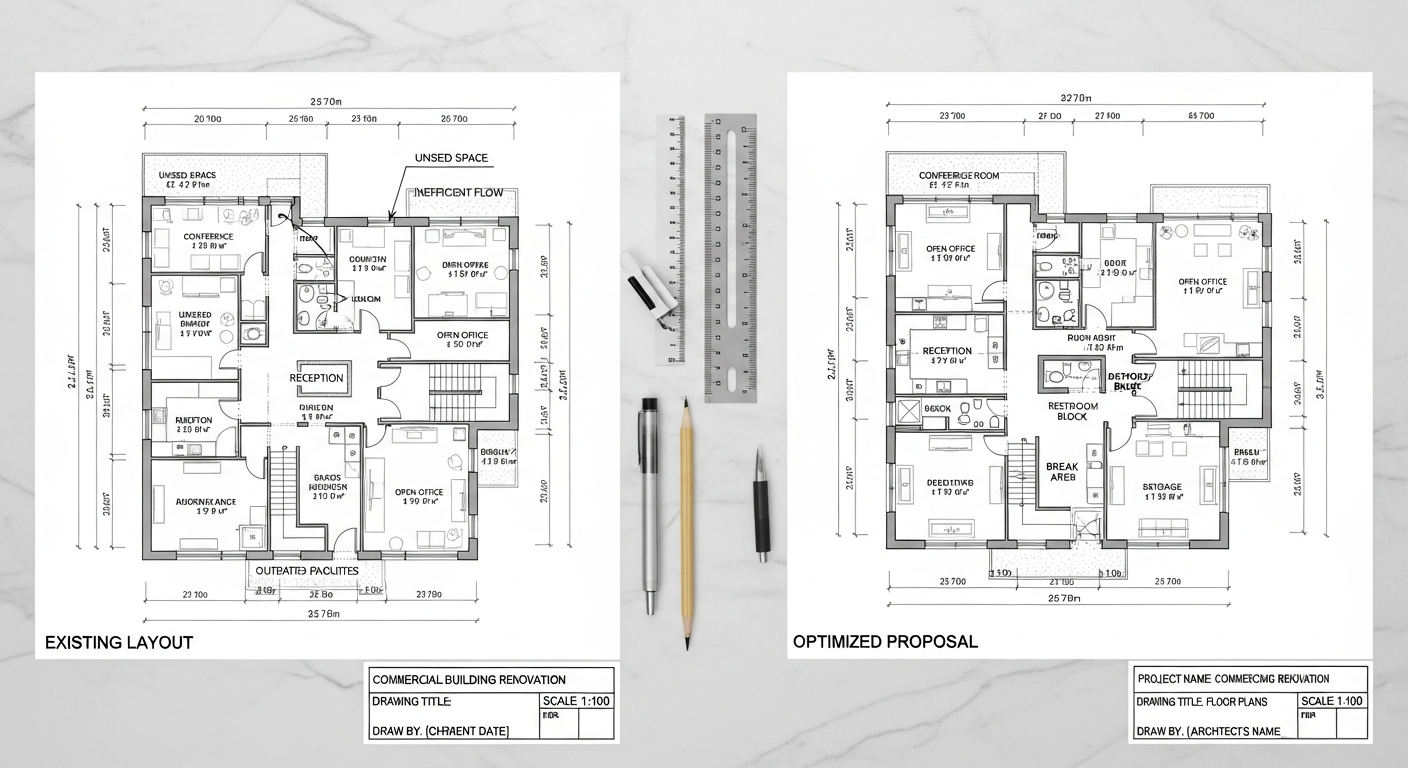
The computational power behind modern AI platforms enables analysis of spatial configurations at levels of detail that would be impractical using manual methods. Systems can evaluate thousands of potential arrangements, considering factors such as natural light distribution, acoustic separation, traffic flow efficiency, and equipment placement simultaneously, identifying solutions that optimize multiple objectives rather than focusing on single variables.
Quality assurance becomes automated when AI systems apply consistent checking protocols to every generated layout. Traditional manual reviews depend on individual attention to detail and can miss subtle issues under time pressure or high workload conditions. Automated quality control systems apply comprehensive checking algorithms to every project, identifying potential issues before layouts are presented to clients.
The ability to rapidly generate and evaluate multiple high-quality alternatives provides clients with better options than traditional single-concept approaches. When space planning constraints are removed, real estate professionals can present clients with diverse solutions that explore different priorities and trade-offs, leading to more informed decision-making and ultimately better outcomes.
Architectural productivity improvements demonstrate how AI automation enhances both speed and quality simultaneously, disproving the conventional assumption that these objectives conflict. The research shows that automated systems produce more comprehensive analyses while reducing the time required for completion.
Error detection capabilities in AI systems identify potential issues that might escape notice during manual review processes. By analyzing spatial relationships mathematically, automated platforms can detect circulation bottlenecks, inefficient adjacencies, or suboptimal equipment placement that might not be immediately apparent to human reviewers working under time pressure.
The precision of automated space calculations eliminates the approximations and assumptions that characterize manual planning processes. When determining square footage allocations, circulation ratios, and efficiency metrics, AI systems work with exact calculations rather than estimates, providing clients with more accurate information for decision-making and budget planning.
Documentation quality improves significantly when AI systems generate comprehensive space plans that include detailed specifications, compliance notes, and optimization rationale. This thorough documentation provides clients and construction teams with clear guidance while reducing the potential for misunderstandings or implementation errors.
Version control and change tracking become seamlessly integrated when automated systems manage space planning projects. Unlike manual processes where tracking revisions and maintaining current versions can become problematic, AI platforms automatically maintain complete project histories and enable easy comparison between different design iterations.
The quality benefits of AI automation extend beyond individual projects to portfolio-level consistency. When multiple properties or spaces are planned using the same optimization criteria and quality standards, property owners and tenants benefit from consistent space quality that supports operational efficiency and brand consistency across locations.
Real-World Applications: Office, Retail, and Commercial Success Stories
The practical impact of AI-powered space planning becomes most apparent when examining specific applications across different commercial real estate sectors. Each property type presents unique challenges and optimization opportunities, and automated systems have demonstrated measurable improvements in efficiency, profitability, and tenant satisfaction across diverse commercial environments.
Office space optimization has emerged as one of the most compelling applications of AI automation, particularly as organizations navigate the complexities of hybrid work environments and flexible space requirements. Modern office tenants demand layouts that can adapt to changing headcounts, accommodate diverse work styles, and optimize both individual productivity and collaborative activities. AI systems excel at balancing these competing requirements, generating layouts that maximize space efficiency while supporting operational flexibility.
A prominent technology company’s headquarters renovation exemplifies the power of automated office planning. Using AI optimization, the space plan increased usable workspace by 23% while improving natural light distribution and reducing noise conflicts between departments. The automated system identified circulation inefficiencies that had gone unnoticed in previous manual designs, resulting in space savings that eliminated the need for additional floor leases and saved over $2 million annually in real estate costs.
Hybrid work accommodation represents a particularly complex challenge that AI systems address effectively. Automated platforms can model different occupancy scenarios, from full capacity to reduced density requirements, and generate layouts that remain functional across varying utilization levels. This flexibility has proven essential for organizations adapting to post-pandemic work patterns and changing employee expectations.
Specific office optimization examples demonstrate how AI systems approach the multi-variable optimization required for modern office environments. The platform’s ability to simultaneously consider desk placement, meeting room allocation, collaborative spaces, and support functions while maintaining efficiency standards showcases the sophisticated analysis that automated systems bring to complex planning challenges.
Retail space efficiency improvements through AI automation focus on maximizing revenue per square foot while optimizing customer flow and product placement strategies. Traditional retail planning often relies on general industry guidelines and designer intuition, but AI systems can analyze specific tenant requirements, customer traffic patterns, and merchandise categories to generate layouts optimized for sales performance.
A national retail chain’s store prototype redesign using AI automation resulted in 18% improvement in sales per square foot across their pilot locations. The automated system identified optimal product placement strategies, improved sight lines for security and customer service, and created more efficient inventory management workflows. These improvements were achieved while reducing design time from six weeks to three days, enabling faster rollout of the optimized format across multiple locations.
Multi-tenant building configurations represent another area where AI automation delivers significant value by optimizing rental income and tenant satisfaction simultaneously. Automated systems can analyze different tenant mix scenarios, evaluate the impact of various space divisions, and identify configurations that maximize both occupancy rates and rental revenue while meeting individual tenant requirements.
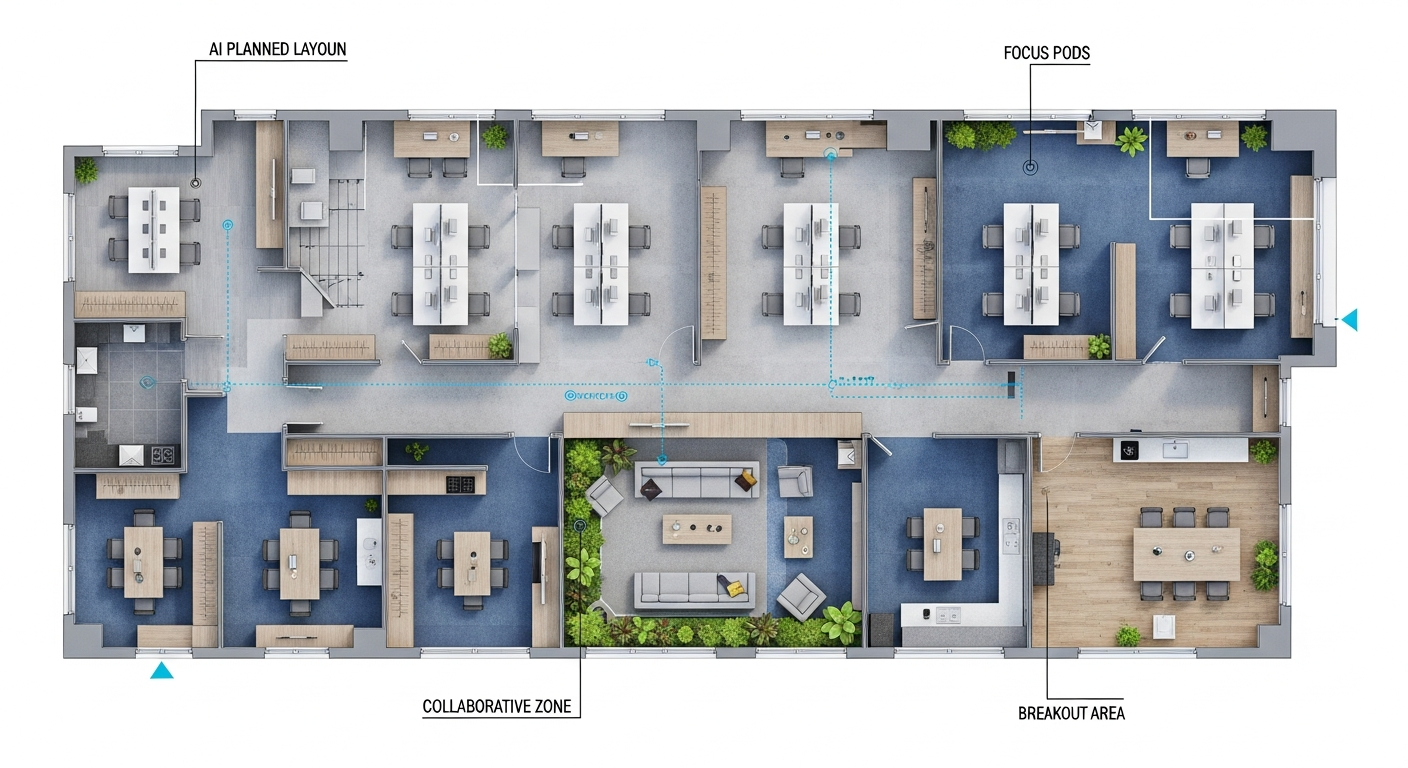
Co-working space optimization presents unique challenges that AI systems address through dynamic space planning capabilities. These environments require layouts that can adapt to changing membership patterns, accommodate different work styles, and maintain productivity while fostering community interaction. Automated platforms excel at balancing these requirements, generating flexible configurations that optimize both individual workspace and community areas.
A leading co-working operator implemented AI-driven space planning across 15 locations, resulting in 30% improvement in space utilization efficiency and 25% increase in member satisfaction scores. The automated system identified optimal ratios of private offices, dedicated desks, and flexible workspace while ensuring adequate meeting room availability and community area access for different membership levels.
Industrial and warehouse optimization through AI automation focuses on logistics efficiency, workflow optimization, and safety compliance. These environments require sophisticated analysis of material flow, equipment placement, and operational processes that automated systems can model more comprehensively than traditional manual methods.
A major e-commerce fulfillment center redesign using AI optimization improved picking efficiency by 35% while reducing travel time for warehouse workers and optimizing inventory placement strategies. The automated system analyzed order patterns, product velocity, and ergonomic requirements to generate layouts that minimized worker fatigue while maximizing throughput capacity.
Space utilization statistics from CBRE demonstrate measurable ROI improvements across different property types when AI automation is properly implemented. The data shows consistent patterns of improved efficiency, reduced operating costs, and enhanced tenant satisfaction regardless of specific commercial sector applications.
Healthcare facility optimization represents an emerging application area where AI systems address the complex requirements of medical practice spaces, patient flow, and regulatory compliance. Automated platforms can model patient circulation patterns, optimize clinical workflow efficiency, and ensure compliance with healthcare-specific building codes while maximizing space utilization for diverse medical functions.
Educational facility planning benefits from AI automation through optimized classroom layouts, improved circulation patterns, and flexible space configurations that accommodate changing educational methodologies. Automated systems can model different class sizes, teaching styles, and technology requirements to generate learning environments that support diverse educational objectives.
The success stories across these diverse commercial applications demonstrate that AI automation isn’t simply a faster way to accomplish traditional space planning—it’s a fundamentally superior approach that identifies optimization opportunities and generates solutions that exceed what’s possible through manual methods alone. As more organizations experience these benefits, automated space planning is rapidly becoming the standard rather than the exception in professional commercial real estate practice.
Implementation Roadmap: Adopting AI-Powered Space Planning
Successfully integrating AI-powered space planning into commercial real estate practice requires a systematic approach that addresses technology selection, team preparation, process integration, and performance measurement. Organizations that approach implementation strategically position themselves to maximize the benefits of automation while minimizing disruption to existing operations and client relationships.
The first step in successful implementation involves conducting a comprehensive assessment of current space planning processes and identifying specific bottlenecks that AI automation can address. This analysis should examine typical project timelines, resource allocation patterns, client satisfaction feedback, and competitive positioning relative to firms with faster response capabilities. Understanding these baseline metrics provides the foundation for measuring improvement and justifying investment in automated solutions.
Technology platform evaluation requires careful consideration of features that align with specific commercial real estate needs rather than generic design capabilities. The most effective AI space planning platforms for commercial real estate integrate seamlessly with existing CRM systems, provide industry-specific optimization algorithms, and offer flexibility for different property types and client requirements. Evaluation criteria should include speed of layout generation, quality of output, ease of use for non-design professionals, integration capabilities, and ongoing support resources.
AI implementation strategies for commercial real estate teams emphasize the importance of phased adoption that allows organizations to build confidence and expertise gradually while maintaining service quality during the transition period. Starting with less complex projects or specific property types enables teams to develop proficiency with automated tools before applying them to high-stakes client engagements.
Team training requirements extend beyond technical platform instruction to include strategic thinking about how AI automation changes client interaction patterns and service delivery approaches. Team members need to understand not just how to use automated tools, but how to position these capabilities as value-added services that differentiate the firm from competitors using traditional methods.
Process integration strategies focus on incorporating AI-powered space planning into existing client engagement workflows without disrupting established relationship patterns. Successful implementation often involves presenting automated capabilities as enhanced service offerings rather than replacement technologies, maintaining client confidence while demonstrating superior results and responsiveness.
Client communication protocols require careful development to explain the benefits of AI automation without raising concerns about reduced personal attention or service quality. Effective communication strategies emphasize improved accuracy, faster response times, and enhanced analytical capabilities while reinforcing the professional expertise that guides the application of automated tools.

Quality control procedures become essential during the implementation phase to ensure that automated outputs meet established standards before client presentation. Organizations should develop review protocols that combine automated quality checking with professional oversight, gradually building confidence in system outputs while maintaining professional standards.
Performance measurement frameworks enable organizations to track the impact of AI automation on key business metrics including project turnaround times, client satisfaction scores, deal closure rates, and revenue per professional. Transformation examples show successful adoption patterns that correlate automated capabilities with measurable business improvements.
Change management considerations address the natural resistance that can occur when introducing new technologies that change established work patterns. Successful implementation strategies involve team members in the platform selection process, provide adequate training and support, and create incentive structures that encourage adoption and expertise development.
Budget planning for AI automation should consider both direct technology costs and indirect benefits from increased efficiency, expanded opportunity pursuit, and enhanced competitive positioning. Many organizations find that the revenue impact from faster response times and increased deal closure rates justifies automation investment within the first year of implementation.
Integration timeline development typically follows a 90-day adoption schedule that includes platform setup, team training, pilot project execution, process refinement, and full deployment. This timeline allows for adequate preparation while moving quickly enough to realize competitive benefits and avoid extended transition periods that can disrupt client service.
Risk mitigation strategies address potential challenges including technology reliability, output quality consistency, and client acceptance of automated solutions. Successful organizations develop backup procedures, maintain alternative service delivery methods during the transition period, and create communication strategies that position automation as enhancement rather than replacement of professional services.
Competitive positioning requires careful consideration of how AI automation capabilities are marketed and communicated to prospects and existing clients. Organizations that successfully implement automated space planning often find that these capabilities become significant differentiators that enable premium pricing and expanded market share.
Ongoing optimization involves regularly reviewing system performance, updating optimization parameters based on project outcomes, and staying current with platform enhancements and new features. AI systems improve over time, and organizations that actively engage with platform development achieve better long-term results than those that implement static solutions.
The implementation roadmap culminates in establishing AI-powered space planning as a core competency that enables new business approaches, expanded service offerings, and enhanced competitive positioning in the commercial real estate market.
The Future of Commercial Real Estate Space Planning
The transformation of space planning through AI automation represents more than just a technological upgrade—it’s a fundamental shift in how commercial real estate professionals can serve clients and compete in the market. When planning processes that once took weeks can be completed in hours, when multiple layout options can be generated simultaneously, and when accuracy improves alongside speed, the entire dynamic of client relationships changes.
The evidence supporting this transformation is compelling and measurable. Professionals using AI-powered space planning report 5x faster turnaround times, enabling them to respond to opportunities that would have been lost under traditional workflows. The 70% reductions in analysis time documented across implementations translate directly into cost savings and increased capacity for pursuing additional business opportunities.
More importantly, the quality improvements achieved through automated optimization challenge the conventional assumption that speed and accuracy exist in tension. AI systems consistently demonstrate superior precision in space calculations, more comprehensive compliance checking, and more thorough analysis of spatial relationships than manual methods, while delivering results exponentially faster than traditional approaches.
The statistics reveal the competitive advantage that early adopters gain. Firms implementing AI automation report measurable improvements in client satisfaction scores, deal closure rates, and revenue per professional. These improvements aren’t marginal—they represent fundamental shifts in operational capability that create sustainable competitive advantages in increasingly competitive markets.
Beyond the quantitative benefits, there’s a qualitative transformation in the client experience. Real estate professionals can now collaborate with clients in real-time, providing immediate responses to questions and generating alternatives instantly during property tours and planning meetings. This responsiveness builds trust, demonstrates competence, and creates positive momentum that influences negotiations and relationship development.
The strategic implications extend throughout the commercial real estate value chain. Property owners gain the ability to market spaces more effectively with instant visualization of potential configurations. Tenants benefit from faster decision-making processes and more comprehensive option evaluation. Developers can optimize building designs based on detailed analysis of space utilization patterns and tenant preferences.
For commercial real estate professionals, the choice isn’t whether to adopt automated space planning—it’s how quickly you can integrate these capabilities into your practice. Market dynamics are shifting toward instant gratification and immediate solutions. Clients increasingly expect rapid responses and comprehensive analysis. Competitors who can deliver these capabilities gain significant advantages over those constrained by traditional workflows.
The future belongs to professionals who can combine their market expertise and relationship skills with automated intelligence. AI doesn’t replace real estate professionals—it amplifies their capabilities, enabling them to serve more clients effectively, pursue more opportunities simultaneously, and deliver superior results consistently.
Early adoption provides first-mover advantages that become increasingly difficult for competitors to overcome. As automated space planning becomes standard practice rather than competitive differentiator, firms that delay implementation find themselves at growing disadvantages in speed, capacity, and service quality.
The transformation is accelerating, driven by improving technology capabilities, increasing client expectations, and demonstrable business benefits achieved by early adopters. Organizations that embrace AI-powered space planning position themselves at the forefront of industry evolution, while those that resist automation risk being left behind by more responsive, technologically capable competitors.
The investment in automated space planning capabilities pays dividends beyond immediate efficiency improvements. It signals to clients, partners, and competitors that your organization embraces innovation and continuously seeks better ways to serve client needs. This positioning creates business development opportunities, attracts top talent, and builds reputation for forward-thinking leadership.
Ready to transform your space planning process and accelerate your client response times? Discover how qbiq’s AI-powered platform can deliver professional architectural layouts in 24 hours instead of weeks. Experience the future of commercial real estate space planning with a platform designed specifically for real estate professionals who demand speed, accuracy, and results.
Explore qbiq’s automated space planning solutions and see how AI can revolutionize your commercial real estate practice, enabling you to respond faster, serve more clients, and close more deals in today’s competitive market.






.png)


