
Commercial space planning has evolved from an intuitive art to a data-driven science, yet many organizations continue to struggle with suboptimal layouts that drain resources and frustrate occupants. Today’s facility managers, property developers, and office planners face unprecedented pressure to optimize every square foot while balancing tenant satisfaction, operational efficiency, and bottom-line results. The stakes have never been higher - with commercial real estate costs representing up to 20% of most organizations’ operating budgets, even small improvements in space utilization can deliver substantial financial returns.
The traditional approach to space planning - relying on rules of thumb, outdated standards, and subjective preferences - no longer meets the demands of modern commercial environments. Organizations that continue using these antiquated methods find themselves trapped in cycles of costly renovations, persistent tenant complaints, and missed opportunities for operational optimization. Meanwhile, forward-thinking companies are discovering that evidence-based space planning transforms commercial spaces from cost centers into strategic assets that drive measurable business outcomes.
This comprehensive guide explores proven, evidence-based strategies that revolutionize how we approach commercial space optimization. Drawing from BOMA measurement standards, GSA space planning guidelines, and cutting-edge research from leading academic institutions, we’ll demonstrate how data-driven methodologies consistently deliver superior results - from improved utilization rates to enhanced ROI that justifies every investment dollar.
Whether you’re planning a corporate headquarters expansion, optimizing an office building portfolio for maximum returns, or designing tenant improvements that command premium rents, these evidence-based methodologies will transform your decision-making process. You’ll discover how to move beyond guesswork and assumptions to create spaces that measurably improve occupant satisfaction, reduce operational costs, and adapt seamlessly to changing business needs.
The commercial real estate landscape is shifting rapidly, driven by hybrid work models, sustainability requirements, and evolving tenant expectations. Organizations that master evidence-based space planning position themselves not just to survive these changes, but to capitalize on them through spaces that deliver consistent, measurable value over time.

Foundational Framework: Industry Standards That Define Excellence
Professional space planning begins with a solid foundation built on internationally recognized standards that have been tested, refined, and validated across thousands of commercial properties worldwide. These frameworks provide the essential measurement protocols, design principles, and performance benchmarks that separate amateur space planning from professional-grade optimization. Understanding and applying these standards ensures that every planning decision is grounded in proven methodologies rather than subjective preferences or outdated practices.
The Building Owners and Managers Association (BOMA) measurement standards serve as the international benchmark for commercial space calculation and classification, providing the precise measurement methodologies that enable accurate comparison and optimization across properties. BOMA standards define exactly how to measure rentable area, usable area, and common area factors - distinctions that directly impact financial performance and tenant satisfaction. These standards ensure consistency in space measurement, enabling facility managers to benchmark their properties against industry averages and identify optimization opportunities with mathematical precision.
When organizations adopt BOMA standards, they gain access to reliable data that supports evidence-based decision making. For example, BOMA’s load factor calculations reveal the true efficiency of building designs, highlighting spaces where common area allocation may be excessive or where tenant areas could be optimized. Properties that consistently apply BOMA measurement protocols report more accurate budgeting, improved tenant relations through transparent space calculations, and enhanced marketability through standardized reporting that investors and tenants can easily understand and compare.
The General Services Administration (GSA) space planning guidelines bring government-tested approaches to facility optimization, offering systematically developed methodologies that have been validated across diverse commercial environments. GSA guidelines emphasize performance-based planning that prioritizes measurable outcomes over aesthetic preferences. These standards provide detailed frameworks for space allocation, circulation planning, and functional zoning that consistently deliver efficient, compliant, and adaptable commercial environments.
GSA’s approach to space planning centers on evidence-based allocation formulas that account for actual usage patterns rather than theoretical requirements. Their workplace standards, developed through extensive research and real-world testing, provide specific guidance on space per person, meeting room ratios, and support area allocation that optimizes both efficiency and occupant satisfaction. Organizations applying GSA principles typically achieve 15-20% better space utilization compared to traditional planning approaches, while maintaining or improving occupant comfort and productivity.
ISO 6241 performance-based building design principles complement these measurement and allocation standards by focusing on measurable outcomes rather than prescriptive methods. This international standard emphasizes that successful space planning must deliver quantifiable improvements in areas such as occupant comfort, operational efficiency, and environmental performance. Performance-based design requires establishing clear metrics for success and continuously measuring actual outcomes against these targets.
The integration of these standards creates a comprehensive framework that addresses measurement accuracy, allocation efficiency, and performance optimization simultaneously. When BOMA measurement protocols are combined with GSA allocation guidelines and ISO performance principles, the result is a systematic approach to space planning that delivers consistent, measurable improvements across diverse commercial properties.
Accessibility standards, particularly ADA compliance requirements, must be seamlessly integrated within these evidence-based planning frameworks to ensure that optimized spaces serve all users effectively. Modern evidence-based planning recognizes that accessibility features, when properly integrated, often improve usability for all occupants while meeting regulatory requirements. Strategic accessibility planning can actually enhance space efficiency by creating circulation patterns and spatial relationships that benefit the entire user population.
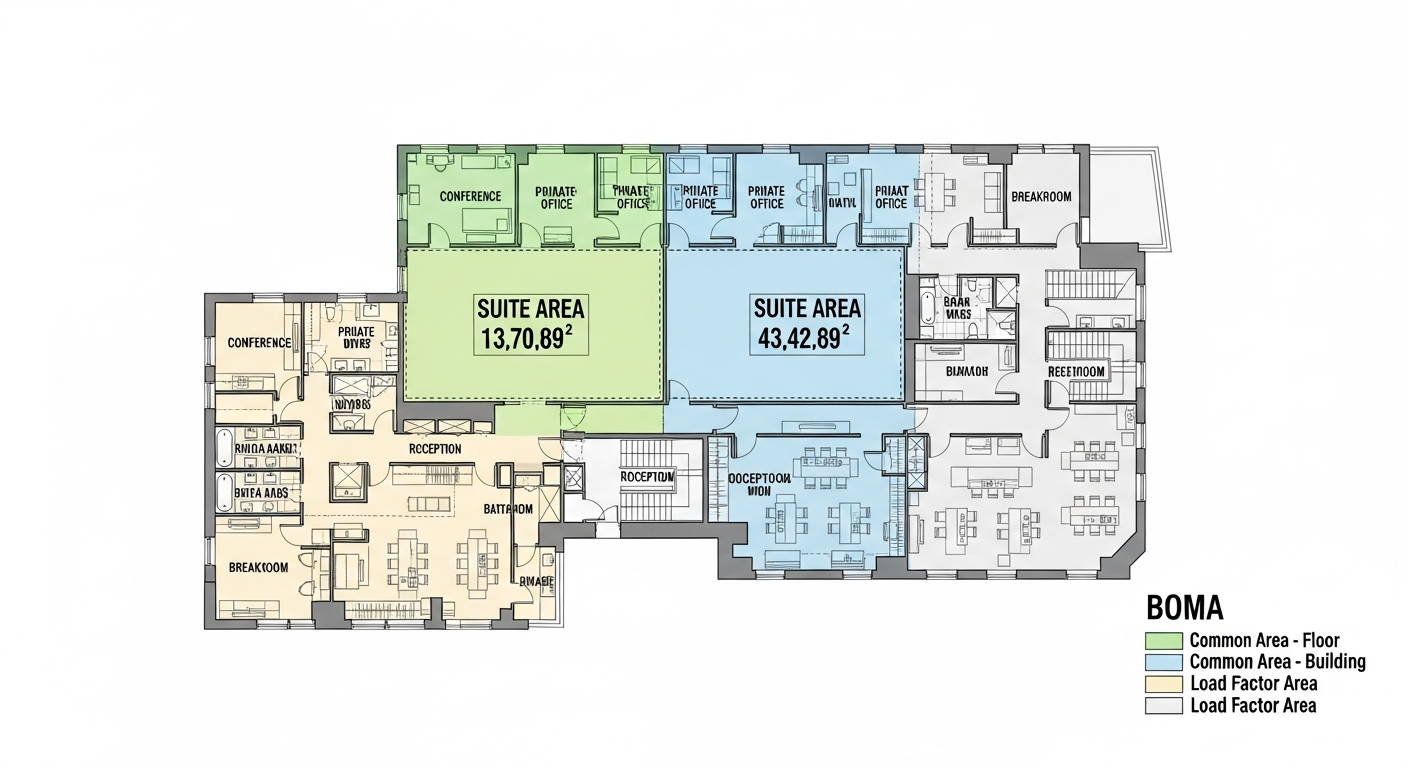
The power of standardized frameworks becomes evident when organizations compare their performance before and after implementation. Properties that adopt comprehensive standard-based approaches typically report improved tenant satisfaction scores, reduced operational costs, and enhanced marketability. More importantly, these standards provide the measurement foundation necessary for continuous improvement and data-driven optimization over time.
These foundational standards establish the measurement framework and design principles that enable evidence-based space planning, but success depends on implementing robust tracking and analysis systems that turn these standards into actionable performance data.
Measuring What Matters: Key Performance Metrics for Space Planning
Evidence-based space planning depends on comprehensive measurement systems that capture both quantitative performance data and qualitative user experience indicators. Without robust metrics, even the best-designed spaces become management guesses rather than strategic assets. Today’s most successful commercial properties implement sophisticated measurement protocols that track everything from basic utilization rates to complex occupant behavior patterns, creating the data foundation necessary for continuous optimization and informed decision-making.
Critical space utilization metrics begin with the fundamental distinction between capacity, occupancy, and actual utilization - three related but distinct measurements that reveal different aspects of space performance. Capacity represents the theoretical maximum number of people or functions a space can accommodate under optimal conditions. Occupancy measures the number of people or functions actually assigned to a space, while utilization tracks real-time usage patterns that reveal how assigned spaces are actually being used throughout typical operational periods.
Understanding these metrics enables facility managers to identify significant optimization opportunities that often remain hidden in traditional planning approaches. For example, a conference room with 100% occupancy (fully booked) might show only 60% utilization (actual usage), revealing an opportunity to optimize booking systems or reconfigure the space for different functions. Organizations that track these distinct metrics typically discover 20-30% improvement opportunities in existing space allocations.
Space density calculations provide another critical metric that balances efficiency with occupant comfort and productivity. Density metrics must account for both physical density (square feet per person) and functional density (the relationship between different activities and support functions). Modern evidence-based planning recognizes that optimal density varies significantly based on work patterns, technology requirements, and organizational culture, making standardized density targets less effective than customized approaches based on actual usage data.
Establishing baseline measurements requires systematic data collection across representative time periods that capture normal usage variations. Effective baseline development typically requires 30-60 days of continuous monitoring to account for seasonal variations, organizational cycles, and atypical usage patterns. These baselines become the foundation for setting realistic performance targets based on industry benchmarks and organizational objectives.
Peak occupancy analysis and demand forecasting enable right-sizing of space allocation to match actual rather than theoretical requirements. Advanced occupancy measurement methodologies reveal usage patterns that inform strategic decisions about space allocation, scheduling systems, and support service positioning. Organizations implementing comprehensive peak analysis typically reduce space requirements by 10-15% while improving occupant satisfaction through better resource availability during high-demand periods.
Cost-per-square-foot analysis and space efficiency ratios demonstrate the financial performance of space planning decisions, translating operational improvements into business language that enables informed investment decisions. These financial metrics must account for total cost of ownership, including utilities, maintenance, technology infrastructure, and occupant support services. Effective cost analysis reveals the true financial impact of space planning decisions, often showing that apparently expensive improvements deliver substantial long-term returns through reduced operational costs and improved productivity.
“What gets measured gets managed. In commercial real estate, the organizations that implement comprehensive measurement systems consistently outperform those that rely on assumptions and traditional approaches.” - International Facility Management Association Research
Quality metrics extend beyond simple cost and utilization measures to include tenant satisfaction scores and productivity indicators that capture the qualitative impact of space planning decisions. Professional facility management guidelines emphasize that successful space optimization must balance efficiency with occupant experience, recognizing that spaces optimized purely for cost or utilization may fail to deliver the productivity and satisfaction benefits that justify the investment.
Environmental performance metrics, including energy usage per square foot, indoor air quality measures, and resource consumption rates, provide essential data for optimizing operational costs and meeting sustainability objectives. These environmental metrics often reveal unexpected correlations between space design and operational efficiency, enabling optimization strategies that deliver both cost savings and environmental benefits simultaneously.
Technology utilization metrics track how effectively spaces support the technology infrastructure and digital tools that enable modern work patterns. These metrics include network usage patterns, equipment utilization rates, and digital collaboration tool effectiveness, providing insights that inform both space design and technology investment decisions.
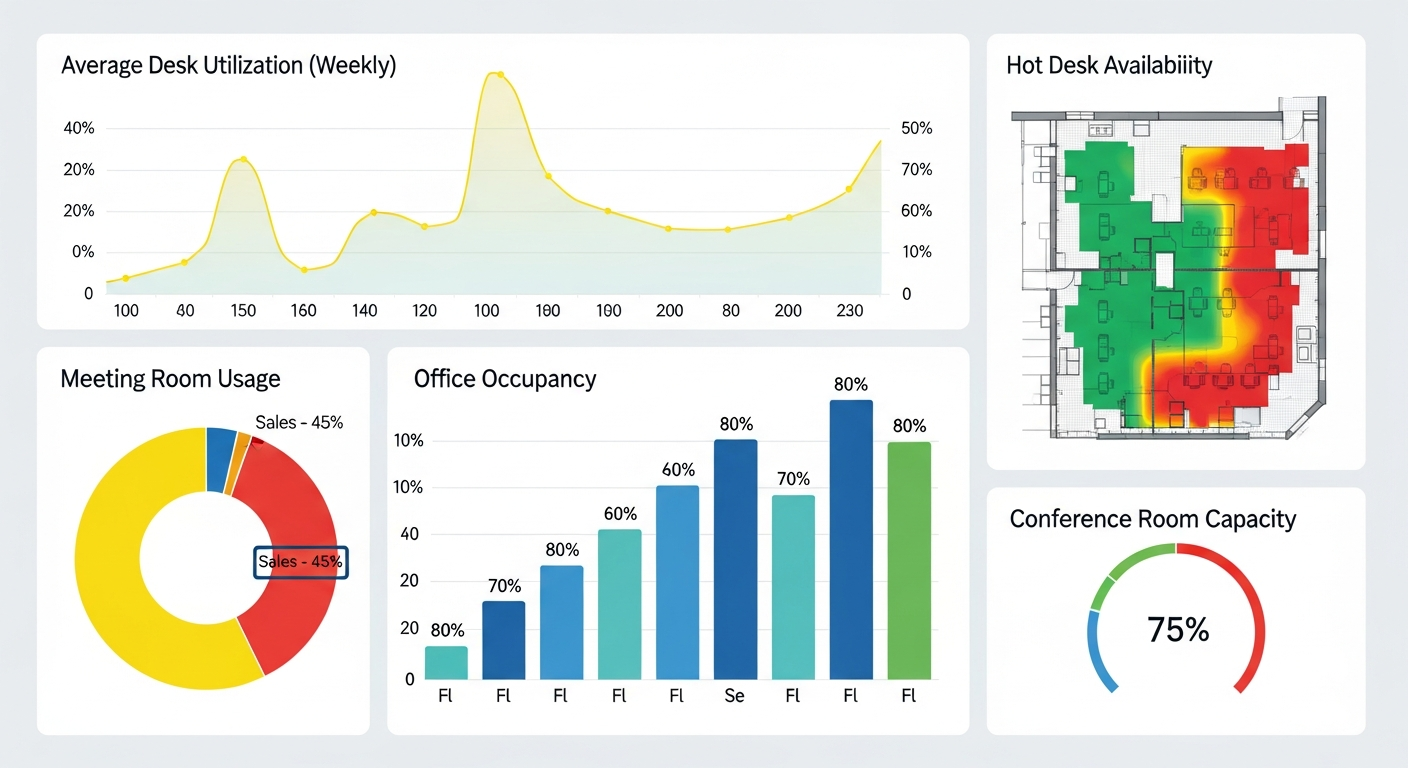
The integration of multiple measurement systems creates comprehensive performance profiles that support sophisticated optimization strategies. Organizations that implement integrated measurement approaches report improved decision-making accuracy, reduced implementation risks, and enhanced ability to demonstrate ROI from space planning investments.
Continuous measurement protocols ensure that performance data remains current and actionable as organizational needs and usage patterns evolve. The most successful space optimization programs implement automated measurement systems that provide real-time performance feedback, enabling rapid response to changing conditions and continuous refinement of space allocation strategies.
With robust measurement capabilities in place, the next step involves applying research-backed design principles that consistently translate performance data into superior space planning outcomes.
Evidence-Based Design Principles That Drive Results
Modern space planning success depends on applying design principles that have been validated through rigorous research rather than relying on aesthetic preferences or traditional assumptions about how spaces should function. Evidence-based design moves beyond subjective decision-making to embrace methodologies that consistently deliver measurable improvements in occupant satisfaction, operational efficiency, and business outcomes. These research-backed principles provide the strategic framework for transforming performance data into optimized physical environments.
Occupant-centric design methodologies represent a fundamental shift from space-focused to people-focused planning approaches. Comprehensive workplace research demonstrates that spaces designed around actual user behavior and preferences consistently outperform those designed around theoretical ideals or cost optimization alone. Occupant-centric design requires systematic analysis of work patterns, collaboration needs, privacy requirements, and technology usage to create environments that support rather than constrain human performance.
This approach begins with detailed user research that captures not just what people say they need, but how they actually use space throughout typical work cycles. Advanced occupant-centric planning utilizes observational studies, usage tracking, and behavioral analysis to understand the complex relationships between space design and human productivity. Organizations implementing occupant-centric design principles report 25-35% improvements in satisfaction scores and measurable increases in collaborative effectiveness and individual focus capabilities.
Natural lighting optimization represents one of the most thoroughly researched and consistently beneficial design principles in commercial space planning. Extensive studies demonstrate that proper natural light integration reduces energy costs by 15-20% while delivering measurable improvements in occupant alertness, mood, and productivity. Evidence-based natural lighting design goes beyond simple window placement to consider light quality, glare control, seasonal variations, and integration with artificial lighting systems.
Effective natural lighting strategies require sophisticated analysis of building orientation, surrounding structures, and intended use patterns to maximize benefits while minimizing negative impacts such as glare and heat gain. Advanced natural lighting design utilizes daylight modeling and seasonal analysis to optimize window placement, shading systems, and interior layout for consistent lighting quality throughout operational periods. Properties implementing evidence-based natural lighting strategies typically achieve 20-30% reductions in lighting-related energy costs while improving tenant satisfaction and space marketability.
Activity-based working (ABW) principles, supported by extensive workplace research and behavioral studies, provide frameworks for creating diverse environments that support different types of work activities rather than assigning individuals to fixed workstations. Harvard Business School research on workplace productivity demonstrates that ABW environments consistently improve both individual performance and collaborative outcomes when properly implemented and supported by appropriate technology infrastructure.
ABW implementation requires careful analysis of organizational work patterns to identify the range of activities that must be supported and the appropriate space allocation for each activity type. Successful ABW environments typically include quiet focus areas, collaborative spaces, social zones, and technology-enabled meeting areas, with allocation ratios based on actual usage analysis rather than theoretical assumptions. Organizations implementing research-backed ABW principles report 15-25% improvements in space utilization efficiency while maintaining or improving productivity metrics.
Space flexibility and adaptability strategies enable commercial environments to accommodate changing business needs without major renovations, providing long-term value that justifies initial investment in sophisticated planning and infrastructure. Evidence-based flexibility design requires systematic analysis of potential change scenarios and the development of architectural and infrastructure solutions that enable rapid reconfiguration with minimal disruption to operations.
Effective adaptability planning considers not just furniture and partition systems, but also technology infrastructure, mechanical systems, and circulation patterns that can accommodate multiple configuration options. Properties designed with evidence-based flexibility principles typically achieve 40-50% lower reconfiguration costs and significantly reduced downtime during space modifications, delivering substantial long-term value that more than compensates for additional upfront planning and infrastructure investment.
“Design is not just what it looks like and feels like. Design is how it works. Evidence-based space planning ensures that how it works delivers measurable value for the people who use it and the organizations that invest in it.” - Adapted from Steve Jobs
Technology infrastructure planning must be integrated with space design from the earliest planning stages to ensure that physical environments support rather than constrain the digital tools and connectivity requirements that enable modern work patterns. Evidence-based technology integration considers not just current requirements but anticipated future needs, building in the flexibility and capacity necessary for evolving technology demands without requiring major infrastructure upgrades.
Evidence-based design methodology provides systematic approaches for translating research findings into practical design decisions that consistently deliver superior outcomes. This methodology emphasizes the importance of establishing clear performance objectives, selecting appropriate research and data sources, and implementing validation processes that ensure designed environments actually deliver the intended benefits.
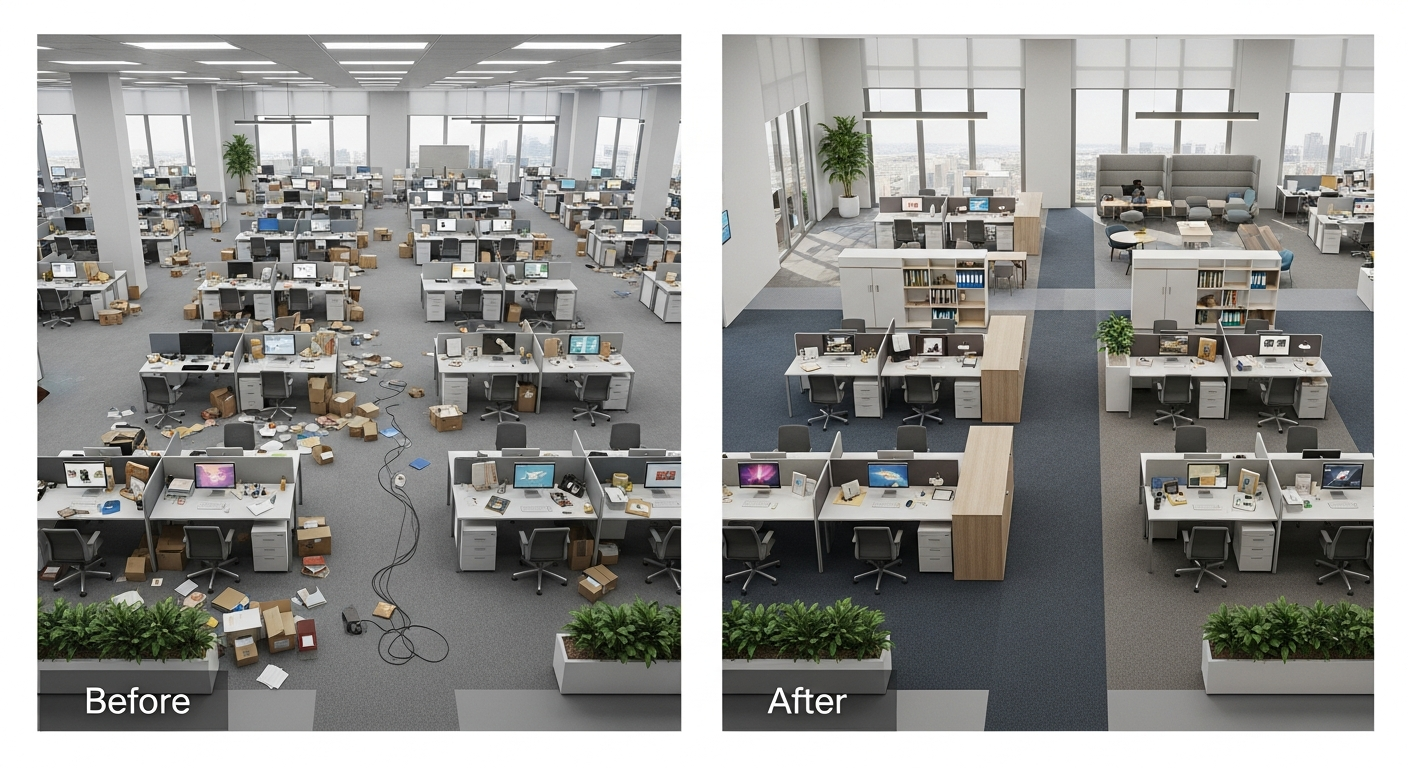
The integration of multiple evidence-based design principles creates synergistic effects where combined benefits exceed the sum of individual improvements. Spaces that integrate occupant-centric design, natural lighting optimization, activity-based planning, and flexible infrastructure typically achieve 30-40% better performance across multiple metrics compared to spaces designed using traditional approaches.
Validation and post-occupancy evaluation ensure that implemented design principles actually deliver the intended benefits, creating feedback loops that continuously improve design effectiveness. The most successful evidence-based design programs implement systematic evaluation protocols that measure actual performance against design objectives, enabling continuous refinement of design strategies and approaches.
Understanding these evidence-based design principles provides the foundation for effective space optimization, but translating these concepts into real-world improvements requires systematic implementation strategies that bring research-backed planning from concept to reality.
Strategic Implementation: From Planning to Execution
Evidence-based space planning requires systematic execution strategies that transform research and analysis into physical improvements that deliver measurable results. Implementation success depends on comprehensive project management approaches that coordinate multiple stakeholders, manage complex dependencies, and minimize operational disruption while maximizing the impact of design improvements. The most successful space optimization projects follow proven methodologies that ensure all phases of implementation contribute to achieving the performance objectives established during the planning process.
Comprehensive space inventory and audit methodologies form the foundation for accurate planning decisions, providing the detailed baseline data necessary for informed optimization strategies. Effective space inventory systems capture not just basic area measurements but also detailed information about existing conditions, infrastructure capabilities, utilization patterns, and performance characteristics that inform implementation planning. Professional space audits typically reveal 15-20% more optimization opportunities than basic measurement approaches, providing the detailed understanding necessary for targeted improvements.
Modern space inventory methodologies utilize advanced measurement technologies including laser scanning, 3D modeling, and IoT sensors to create comprehensive digital representations of existing conditions. These digital inventories enable sophisticated analysis of optimization opportunities and provide the accurate baseline data necessary for measuring improvement results. Organizations implementing comprehensive space inventory systems report significantly improved planning accuracy and reduced implementation risks through better understanding of existing conditions and constraints.
Stakeholder engagement strategies ensure that space planning decisions align with business objectives and user needs rather than pursuing optimization for its own sake. Effective stakeholder engagement requires systematic identification of all parties affected by space changes, development of communication protocols that maintain engagement throughout implementation, and feedback mechanisms that capture user input and concerns before they become implementation obstacles.
Professional stakeholder management recognizes that successful space optimization must balance competing priorities including cost control, operational efficiency, user satisfaction, and regulatory compliance. Strategic space management principles emphasize that stakeholder alignment early in the implementation process prevents costly changes and delays during construction and occupancy phases. Organizations that implement systematic stakeholder engagement report 25-30% fewer change orders and significantly higher satisfaction with final outcomes.
Phased implementation approaches minimize disruption while maximizing impact through strategic sequencing of improvements that maintain operational continuity while delivering incremental benefits. Effective phasing requires detailed analysis of dependencies between different space areas and functions, enabling implementation schedules that avoid operational conflicts while building momentum through early wins that demonstrate the value of evidence-based planning approaches.
Successful phasing strategies typically begin with spaces that can deliver high impact with minimal disruption, creating positive momentum that supports more complex phases of implementation. Advanced phasing plans include contingency protocols that enable rapid response to unexpected conditions or changing requirements without derailing overall project timelines or budgets. Properties implementing strategic phasing approaches typically achieve 20-25% faster overall completion times while maintaining higher quality outcomes through reduced pressure on individual implementation phases.
Change management principles for space transitions recognize that physical space changes often require corresponding adjustments to work patterns, organizational processes, and individual behaviors. Effective change management integrates space transition planning with organizational development strategies that help users adapt to new environments while maximizing the benefits of improved space design.
Professional change management for space transitions includes training programs that help users understand and utilize new space features, communication strategies that maintain engagement and address concerns throughout transition periods, and support systems that enable rapid resolution of adjustment challenges. Organizations implementing comprehensive change management report 30-40% faster adaptation periods and higher long-term satisfaction with space improvements.
Technology integration planning ensures that physical space improvements are supported by appropriate technology infrastructure and digital systems that enable optimal space utilization. Modern space planning must account for WiFi connectivity, power distribution, audiovisual capabilities, and space management software that supports the intended usage patterns and operational requirements.
Technology integration for space management requires coordination between physical design and IT infrastructure planning to ensure that technology capabilities support rather than limit space functionality. Advanced technology planning includes future capacity requirements and upgrade pathways that enable technology evolution without requiring major physical modifications. Properties with integrated technology planning typically achieve 15-20% better space utilization through improved booking systems, usage tracking, and user support capabilities.
Quality control and validation processes ensure that implemented spaces meet design specifications and performance targets rather than simply completing construction activities. Professional quality control includes systematic inspection protocols, performance testing procedures, and user feedback collection that verifies actual performance against design objectives.
Effective validation processes include both technical verification of physical systems and functional testing of space performance under actual usage conditions. Post-implementation validation typically reveals optimization opportunities that inform future projects while ensuring that completed improvements deliver the intended benefits. Organizations implementing comprehensive validation protocols report 25-30% better long-term performance from space improvements through systematic identification and resolution of performance gaps.
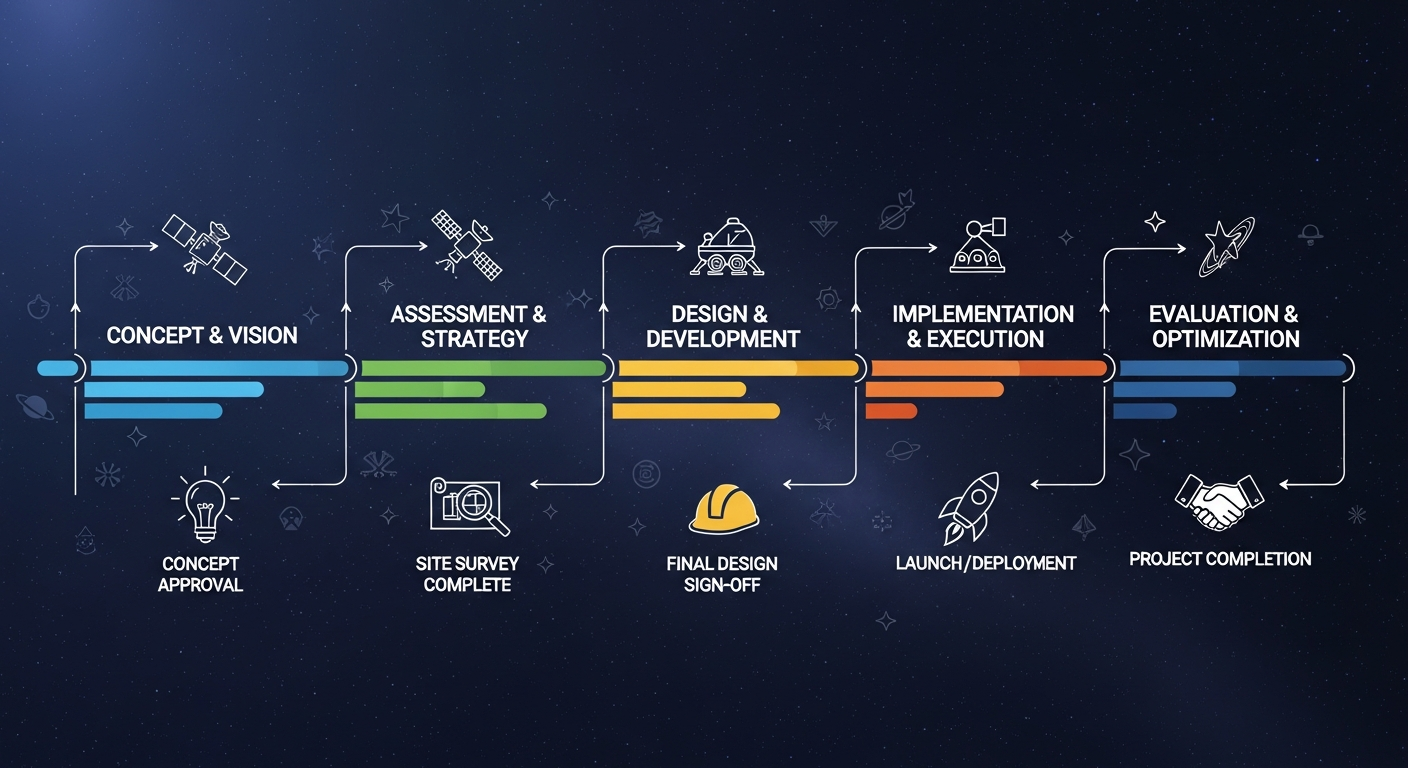
Risk management throughout implementation includes contingency planning for potential delays, cost overruns, or performance shortfalls that could compromise project success. Professional risk management identifies potential implementation challenges early in the planning process and develops mitigation strategies that minimize impact while maintaining project momentum.
Effective implementation coordination requires sophisticated project management that balances multiple competing priorities while maintaining focus on the evidence-based performance objectives that justify the investment. The most successful implementation projects utilize professional project management methodologies adapted specifically for space planning challenges, ensuring that complex coordination requirements don’t compromise the quality of final outcomes.
Implementation success creates the foundation for realizing the financial and operational benefits that justify evidence-based space planning investments and demonstrate the value of systematic optimization approaches.
Optimizing ROI: The Business Case for Evidence-Based Planning
Evidence-based space planning delivers quantifiable financial and operational benefits that transform commercial real estate from a necessary expense into a strategic investment that contributes directly to organizational success. Understanding and documenting these benefits enables informed decision-making about space planning investments while providing the performance metrics necessary for demonstrating ongoing value to stakeholders and investors. The most successful space optimization programs systematically track and report these benefits, creating compelling business cases for continued investment in evidence-based approaches.
Quantifiable cost savings through optimized space utilization typically achieve 8-12% ROI on commercial real estate investments within the first year of implementation, with continuing benefits that compound over time through improved operational efficiency and reduced space requirements. Professional space planning ROI analysis demonstrates that systematic space optimization consistently outperforms traditional approaches across diverse property types and organizational contexts, delivering measurable financial returns that justify implementation investments.
These cost savings result from multiple optimization strategies working simultaneously to improve space efficiency. Optimized layouts typically reduce space requirements by 15-25% while maintaining or improving functionality, directly reducing lease costs, utilities, and maintenance expenses. Advanced space utilization strategies enable organizations to accommodate growth within existing footprints or to reduce space costs through strategic consolidation without compromising operational effectiveness.
Energy efficiency improvements through strategic layout design and natural lighting optimization typically reduce operational expenses by 10-20% annually, providing ongoing savings that accumulate significant value over time. Evidence-based design principles consistently deliver energy performance improvements through reduced lighting requirements, optimized HVAC efficiency, and strategic space allocation that minimizes energy waste. Properties implementing comprehensive energy optimization strategies report annual savings that often exceed the total initial investment in evidence-based planning within 3-5 years.
Enhanced tenant satisfaction and retention rates improve building occupancy and reduce marketing costs through reduced turnover and premium pricing for optimized spaces. Strategic space management benefits include measurable improvements in tenant satisfaction scores that translate directly to improved retention rates and reduced vacancy periods. Properties with systematically optimized spaces typically achieve 5-10% premium rental rates and 20-30% lower tenant turnover compared to conventional properties.
Improved tenant retention delivers compound financial benefits through reduced leasing costs, minimized vacancy periods, and enhanced property reputation that supports premium positioning in competitive markets. Advanced space optimization creates distinctive value propositions that enable properties to command premium rents while reducing marketing expenses through enhanced tenant referrals and reputation benefits.
Increased property values through systematic improvements and optimized tenant mix provide substantial long-term returns that often exceed annual operational savings. Evidence-based space planning creates demonstrable value improvements that professional appraisers and investors recognize and value appropriately. Properties with documented space optimization programs typically achieve 10-15% higher valuations compared to similar properties without systematic optimization.
Strategic space management approaches that integrate tenant mix optimization with physical space improvements create synergistic value enhancements that benefit both individual tenants and overall property performance. Optimized tenant mix strategies consider compatibility between different business types, shared resource requirements, and complementary service needs that enhance overall property attractiveness and operational efficiency.
Risk mitigation benefits include regulatory compliance improvements, safety enhancements, and future-proofing for changing work patterns that reduce liability exposure and adaptation costs. Professional space planning systematically addresses regulatory requirements including ADA compliance, fire safety, and building code adherence, reducing compliance risks while improving overall space functionality.
Advanced risk mitigation through evidence-based planning includes scenario analysis and adaptability planning that reduces exposure to changing market conditions, technology requirements, and organizational needs. Properties with comprehensive risk mitigation strategies typically experience 25-30% lower unexpected adaptation costs and significantly reduced downtime during market transitions or organizational changes.
Portfolio-level optimization strategies compound savings across multiple properties through standardized approaches, shared learning, and economies of scale in implementation and management. Organizations managing multiple properties achieve additional benefits through systematic application of evidence-based principles across their entire portfolio, creating consistency that improves operational efficiency and reduces management complexity.
“Real estate is not just about location anymore. It’s about optimization. Properties that embrace evidence-based space planning create measurable value that gets rewarded in the marketplace.” - Commercial Real Estate Research Institute
Portfolio optimization enables sophisticated strategies including standardized space design that reduces management costs, coordinated tenant services that improve efficiency across properties, and systematic performance benchmarking that identifies optimization opportunities that might not be apparent at individual property levels. Portfolio-level approaches typically deliver 15-20% additional savings compared to individual property optimization through improved operational coordination and shared resource utilization.
Tax benefits and incentives for energy efficiency improvements and accessibility enhancements provide additional financial returns that enhance the overall ROI of evidence-based space planning investments. Many jurisdictions offer tax credits, deductions, or grants for improvements that meet energy efficiency standards or accessibility requirements, effectively subsidizing optimization investments while delivering ongoing operational benefits.
Performance measurement and reporting systems enable continuous demonstration of ROI through ongoing tracking of operational improvements, cost savings, and revenue enhancements. Professional ROI analysis requires sophisticated measurement systems that capture all benefits while accurately allocating costs to ensure that reported returns reflect actual performance rather than theoretical projections.
The integration of multiple benefit streams creates compound returns that significantly exceed individual optimization benefits, demonstrating why systematic evidence-based approaches consistently outperform piecemeal improvement strategies. Organizations that implement comprehensive measurement and reporting systems for space planning ROI typically discover additional benefits that weren’t initially anticipated, further enhancing the business case for systematic optimization approaches.
These immediate financial and operational benefits establish the foundation for long-term value creation through adaptable space planning strategies that maintain and enhance returns over time.
Future-Ready Space Planning: Adaptability and Continuous Improvement
The most successful space planning investments create enduring value through adaptive design strategies that anticipate and accommodate changing work patterns, technology evolution, and market dynamics. Future-ready space planning moves beyond optimizing for current conditions to develop frameworks that maintain effectiveness as organizational needs evolve, technology advances, and market expectations shift. This forward-thinking approach ensures that space planning investments continue delivering value throughout their operational lifespan rather than requiring costly renovations or replacements as conditions change.
Flexible design frameworks accommodate hybrid work models and changing occupancy patterns through architectural and infrastructure solutions that enable rapid reconfiguration without major construction disruption. Advanced facility management practices emphasize that flexibility must be built into the fundamental design architecture rather than added as an afterthought, requiring sophisticated planning that anticipates multiple usage scenarios while maintaining operational efficiency under all conditions.
Modern flexible design goes beyond moveable partitions to include adaptable infrastructure systems that can support different technology requirements, various density configurations, and evolving collaboration needs. Successful flexible frameworks typically achieve 40-50% faster reconfiguration capabilities compared to conventional designs while reducing reconfiguration costs by 60-70% through systematic design for adaptability. Organizations implementing comprehensive flexibility strategies report significantly improved ability to accommodate organizational changes without major space planning investments.
Data-driven optimization cycles utilize ongoing performance metrics to refine space allocation through systematic analysis of actual usage patterns, user feedback, and operational performance. Advanced optimization processes implement continuous monitoring systems that capture space performance data automatically, enabling rapid identification of optimization opportunities and systematic refinement of space allocation strategies based on actual rather than theoretical performance.
Professional optimization cycles typically review performance data monthly and implement adjustments quarterly, maintaining space effectiveness while accommodating gradual changes in usage patterns and organizational needs. Strategic space management for corporate real estate demonstrates that systematic optimization cycles consistently deliver 10-15% annual improvements in space efficiency while maintaining or enhancing user satisfaction through responsive management approaches.
Technology integration planning for emerging workplace technologies requires sophisticated infrastructure design that can accommodate future technology evolution without requiring major physical modifications. Future-ready technology planning considers not just current connectivity and power requirements but anticipated advances in virtual reality, artificial intelligence, and Internet of Things technologies that will reshape workplace interactions and space requirements.
Advanced technology integration includes modular infrastructure systems that enable technology upgrades without disrupting space functionality, flexible power and data distribution that can accommodate changing equipment requirements, and space design that supports both current technology and anticipated future innovations. Properties with comprehensive future-technology planning typically achieve 20-30% lower technology upgrade costs while maintaining competitive technology capabilities throughout rapidly changing technology cycles.
Sustainability considerations reduce long-term operational costs while meeting evolving environmental standards and regulatory requirements. Future-ready sustainability planning anticipates increasingly stringent environmental regulations while implementing strategies that deliver immediate operational benefits through reduced resource consumption and improved operational efficiency. Sustainable building performance measurement provides frameworks for tracking environmental performance improvements and demonstrating compliance with evolving sustainability standards.
Comprehensive sustainability strategies typically achieve 15-25% reductions in environmental impact while delivering 10-20% operational cost savings through improved resource efficiency, reduced waste, and optimized energy consumption. Advanced sustainability planning includes lifecycle analysis that optimizes long-term environmental and financial performance rather than focusing only on initial compliance or cost considerations.
Scenario planning methodologies prepare spaces for multiple future business scenarios through systematic analysis of potential changes in organizational size, work patterns, technology requirements, and market conditions. Professional scenario planning enables space design that maintains effectiveness across a range of possible future conditions rather than optimizing for a single anticipated scenario.
Effective scenario planning typically considers best-case, worst-case, and most-likely-case scenarios for key factors affecting space requirements, developing design solutions that perform well under all scenarios while maintaining cost-effectiveness. Organizations implementing comprehensive scenario planning report significantly improved adaptation capabilities and reduced unexpected adaptation costs through proactive preparation for multiple potential futures.
Continuous improvement processes capture user feedback and performance data for ongoing optimization through systematic collection and analysis of space performance information. Advanced continuous improvement systems integrate user experience feedback with quantitative performance metrics to identify optimization opportunities that improve both operational efficiency and occupant satisfaction.
Professional continuous improvement protocols typically include quarterly user surveys, monthly performance data analysis, and annual comprehensive reviews that assess overall space performance and identify strategic improvement opportunities. Organizations implementing systematic continuous improvement report 20-25% better long-term satisfaction with space improvements through responsive management that addresses emerging issues before they become significant problems.
“The best space planning anticipates change rather than simply responding to it. Organizations that build adaptability into their spaces from the beginning position themselves to capitalize on opportunities rather than struggle with constraints.” - Future of Work Research Institute
Artificial intelligence and machine learning integration in space management systems enable predictive optimization that anticipates usage patterns and proactively adjusts space allocation to optimize performance. Advanced AI-enabled space management can predict peak usage periods, identify underutilized spaces, and recommend reallocation strategies that improve efficiency while maintaining user satisfaction.
AI-enabled space optimization typically delivers 15-20% additional efficiency improvements compared to traditional management approaches through sophisticated pattern recognition and predictive analytics that identify optimization opportunities not apparent through conventional analysis. Organizations implementing AI-enhanced space management report improved responsiveness to changing conditions and enhanced ability to maintain optimal performance as usage patterns evolve.
Integration with smart building systems creates comprehensive environmental management that optimizes comfort, efficiency, and performance automatically based on actual usage patterns and environmental conditions. Smart building integration enables automated lighting, temperature, and ventilation control that reduces operational costs while improving occupant comfort through responsive environmental management.
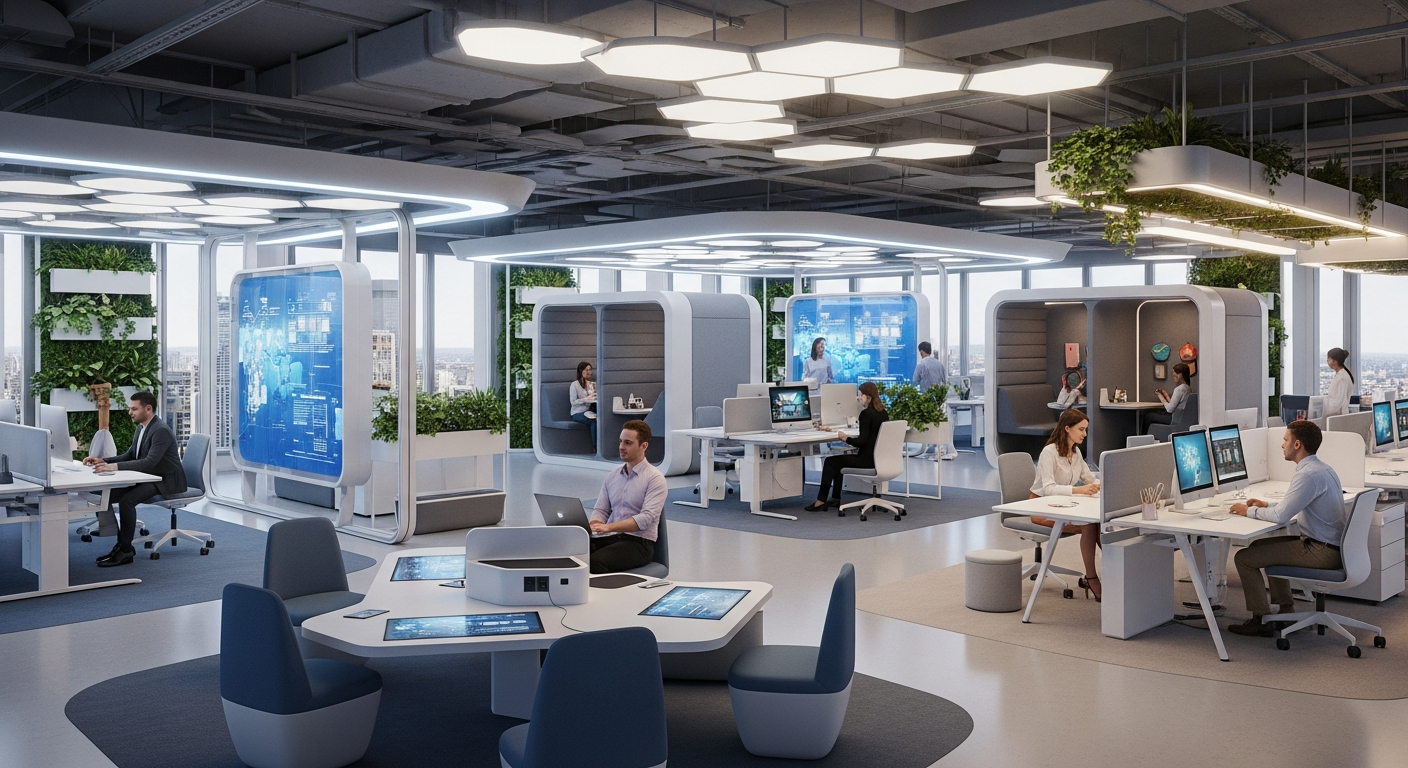
The convergence of flexible design, data-driven optimization, technology integration, and sustainability planning creates space environments that not only meet current needs effectively but adapt seamlessly to future requirements while maintaining operational efficiency and occupant satisfaction. Properties implementing comprehensive future-ready strategies typically achieve 25-30% better long-term performance compared to conventional spaces through systematic preparation for change and continuous optimization capabilities.
Professional future-ready space planning recognizes that change is the only constant in modern commercial environments, requiring systematic approaches that embrace rather than resist evolution while maintaining focus on delivering measurable value throughout the operational lifespan of space investments.
The integration of these forward-thinking strategies positions organizations to maximize their real estate investments while creating spaces that serve their mission effectively regardless of how conditions change over time.
Principles to Build On
Evidence-based space planning represents a fundamental shift from intuitive decision-making to systematic optimization that transforms commercial real estate from a necessary expense into a strategic competitive advantage. The methodologies and frameworks presented in this guide provide a comprehensive roadmap for organizations seeking to maximize the value of their space investments while creating environments that consistently deliver superior performance across multiple business objectives.
The journey from traditional space planning to evidence-based optimization requires commitment to systematic measurement, research-backed design principles, and continuous improvement processes that maintain effectiveness as conditions evolve. Organizations that embrace these approaches position themselves to realize significant financial returns through optimized space utilization, reduced operational costs, and enhanced property values that compound over time. More importantly, they create work environments that measurably improve occupant satisfaction, productivity, and organizational effectiveness.
The implementation of BOMA measurement standards, GSA planning guidelines, and ISO performance principles creates the foundational framework necessary for informed decision-making and accurate performance tracking. These internationally recognized standards provide the credibility and consistency required for benchmarking, optimization, and continuous improvement across diverse commercial properties and organizational contexts.
Systematic measurement of space performance through utilization metrics, satisfaction surveys, and financial analysis enables data-driven optimization that consistently outperforms traditional approaches. Organizations that implement comprehensive measurement systems typically discover optimization opportunities that deliver 15-25% improvements in space efficiency while maintaining or enhancing occupant satisfaction and operational effectiveness.
Evidence-based design principles including occupant-centric planning, natural lighting optimization, activity-based working strategies, and flexible infrastructure deliver measurable improvements in both operational performance and user experience. These research-backed approaches ensure that space planning investments create lasting value rather than simply addressing immediate needs or aesthetic preferences.
Strategic implementation methodologies that coordinate stakeholder engagement, phased execution, and comprehensive change management ensure that evidence-based planning translates into real-world improvements that deliver the intended benefits. Professional implementation approaches typically reduce project risks while accelerating benefit realization through systematic execution strategies that maintain focus on performance objectives.
The financial benefits of evidence-based space planning, including 8-12% ROI on real estate investments, 15-25% reductions in space requirements, and 10-20% operational cost savings, provide compelling justification for systematic optimization approaches. These quantifiable returns, combined with qualitative benefits including improved tenant satisfaction and enhanced property marketability, demonstrate the superior value proposition of evidence-based methodologies.
Future-ready planning strategies that build adaptability, continuous optimization, and technology integration into space design ensure that optimization investments maintain and enhance their value as conditions change. Organizations implementing comprehensive future-ready approaches typically achieve 25-30% better long-term performance through systematic preparation for evolving requirements and changing market conditions.
The convergence of standardized frameworks, comprehensive measurement, evidence-based design, strategic implementation, financial optimization, and future-ready planning creates a systematic approach to space optimization that consistently delivers superior results across diverse commercial real estate contexts. Organizations that master these integrated approaches position themselves to capitalize on their real estate investments while creating spaces that truly serve their mission and stakeholders.
Success in modern commercial space planning requires precision, accountability, and systematic optimization based on measurable performance data rather than assumptions or traditional practices. The evidence is clear: organizations that embrace systematic, research-backed approaches to space planning consistently outperform those that rely on conventional methods across all key performance indicators including financial returns, operational efficiency, and occupant satisfaction.
The transformation from conventional space planning to evidence-based optimization represents not just an improvement in methodology but a fundamental shift in how organizations approach their most significant operational investments. By grounding decisions in proven standards, measurable metrics, and research-backed principles, facility managers and property developers can optimize every square foot for maximum strategic impact while creating environments that adapt and improve over time.
Ready to transform your space planning approach with evidence-based precision? Discover how qbiq’s AI-powered architectural planning platform delivers professional-grade space optimization in minutes, not weeks. Our automated system applies these proven methodologies to generate data-driven layout solutions that maximize efficiency and ROI. Experience the future of space planning - where evidence-based decisions happen instantly. Explore qbiq’s capabilities and see how automated architectural intelligence can revolutionize your next project.






.png)


