
The commercial real estate market in 2026 represents a $20 trillion global ecosystem where a single leasing decision can make or break a company’s operational success for the next decade. With average commercial lease terms spanning 5-10 years and total occupancy costs often representing 10-20% of a company’s operating budget, the stakes have never been higher for getting the leasing process right the first time.
Yet despite these astronomical figures, the vast majority of businesses approach commercial leasing with outdated methodologies that fail to account for the seismic shifts reshaping the industry. Remote work policies have fundamentally altered space utilization patterns, with many companies requiring 30-40% less physical space than pre-2020 projections suggested. Artificial intelligence integration is revolutionizing everything from property search to space planning, enabling decisions that once took weeks to complete in mere hours. Economic uncertainties, from fluctuating interest rates to supply chain disruptions, have created a volatility that demands more sophisticated risk assessment and negotiation strategies.
Traditional leasing approaches (relying on gut instincts, limited market data, and manual space planning processes) are not just inefficient in today’s environment; they’re actively dangerous to business success. Companies that continue to lease space using 2019 methodologies are finding themselves locked into expensive, inflexible arrangements that fail to support their evolved operational needs. The cost of these mistakes compound over time: a poorly negotiated lease can result in millions in unnecessary expenses, while inadequate space planning can devastate employee productivity and recruitment efforts.
The solution lies not in abandoning fundamental leasing principles, but in augmenting them with modern tools, data-driven insights, and systematic approaches that acknowledge the complexity of today’s commercial real estate landscape. Commercial Real Estate: 2026 Trends and Predictions reveals that successful companies are increasingly adopting structured, technology-enhanced leasing processes that reduce risk while accelerating decision-making timelines.
This comprehensive checklist represents the culmination of industry best practices refined for the current market environment. It synthesizes timeless leasing fundamentals with cutting-edge technological capabilities, creating a roadmap that serves both seasoned commercial real estate professionals and executives navigating their first major leasing decision. The framework encompasses six critical phases: defining strategic space requirements, conducting systematic market research, leveraging modern space planning tools, executing sophisticated financial analysis, performing thorough due diligence, and managing seamless lease execution.
Each phase builds upon the previous one, creating a cumulative advantage that transforms leasing from a reactive scramble into a strategic competitive weapon. Companies that master this systematic approach don’t just secure better lease terms—they position themselves for operational excellence that drives long-term business success.

Define Your Space Requirements and Strategic Objectives
The foundation of successful commercial leasing rests not on finding available properties, but on developing crystal-clear requirements that align space decisions with broader business strategy. This initial phase demands rigorous analysis across multiple dimensions, combining current operational realities with forward-looking growth projections and market positioning considerations.
Current and projected headcount analysis represents the most critical starting point, but the calculations have evolved far beyond simple desk-to-person ratios. The hybrid work revolution has fundamentally altered utilization patterns, with many organizations discovering that traditional space planning assumptions overestimate actual occupancy by 40-60%. Smart companies now conduct detailed utilization studies, tracking actual presence patterns across different departments, roles, and seasonal cycles. This data reveals that while executive teams might maintain 80-90% office presence, technical teams often operate effectively with 2-3 days per week on-site, dramatically affecting space requirements.
Growth planning in this context requires scenario modeling that accounts for different business trajectories and hiring strategies. A technology company planning for 50% headcount growth over three years might discover that their space needs only increase by 20% due to evolved work patterns. Conversely, client-facing organizations might find that maintaining impressive physical presence requires more space per person than historical models suggested. The key lies in developing detailed persona-based analysis that recognizes how different roles, functions, and seniority levels utilize physical workspace.
Space allocation methodology has similarly evolved beyond the traditional private office versus open workspace dichotomy. Modern space planning recognizes the critical importance of collaborative zones, quiet focus areas, social spaces, and technology-enabled meeting environments. The 2026 commercial real estate outlook emphasizes that successful companies are allocating 25-35% of their space to flexible, multi-purpose areas that can adapt to changing utilization patterns throughout the day and across business cycles.
Budget framework development extends far beyond base rent calculations to encompass the true total cost of occupancy. Base rent typically represents only 60-70% of actual space costs, with operating expenses, utilities, insurance, maintenance, and hidden fees adding substantial financial burden. Tenant improvement costs have escalated significantly, with high-quality buildouts now averaging $75-150 per square foot depending on market and finishes. These figures demand sophisticated financial modeling that accounts for amortization periods, escalation clauses, and potential renovation needs over the lease term.
The budget framework must also incorporate opportunity costs and productivity considerations. A location that saves $10 per square foot annually but requires employees to commute an additional 30 minutes each direction might ultimately cost more in talent retention, recruitment challenges, and productivity losses than a premium location with superior access. Commercial Real Estate Trends for 2026 demonstrates how leading companies are incorporating these qualitative factors into quantitative budget models, creating more holistic decision-making frameworks.
Location criteria prioritization has become increasingly sophisticated as talent competition intensifies and client expectations evolve. Transportation access now encompasses not just highway connectivity but public transit options, bike-friendly infrastructure, and parking availability for both employees and visitors. The rise of electric vehicles is creating new considerations around charging station availability and future infrastructure development. Companies are discovering that locations near transit hubs command premium rents but often deliver superior talent attraction and retention outcomes that justify the additional expense.
Client proximity considerations have similarly evolved, with many organizations discovering that strategic visibility matters more than geographic convenience. A professional services firm might prioritize presence in a prestigious business district even if most client meetings occur virtually, recognizing that address perception affects client confidence and recruitment success. Conversely, operationally-focused companies might prioritize cost-effective locations with superior logistics access, accepting longer client travel times in exchange for operational efficiency.
Technology infrastructure requirements represent an increasingly critical component of space planning that many organizations dramatically underestimate. Modern business operations demand fiber optic connectivity, redundant internet service providers, robust cellular coverage, and electrical capacity that can support growing technology loads. The proliferation of AI tools, video conferencing systems, and digital collaboration platforms is straining infrastructure in older buildings that seemed adequate just five years ago. Companies must evaluate not just current connectivity needs but projected technology adoption and capacity requirements over the lease term.
Future-proofing considerations extend to HVAC capacity for increased server loads, electrical panel capacity for expanded technology deployment, and physical infrastructure that can accommodate evolving space utilization patterns. Smart building features—from automated lighting and climate control to occupancy sensing and space optimization systems—are transitioning from luxury amenities to operational necessities that affect productivity and energy costs.
Timeline establishment requires balancing multiple competing pressures: lease expiration deadlines, business growth requirements, market timing considerations, and construction lead times. Most companies dramatically underestimate the time required for comprehensive leasing processes, particularly when tenant improvements are involved. A typical process spanning from initial requirements definition through occupancy often requires 9-18 months, depending on market conditions and build-out complexity. This timeline must account for market research phases, space planning iterations, negotiation cycles, due diligence periods, legal review, construction permitting, and actual build-out completion.
The most successful organizations begin their leasing process 18-24 months before occupancy requirements, creating sufficient time for thorough evaluation without the pressure of emergency decision-making. This timeline buffer enables more strategic negotiation positioning and reduces the risk of accepting suboptimal terms due to time constraints. Clear requirements definition becomes the foundation that enables all subsequent phases of the leasing process to proceed efficiently and effectively.
Conduct Market Research and Property Evaluation
Systematic market research transforms commercial leasing from reactive property hunting into strategic advantage development. The most successful leasing outcomes emerge from comprehensive market intelligence that reveals not just what’s currently available, but how market dynamics, pricing trends, and landlord motivations create negotiation opportunities and risk mitigation strategies.
Market analysis methodology begins with macro-level trend evaluation across relevant submarkets and property classes. Vacancy rates provide the foundational indicator of supply-demand balance, but sophisticated analysis examines vacancy trends across different building classes, size ranges, and geographic micro-markets. A submarket with 15% overall vacancy might show dramatically different patterns for Class A versus Class B properties, or for spaces above versus below 10,000 square feet. These nuances directly affect negotiation leverage and pricing strategies.
Rental trend analysis reveals market velocity and pricing trajectory, but the most valuable insights emerge from understanding the drivers behind these trends. Are rental increases driven by genuine demand growth or artificial supply constraints? Are concession packages becoming more generous despite stable quoted rents? Have tenant improvement allowances increased to offset higher base rents? 2026 Commercial Real Estate Trends demonstrates how sophisticated tenants are analyzing these secondary market indicators to identify optimal timing and negotiation strategies.
Submarket dynamics extend beyond simple geography to encompass transportation patterns, development pipelines, and economic base diversity. A submarket heavily dependent on a single industry faces different risk profiles than one with diverse economic drivers. Understanding these fundamentals helps predict future market stability and guides decision-making around lease term length and renewal option structures.

Property screening criteria must balance quantitative metrics with qualitative factors that affect long-term operational success. Building class designation provides a starting framework, but modern evaluation requires deeper analysis of construction quality, maintenance standards, and ownership philosophy. Class A buildings with deferred maintenance might deliver inferior experiences to well-maintained Class B properties with proactive management. The key lies in developing systematic evaluation criteria that look beyond surface-level classifications to assess actual building performance and management quality.
Building age considerations have become more nuanced as sustainability requirements and technology infrastructure capabilities gain importance. A 20-year-old building with recent systems upgrades might outperform newer construction with inferior mechanical systems or inadequate technology infrastructure. Smart evaluation focuses on effective building age—considering major system replacement cycles and upgrade investments—rather than simple chronological age.
Landlord reputation analysis has emerged as a critical success factor that many tenants underestimate. Landlord responsiveness, financial stability, investment philosophy, and tenant relationship management directly affect lease experience quality and operational flexibility. Research into landlord track record, including lease renewal rates, tenant satisfaction, and responsiveness to building issues, provides insights that affect both immediate decision-making and long-term relationship success.
Site visit planning requires systematic approaches that enable objective comparison across multiple properties. Successful evaluation teams develop standardized checklists that assess factors from lobby presentation and elevator efficiency to parking adequacy and security systems. These visits should occur at different times of day and week to understand traffic patterns, noise levels, and operational realities that affect daily work experiences.
Building infrastructure assessment demands technical evaluation that many tenants approach superficially. HVAC system capacity, age, and efficiency directly affect comfort and utility costs over the lease term. Electrical capacity must accommodate current needs plus projected technology growth, with particular attention to availability of redundant power feeds and backup systems for business continuity. Elevator efficiency affects building usability for multi-floor tenants and influences employee satisfaction and visitor experience.
Modern infrastructure evaluation increasingly includes technology capabilities that weren’t considered essential just five years ago. Cellular signal strength throughout the building, fiber optic connectivity options, and smart building systems integration affect operational efficiency and employee satisfaction. Buildings with outdated technology infrastructure often require expensive upgrades that can surprise tenants with unexpected costs and disruption.
Neighborhood analysis encompasses both immediate amenities and broader market positioning that affects talent attraction and client perception. Retail options, restaurants, and services within walking distance contribute to employee satisfaction and client entertainment capabilities. Transportation access includes not just highway connectivity but public transit options, ride-share pickup locations, and bicycle infrastructure that support diverse commuting preferences.
Parking availability and costs represent critical factors that many organizations underestimate during property evaluation. Parking ratios, monthly costs, and availability for visitors and clients directly affect operational budgets and stakeholder satisfaction. In urban markets, parking costs can represent 10-20% of total occupancy expenses, making accurate evaluation essential for comprehensive budget planning.
Future development impact evaluation requires understanding both planned and potential development that could affect property value, access patterns, and neighborhood character. Proposed transportation improvements might enhance property value but create short-term disruption during construction. New competing properties might affect renewal negotiations but also indicate market confidence in the submarket’s growth trajectory.
Area growth projections help assess long-term market stability and property value trends that affect renewal options and potential expansion opportunities. Understanding economic development initiatives, zoning changes, and infrastructure investments provides context for making lease term decisions and evaluating renewal option pricing. This forward-looking analysis transforms leasing decisions from reactive property selection into strategic market positioning that supports long-term business objectives.
The most successful market research combines quantitative analysis with qualitative insights that reveal market dynamics and opportunity identification. This systematic approach enables more confident property evaluation and stronger negotiation positioning in subsequent leasing phases.
Space Planning and Layout Feasibility Assessment
The revolution in commercial space planning represents one of the most significant advances in commercial real estate decision-making capabilities in decades. What once required weeks of manual architectural work, multiple design iterations, and substantial financial investment can now be completed in minutes using automated tools that generate multiple layout options with professional accuracy and 3D visualization capabilities.
Traditional space planning limitations have historically created a significant bottleneck in the leasing process, often forcing companies to make binding lease decisions before understanding how effectively they could utilize the available space. The conventional approach required hiring architects or space planners to manually create floor plans, a process that typically consumed 2-4 weeks and cost $5,000-$15,000 per property evaluated. These static 2D outputs provided limited visualization capabilities and made it difficult for stakeholders to understand how the proposed layouts would function in practice.
The manual nature of traditional space planning also severely limited scenario testing, making it impractical to explore multiple layout configurations or test different space allocation strategies. Companies often found themselves evaluating only one or two layout options per property, missing opportunities to optimize space efficiency or identify creative solutions that could improve functionality within existing floor plates. This limitation particularly affected organizations with complex operational requirements or those seeking to implement innovative workplace strategies that departed from conventional space planning approaches.
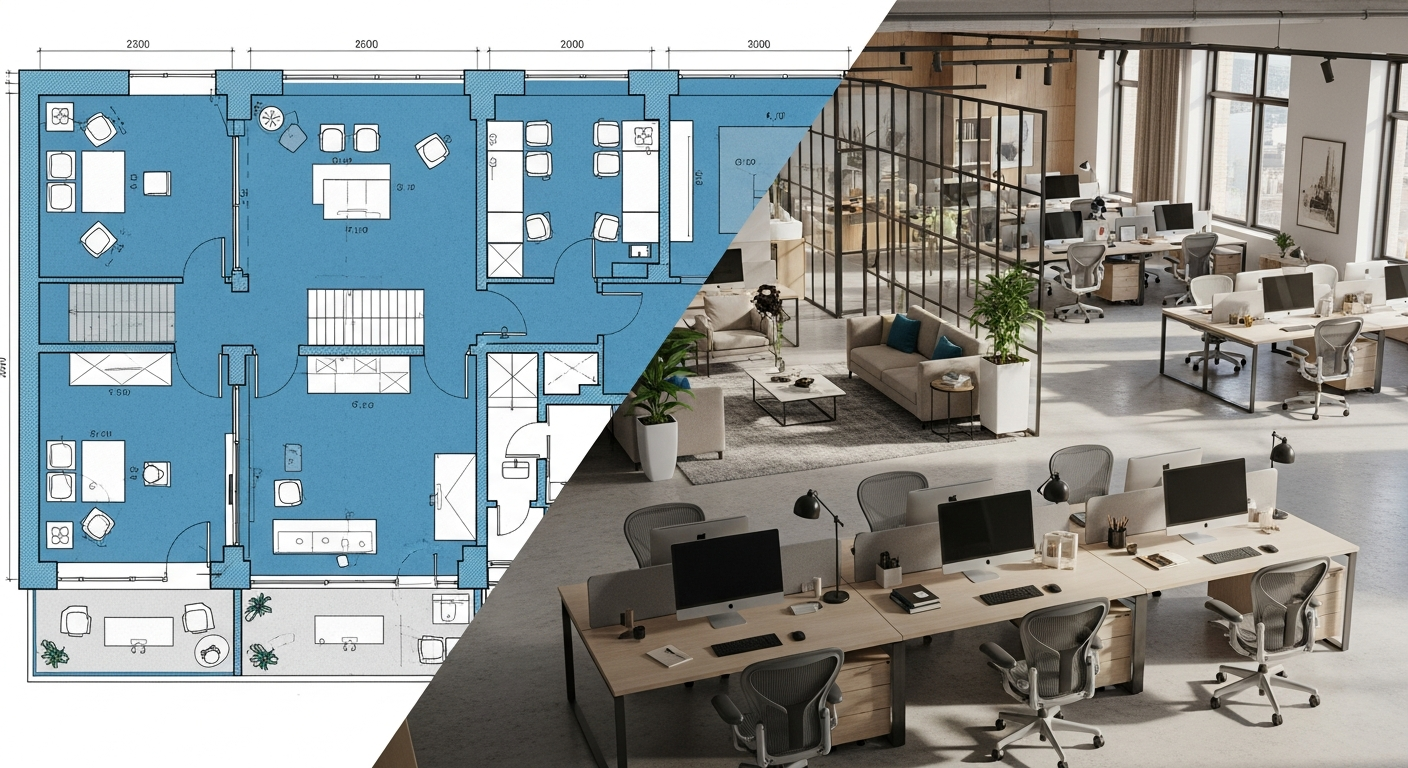
Modern automated architectural services have fundamentally transformed this landscape, enabling comprehensive space planning analysis that strengthens every aspect of the leasing process. AI Test Fit Generators: Complete Guide for Commercial Office Design demonstrates how advanced algorithms can generate multiple professionally accurate layout options within minutes, allowing leasing teams to evaluate space utilization potential before making binding commitments.
The speed advantages extend far beyond simple time savings to enable more strategic decision-making approaches. When space planning becomes nearly instantaneous, leasing teams can evaluate multiple properties with comprehensive layout analysis, comparing not just square footage and rental rates but actual space utilization efficiency and functional suitability. This capability transforms property evaluation from abstract assessment into concrete visualization of how each space would support specific operational requirements.
Automated space planning tools excel at generating diverse layout options that explore different space allocation strategies and workflow optimization approaches. A single floor plate might be configured with traditional perimeter offices, open collaborative zones with scattered private spaces, or hybrid arrangements that balance privacy and collaboration requirements. These multiple scenarios enable stakeholder teams to visualize trade-offs between different approaches and make more informed decisions about optimal space allocation.
The accuracy of modern automated tools rivals traditional manual planning while providing consistency that eliminates the variability inherent in different architects’ interpretation of requirements. Advanced platforms incorporate building codes, accessibility requirements, and industry best practices into their algorithms, ensuring that generated layouts meet regulatory compliance and functional requirements. This accuracy enables confident lease negotiation based on verified space utilization rather than uncertain assumptions about layout feasibility.
3D visualization capabilities represent perhaps the most transformative aspect of modern space planning technology. Traditional 2D floor plans require significant spatial reasoning skills to envision how spaces will function in practice, creating barriers to stakeholder engagement and decision confidence. 3D visualizations enable immediate understanding of space flow, natural light distribution, sight lines, and functional relationships that directly affect workplace effectiveness and employee satisfaction.
The visualization capabilities particularly excel at communicating space planning concepts to executive teams and stakeholders who may lack architectural background but need to understand how space decisions affect operational outcomes. A 3D rendering of a proposed office layout immediately conveys the feel and functionality of the space in ways that 2D plans cannot match, enabling more confident executive decision-making and stakeholder alignment.
Space efficiency optimization through automated tools often reveals opportunities that manual planning approaches miss. Advanced algorithms can test hundreds of configuration possibilities to identify layouts that maximize usable space within existing floor plates, often discovering 10-15% efficiency improvements that translate directly into reduced square footage requirements or enhanced functionality within existing budgets. These optimizations become particularly valuable in expensive markets where small efficiency gains deliver substantial cost savings over multi-year lease terms.
Future flexibility considerations have become increasingly important as organizations acknowledge the rapid pace of workplace evolution and operational change. Modern space planning tools can model how layouts might adapt to different scenarios: headcount growth, hybrid work policy changes, or evolving collaboration requirements. This scenario planning capability enables leasing decisions that anticipate change rather than simply addressing current requirements.
The Role of Space Planning and Test Fits in Office Design emphasizes how comprehensive space planning analysis supports more strategic lease negotiation by providing concrete data about space utilization efficiency and required modifications. When negotiating tenant improvement allowances, having detailed space plans enables precise cost estimation and more effective advocacy for landlord contributions.
Integration of space planning insights into lease negotiation strategy transforms the entire leasing process. Instead of negotiating based on general space requirements and market comparables, sophisticated tenants can present landlords with specific utilization data, improvement requirements, and value propositions based on proven space efficiency. This data-driven approach often results in more favorable lease terms and reduced post-occupancy modification costs.
The combination of speed, accuracy, and visualization capabilities has elevated space planning from a necessary expense into a competitive advantage that enables faster, more confident leasing decisions with superior long-term outcomes. Organizations that leverage these modern capabilities consistently achieve better space utilization, reduced leasing costs, and improved stakeholder satisfaction throughout the leasing process.
Financial Analysis and Lease Negotiation
Sophisticated financial analysis serves as the backbone of successful commercial lease negotiation, enabling informed decision-making that optimizes both immediate cash flow and long-term operational flexibility. The complexity of modern commercial leases demands analytical frameworks that extend far beyond simple rent-per-square-foot calculations to encompass total occupancy costs, risk assessment, and strategic value optimization.
Total occupancy cost analysis begins with comprehensive identification of all expense components that contribute to the true cost of space occupancy. Base rent represents only the most visible element, typically comprising 60-70% of total occupancy expenses. Operating expenses—including property taxes, insurance, maintenance, utilities, and management fees—add substantial costs that vary significantly between properties and lease structures. Common area maintenance charges, security costs, and shared utility expenses often surprise tenants with their magnitude and variability over time.
Understanding escalation mechanisms becomes critical for accurate long-term cost projection. Operating expense escalations tied to actual costs can fluctuate unpredictably based on energy prices, tax assessments, and maintenance requirements. Fixed percentage escalations provide predictability but may not reflect actual cost increases, potentially creating either landlord subsidies or tenant overpayments over time. Consumer Price Index (CPI) escalations offer middle-ground approaches that balance predictability with responsiveness to economic conditions.
Parking costs represent a significant but often overlooked expense component that can substantially impact total occupancy budgets. Monthly parking fees ranging from $100-$400 per space in urban markets add thousands of dollars annually to space costs. Visitor parking availability and pricing affect client service capabilities and employee satisfaction, making comprehensive parking cost analysis essential for accurate budget modeling.

Tenant improvement allowance optimization requires sophisticated analysis of market standards, actual improvement costs, and negotiation strategies that maximize landlord contributions while achieving functional objectives. Commercial Real Estate Lease Analysis Tool (Updated Feb 2026) provides frameworks for evaluating different allowance structures and their financial impact over various lease terms.
Market research into prevailing tenant improvement allowances across different building classes and submarkets reveals negotiation benchmarks and identifies properties where landlords might offer enhanced packages to secure quality tenants. Understanding that allowances often vary based on lease term length, tenant creditworthiness, and market conditions enables strategic negotiation positioning that maximizes landlord investment in space improvements.
Gap funding strategies become necessary when desired improvements exceed available allowances. Options include tenant investment with amortization over the lease term, landlord loans with favorable interest rates, or phased improvement approaches that spread costs across multiple budget periods. Each approach affects cash flow differently and requires analysis of return on investment, tax implications, and long-term financial impact.
Lease term structure evaluation encompasses more than simple duration decisions to include renewal options, escalation patterns, and termination rights that affect long-term flexibility and cost predictability. Longer lease terms typically secure more favorable base rents and tenant improvement allowances but reduce flexibility to respond to business changes or market shifts. Shorter terms preserve flexibility but often command rental premiums and reduced landlord improvement investments.
Renewal option structures require careful analysis of pricing mechanisms, exercise timelines, and market protection features. Fixed percentage increases provide cost predictability but may result in above-market rents if market conditions decline. Fair market value renewals protect against overpayment but introduce uncertainty and potential negotiation complexity. Hybrid approaches with caps and floors balance predictability with market protection but require sophisticated modeling to understand potential outcomes.
Early termination rights offer valuable flexibility for organizations facing potential changes in space requirements, business conditions, or strategic direction. However, termination penalties must be evaluated against the value of preserved flexibility, considering factors like future space needs uncertainty, market volatility, and business growth projections. The cost of termination rights—whether through higher base rents or specific penalty structures—must be weighed against their strategic value for business planning.
Incentive negotiation extends beyond traditional free rent periods to encompass moving allowances, landlord contributions to existing lease termination costs, and assumption of tenant improvement responsibilities that reduce upfront capital requirements. Free rent periods provide immediate cash flow benefits but may be offset by higher base rents over the lease term. Moving allowances can significantly reduce occupancy transition costs, particularly for organizations with substantial furniture, equipment, or technology infrastructure.
Market leverage assessment requires understanding current supply-demand dynamics, landlord motivations, and competitive alternatives that strengthen negotiation positioning. Properties with extended vacancy periods often present opportunities for enhanced concessions, while buildings with limited availability may require more competitive offers. Landlord financial pressures, loan maturity dates, or portfolio strategy changes can create negotiation opportunities that informed tenants can exploit.
Timing considerations affect both market leverage and landlord negotiation flexibility. Negotiations conducted near calendar year-end often benefit from landlord desire to close deals for financial reporting purposes. Similarly, negotiations approaching landlord fiscal year-ends or loan compliance measurement dates may encounter enhanced flexibility. Understanding these timing dynamics enables strategic negotiation scheduling that maximizes tenant leverage.
Financial scenario modeling tests different lease structures under various business and market scenarios, enabling risk assessment and contingency planning. Models should evaluate outcomes under scenarios including business growth, contraction, market rent increases, and economic downturns. This analysis identifies lease structures that provide optimal protection against downside risks while preserving upside opportunities.
The sophistication of financial analysis directly correlates with negotiation success and long-term lease satisfaction. Organizations that invest in comprehensive financial modeling consistently achieve more favorable lease terms and avoid costly surprises that emerge from inadequate initial analysis.
Due Diligence and Legal Review
Comprehensive due diligence represents the critical gateway between lease negotiation success and operational reality, providing the final opportunity to identify potential issues, verify assumptions, and protect interests before making binding lease commitments. The complexity of modern commercial properties and lease structures demands systematic investigation that extends far beyond surface-level property inspection to encompass legal, financial, environmental, and operational factors that affect long-term lease success.
Building inspection and engineering assessment protocols require professional expertise that evaluates both immediate condition and long-term maintenance requirements. Structural integrity assessment examines foundation condition, load-bearing capacity, and potential settlement or deterioration issues that could affect building stability or require expensive remediation. This analysis becomes particularly critical for older buildings or properties in geographic areas subject to seismic activity, soil subsidence, or other environmental factors that affect structural performance.
Mechanical systems evaluation encompasses HVAC performance, electrical capacity, plumbing adequacy, and elevator functionality that directly affect tenant operations and comfort. HVAC system age, maintenance history, and capacity relative to projected tenant loads determine both immediate functionality and future replacement costs that may be passed through to tenants. Electrical system capacity must accommodate current needs plus reasonable growth projections, with particular attention to availability of adequate power for technology infrastructure and specialized equipment requirements.
Roof condition assessment addresses immediate leak risks and long-term replacement requirements that represent substantial capital expenditures often allocated to tenants through operating expense escalations. Professional inspection identifies current condition, maintenance adequacy, and expected remaining useful life that affects budget planning and potential future cost exposure.

Legal document review encompasses lease terms, compliance requirements, and liability considerations that affect tenant rights, obligations, and risk exposure throughout the lease term. Professional legal review identifies potentially problematic clauses, ambiguous language, and terms that may create unforeseen obligations or limit operational flexibility. This analysis often reveals opportunities for additional protection through lease modification or clarification that strengthens tenant position.
Compliance verification examines building adherence to applicable codes, regulations, and accessibility requirements that affect tenant operations and liability exposure. Americans with Disabilities Act compliance, fire safety systems, building code conformity, and occupancy load limits directly affect space utilization and operational risk. Non-compliance issues may require expensive remediation or limit operational flexibility, making thorough compliance verification essential for risk management.
Insurance requirements analysis evaluates mandatory coverage levels, permitted carriers, and allocation of liability between landlord and tenant that affects insurance costs and risk exposure. Required coverage levels may exceed tenant’s existing policies, necessitating additional insurance acquisition or modification of existing coverage. Liability allocation clauses determine financial responsibility for different types of losses or claims, affecting both insurance requirements and operational risk exposure.
Environmental due diligence addresses potential contamination, hazardous material presence, and environmental compliance requirements that could affect tenant operations or create liability exposure. Asbestos presence in older buildings may limit renovation options or require expensive abatement during tenant improvements. Mold issues, chemical contamination, or other environmental hazards may affect employee health and safety while creating potential liability for tenants.
Lead-based paint in older buildings requires specific handling protocols during any renovation work, potentially increasing improvement costs and construction timelines. Environmental site assessments may reveal soil or groundwater contamination that creates liability concerns or limits future property use options. Understanding these environmental factors enables informed decision-making and appropriate risk mitigation strategies.
Zoning and permit verification confirms that intended tenant use complies with current zoning requirements and that necessary permits are available for proposed operations or improvements. Zoning restrictions may limit operational flexibility, restrict signage options, or prohibit certain business activities that affect long-term space suitability. Permit requirements for tenant improvements, signage, or operational changes may involve longer timelines or higher costs than initially anticipated.
Special use permits, variances, or conditional use approvals require verification of current status and any conditions or restrictions that affect tenant operations. These approvals may have expiration dates, compliance requirements, or renewal processes that create ongoing obligations or potential operational disruptions.
Landlord financial stability assessment evaluates property ownership structure, mortgage obligations, and financial capacity that affects lease security and property management quality. Highly leveraged properties may face financial distress that affects maintenance quality, capital improvement availability, or lease renewal negotiations. Understanding landlord financial position provides insights into property management philosophy and long-term relationship expectations.
Property management evaluation examines management company capabilities, tenant satisfaction levels, and responsiveness to building issues that directly affect day-to-day lease experience. Property management quality often varies significantly between properties and management companies, affecting everything from maintenance response times to lease administration efficiency. Commercial Real Estate: 2026 Trends and Predictions emphasizes how property management quality has become a critical differentiator that affects tenant satisfaction and renewal decisions.
Tenant satisfaction research through discussions with existing building tenants reveals insights into actual building performance, management responsiveness, and operational issues that may not be apparent during initial property evaluation. Current tenants often provide candid feedback about building systems performance, management quality, and hidden costs or operational challenges that affect lease satisfaction.
Title review and ownership verification confirm clear property ownership and identify any liens, encumbrances, or legal issues that could affect landlord’s ability to perform lease obligations or tenant’s quiet enjoyment of the premises. Outstanding liens, pending legal actions, or ownership disputes may create uncertainty that affects lease security or future property operations.
The thoroughness of due diligence investigation directly correlates with lease success and risk mitigation. Organizations that invest in comprehensive due diligence consistently avoid costly surprises and achieve more satisfactory long-term lease outcomes. This systematic approach transforms due diligence from a procedural requirement into a strategic advantage that protects interests and enables confident lease execution.
Lease Execution and Transition Planning
The transition from lease negotiation to successful occupancy represents a complex orchestration of legal, operational, and logistical elements that determines whether months of strategic planning translate into smooth operational success. Effective execution requires systematic coordination across multiple workstreams, proactive risk management, and comprehensive planning that anticipates and addresses potential obstacles before they disrupt business operations.
Lease document finalization demands meticulous attention to legal details, amendment incorporation, and execution timeline coordination that ensures all negotiated terms are accurately reflected in binding documentation. Professional legal review of final documents confirms that all negotiated modifications, exhibits, and schedules are properly incorporated and consistent with agreed terms. This final review often identifies discrepancies between negotiated terms and legal language that require resolution before execution.
Execution timeline coordination becomes critical when lease commitments must align with existing lease expiration dates, business operational requirements, and construction timelines that support seamless occupancy transitions. Complex transactions often require simultaneous closings, conditional execution pending due diligence completion, or phased execution that manages cash flow and operational disruption. Understanding these timing requirements enables proactive scheduling that avoids costly delays or operational gaps.
Document recording, delivery, and administrative processing require coordination between legal teams, property management companies, and tenant administration to ensure proper execution and immediate operational capability. Security deposit delivery, insurance certificate submission, and administrative documentation often involve multiple parties and specific timing requirements that affect occupancy authorization.

Tenant improvement project management transforms negotiated improvement allowances into functional workspace through systematic construction oversight that balances quality, timeline, and budget objectives. Design development builds upon initial space planning to create detailed construction documentation that meets operational requirements while maximizing allowance utilization. Professional architectural services ensure compliance with building codes, accessibility requirements, and landlord construction standards while optimizing space functionality.
Construction contractor selection requires evaluation of qualifications, experience, pricing, and scheduling capabilities that affect project quality and completion timelines. Preferred contractor relationships with landlords or property management companies may offer scheduling advantages or streamlined approval processes, but independent contractor selection may provide better pricing or specialized capabilities. The decision requires balancing relationship benefits against competitive pricing and capability optimization.
Construction oversight and project management ensure adherence to design specifications, quality standards, and completion schedules that support planned occupancy dates. Regular progress monitoring, quality inspections, and change order management prevent cost overruns and timeline delays that could disrupt business operations. Professional project management coordination between tenant representatives, contractors, and landlord requirements ensures smooth construction progression.
Moving logistics and operational transition planning coordinate the physical relocation of personnel, equipment, and operations while maintaining business continuity and minimizing productivity disruption. Professional moving services evaluation considers not just transportation costs but also scheduling flexibility, insurance coverage, and specialized equipment handling capabilities that affect relocation success.
Technology migration represents an increasingly complex component of office transitions that requires careful coordination of telecommunications, internet connectivity, server infrastructure, and digital systems that support business operations. Telecommunications service installation often requires 4-8 weeks lead time and coordination with building management for infrastructure access and installation scheduling. Internet connectivity setup involves coordination between service providers, building infrastructure, and tenant technology requirements to ensure seamless operational capability.
Server and network infrastructure migration requires systematic planning that maintains data security, operational continuity, and employee productivity throughout the transition process. Cloud-based systems often simplify relocation logistics but may require additional security configuration for new network environments. On-premise technology infrastructure requires careful packing, transportation, and reinstallation that minimizes downtime and maintains operational capability.
Team communication and change management strategies address employee concerns, maintain morale, and ensure smooth adaptation to new workplace environments. Comprehensive communication plans inform employees about timeline expectations, new amenities and procedures, and address common concerns about commuting, parking, and workplace changes that affect daily routines.
Change management extends beyond simple communication to include employee engagement in space planning decisions, orientation programs for new building procedures, and feedback collection that supports ongoing optimization. Employee involvement in transition planning often improves acceptance and satisfaction while identifying practical considerations that professional planners might overlook.
Post-occupancy evaluation and optimization planning establish frameworks for ongoing space performance assessment and continuous improvement that maximize long-term lease value. Systematic evaluation of space utilization, employee satisfaction, operational efficiency, and cost performance provides data for ongoing optimization and future lease planning. 2026 Demands Better Commercial Property Management to Stay Ahead emphasizes how successful tenants establish ongoing performance monitoring systems that support continuous workplace optimization.
Space utilization monitoring through occupancy sensors, utilization surveys, and employee feedback reveals actual usage patterns compared to planned allocation, enabling ongoing optimization that improves efficiency and employee satisfaction. These insights support future space planning decisions and provide data for lease renewal negotiations or expansion planning.
Operational efficiency assessment evaluates workflow effectiveness, collaboration success, and productivity outcomes that measure space planning success beyond simple cost metrics. Understanding how space configuration affects business operations provides insights for ongoing optimization and future leasing decisions.
The sophistication of execution and transition planning directly affects long-term lease satisfaction and operational success. Organizations that invest in systematic transition management consistently achieve smoother occupancy transitions, higher employee satisfaction, and superior long-term operational outcomes that justify the strategic leasing investment.

Transforming Commercial Leasing Through Strategic Excellence
The commercial real estate leasing landscape in 2026 demands a fundamental evolution from traditional reactive approaches to sophisticated strategic methodologies that leverage modern tools, comprehensive analysis, and systematic execution. Companies that master these six essential phases—strategic requirements definition, systematic market research, advanced space planning, comprehensive financial analysis, thorough due diligence, and seamless execution—consistently achieve superior outcomes that extend far beyond simple cost savings to encompass competitive advantages in talent attraction, operational efficiency, and long-term business flexibility.
The interconnected nature of these phases creates cumulative value that transforms leasing from a necessary business expense into a strategic capability that drives organizational success. Clear requirements definition enables more effective market research, which supports informed space planning decisions that strengthen financial negotiations and risk mitigation strategies. Each phase builds upon previous insights, creating a comprehensive advantage that sophisticated organizations leverage to achieve lease terms and operational outcomes that their competitors cannot match.
The integration of modern technology throughout this process represents perhaps the most significant advancement in commercial leasing capabilities in decades. Automated space planning tools that generate professional layouts in minutes rather than weeks enable more thorough property evaluation and stronger negotiation positioning. Advanced financial modeling platforms provide sophisticated analysis capabilities that reveal hidden costs and optimization opportunities. Digital market research tools deliver real-time insights into market dynamics and competitive positioning that inform strategic decision-making.
The competitive advantage of faster, more informed decision-making cannot be overstated in today’s rapidly evolving commercial real estate environment. Organizations that can complete comprehensive space planning analysis for multiple properties within days rather than months gain significant advantages in competitive markets where desirable properties move quickly. The ability to present landlords with detailed utilization data, precise improvement requirements, and sophisticated financial analysis strengthens negotiation positioning and often results in more favorable lease terms.
This systematic approach provides consistency across multiple transactions and organizational growth phases, enabling companies to refine their leasing capabilities over time and achieve progressively better outcomes. The framework serves not just as a checklist for individual transactions but as a foundation for developing organizational competency that improves with experience and market knowledge accumulation.
The evolving role of artificial intelligence and automation in commercial real estate processes continues to accelerate, with advanced algorithms increasingly capable of supporting complex decision-making across every phase of the leasing process. From automated property identification based on specific requirements to predictive market analysis that anticipates optimal timing strategies, AI integration is transforming leasing from an art dependent on individual expertise into a systematic science that delivers consistent, optimized outcomes.
Organizations that embrace these systematic approaches while leveraging modern technological capabilities position themselves not just for individual transaction success but for long-term competitive advantage in an increasingly complex and fast-moving commercial real estate environment. The investment in strategic leasing capabilities pays dividends across multiple transactions and business cycles, creating operational advantages that compound over time.
The future belongs to organizations that recognize commercial leasing as a core business capability worthy of systematic development and continuous improvement. This checklist provides the roadmap for that transformation, enabling companies to evolve from reactive space consumers into strategic real estate decision-makers who leverage every aspect of the leasing process to drive business success.
The time for ad-hoc approaches and gut-instinct decisions has passed. In 2026’s competitive business environment, commercial leasing success requires the systematic excellence, technological leverage, and strategic thinking outlined in this comprehensive framework. Companies that implement these approaches consistently outperform their competitors in lease economics, operational effectiveness, and long-term business flexibility.
Ready to transform your commercial leasing approach from reactive scramble into strategic advantage? The advanced space planning capabilities that power many of the world’s most successful leasing decisions are now accessible through automated platforms that generate professional layouts in minutes rather than weeks. Experience how qbiq’s AI-driven space planning tools can accelerate your property evaluation process, strengthen your negotiation positioning, and ensure optimal space utilization from day one of occupancy.
Visit qbiq.ai today to discover how automated architectural services are revolutionizing commercial leasing decisions and request a demonstration of the space planning technology that’s helping leading organizations achieve superior leasing outcomes with unprecedented speed and accuracy.





.png)


