
The numbers are staggering: organizations are hemorrhaging millions annually due to poor office space utilization, yet most remain oblivious to the magnitude of this hidden cost center. As we navigate the complexities of 2026’s hybrid work landscape, the traditional approach of allocating fixed desks and static layouts has become not just inefficient -it’s financially destructive.
Consider this reality check: the average office space now sits empty 40-70% of the time, while companies continue paying premium commercial real estate rates as if every square foot were in constant use. For a mid-sized company occupying 50,000 square feet at $35 per square foot annually, poor utilization can translate to over $600,000 in wasted costs each year. These aren’t abstract numbers—they’re real dollars that could fund innovation, talent acquisition, or competitive advantages.
The paradigm has shifted dramatically from the days when corner offices symbolized status and employees claimed permanent desk territories. Today’s successful organizations view space as a strategic asset that must be optimized, measured, and continuously improved. The companies that master this transition are discovering that intelligent space utilization isn’t just about cost reduction—it’s about creating environments that attract top talent, boost productivity, and provide the flexibility to scale rapidly in an uncertain economy.
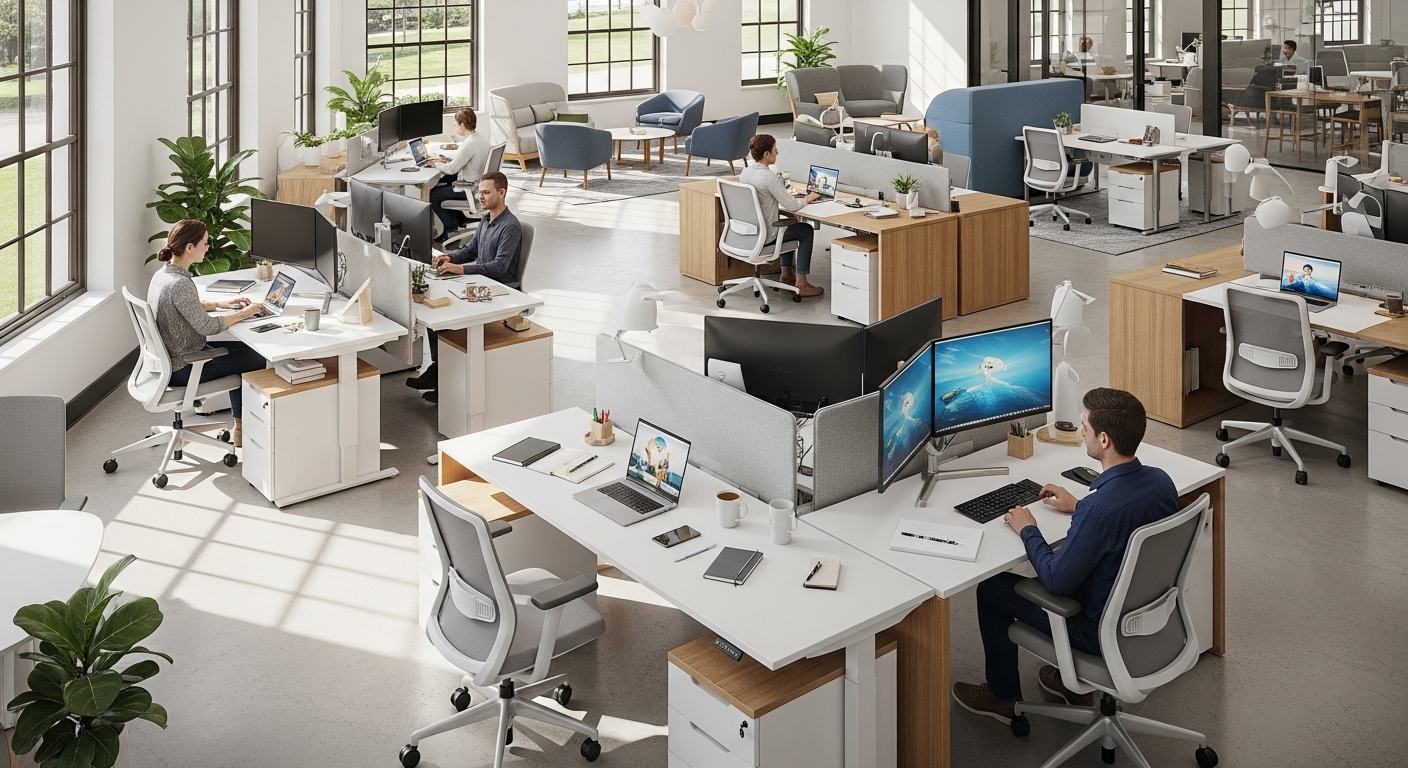
This comprehensive guide reveals the strategies, metrics, and technologies that forward-thinking organizations are using to transform their space utilization from a liability into a competitive advantage. Whether you’re a commercial real estate professional, a business leader responsible for workplace strategy, or anyone tasked with optimizing physical work environments, the insights ahead will equip you with the knowledge to make data-driven decisions that drive measurable results.
The stakes have never been higher, and the opportunity has never been clearer. Organizations that continue operating with outdated space planning approaches will find themselves at a severe disadvantage against competitors who embrace the data-driven, technology-enabled strategies that define excellence in 2026.
Understanding Office Space Utilization in 2026
Office space utilization has evolved far beyond simple occupancy counting to become a sophisticated measurement of how effectively organizations leverage their physical work environments to support employee activities and achieve business objectives. At its core, utilization represents the intersection of real estate efficiency, employee productivity, and strategic business alignment—a convergence that has become critical for organizational success in our rapidly changing work landscape.
The fundamental shift we’re witnessing represents a move from space-as-status to space-as-strategy. Gone are the days when square footage served primarily as a symbol of corporate success or individual hierarchy. Instead, today’s most successful organizations treat their physical environments as dynamic, measurable assets that must deliver quantifiable returns on investment. This transformation reflects a broader business evolution toward data-driven decision making and performance optimization across all operational areas.
The business impact of optimized utilization extends far beyond cost savings, though the financial benefits alone are compelling. Organizations with optimized utilization strategies consistently achieve 25-30% reductions in real estate costs while simultaneously improving employee satisfaction scores. These companies have discovered that intelligent space allocation creates environments that better support diverse work styles, enhance collaboration opportunities, and provide the flexibility that modern talent demands.
Understanding current utilization requires grasping the dramatic changes in workplace attendance patterns that have fundamentally altered space planning calculations. Average in-office attendance now fluctuates between 30-60% on any given day, creating a complex optimization challenge that traditional planning methods simply cannot address effectively. This variability means that spaces designed for full occupancy are consistently underutilized, while peak attendance days may strain available resources.
The evolution of space allocation standards tells a compelling story of changing workplace dynamics. Just a decade ago, the standard allocation hovered around 250 square feet per employee—a figure that reflected both space abundance and status-driven design principles. Today’s benchmark has contracted dramatically to 125-150 square feet per employee, driven not by cost-cutting mandates but by a sophisticated understanding of how people actually work and what environments best support productivity.
This compression isn’t merely about fitting more people into less space; it represents a fundamental reimagining of workplace design principles. Modern utilization strategies recognize that different activities require different spatial configurations, and that static desk assignments often conflict with the dynamic nature of contemporary work. The most effective layouts now incorporate zones optimized for specific functions: collaboration areas for team projects, focus zones for deep work, social spaces for informal interactions, and flexible areas that can adapt based on real-time needs.
The strategic implications extend well beyond individual organizations. Industry research indicates that 43% of companies are planning to reduce their real estate portfolios by 30% or more within the next three years, creating a competitive landscape where space efficiency becomes a significant operational advantage. Organizations that master utilization optimization will capture market opportunities through reduced overhead, increased operational flexibility, and enhanced ability to attract talent who value thoughtfully designed work environments.
Perhaps most importantly, effective space utilization in 2026 requires abandoning the notion that optimization means compromising employee experience. The most successful implementations demonstrate that intelligent space design actually enhances workplace satisfaction by providing greater variety, reducing commute times to collaboration areas, and creating environments that support diverse work preferences. This alignment between efficiency and experience represents the hallmark of truly strategic space utilization.
The organizations that excel in this new paradigm share common characteristics: they measure utilization continuously rather than sporadically, they design for flexibility rather than permanence, and they view space optimization as an ongoing process rather than a one-time project. These principles form the foundation for the measurement strategies and implementation approaches that drive measurable improvements in both cost efficiency and workplace effectiveness.
The Four Essential Metrics Every Organization Must Track
Effective space utilization optimization begins with establishing clear, measurable benchmarks that provide actionable insights into current performance and improvement opportunities. The organizations achieving the most significant results in 2026 focus their measurement efforts on four fundamental metrics that together create a comprehensive view of space effectiveness and efficiency.
Occupancy Rate stands as the cornerstone metric for understanding basic space utilization performance. This measure calculates the percentage of available workspace that is actively occupied during standard business hours, providing essential insight into whether current space allocation aligns with actual usage patterns. Industry benchmarks for optimal occupancy rates have evolved significantly in recent years, with leading organizations now targeting 60-70% occupancy as the sweet spot that balances efficiency with employee comfort and flexibility.
This target range reflects sophisticated understanding of workplace dynamics that goes beyond simple space efficiency. Occupancy rates below 60% typically indicate significant underutilization that translates directly to wasted real estate investment, while rates consistently above 70% often create overcrowding conditions that negatively impact employee satisfaction and productivity. The most effective organizations track occupancy patterns across different time periods and space zones to identify optimization opportunities that maintain this optimal balance.
Desk Utilization Rate provides granular insight into workstation effectiveness by measuring the proportion of individual desks that are actively used on a daily basis. This metric has become particularly critical as organizations navigate the complexities of hybrid work arrangements and flexible seating policies. Current benchmarks suggest that optimal desk utilization ranges from 70-80%, a target that balances resource efficiency with the availability needed to support unpredictable attendance patterns.
Achieving optimal desk utilization requires sophisticated understanding of employee work patterns and preferences. Organizations that excel in this area typically implement intelligent booking systems that enable employees to reserve workstations based on their planned activities and collaboration needs. This approach prevents the common scenario where employees claim specific desks regardless of their actual presence, while also ensuring that sufficient workspace remains available for spontaneous office visits and peak attendance periods.
Meeting Room Utilization represents perhaps the most complex optimization challenge facing organizations today, as these spaces often command premium real estate costs while exhibiting notoriously inefficient usage patterns. The target utilization rate for meeting rooms falls between 60-75%, a range that ensures adequate availability for impromptu meetings while maximizing the return on investment for these typically expensive spaces. Achieving this balance requires careful analysis of meeting patterns, room sizes, and booking behaviors.
The sophistication required for effective meeting room optimization extends beyond simple occupancy tracking to include analysis of meeting effectiveness, room capacity alignment with actual attendance, and integration with digital collaboration tools that may reduce space requirements. Leading organizations are discovering that many traditional conference rooms remain underutilized not due to lack of demand, but because their size and configuration don’t match actual meeting needs. This insight drives strategic decisions about space reallocation and renovation priorities.
Space Efficiency Metrics provide the financial and operational context that transforms utilization data into strategic business intelligence. These measurements include square footage per employee, cost per square foot of occupied space, and utilization performance by department or functional zone. These metrics enable organizations to identify not just what is happening with their space usage, but whether current allocation patterns support business objectives and financial targets.
The power of space efficiency metrics lies in their ability to connect real estate decisions with broader business performance indicators. Organizations tracking these measurements can identify departments or functions that consistently underutilize assigned space, enabling strategic reallocation that better supports high-performing teams or growth initiatives. Similarly, these metrics reveal opportunities to reallocate premium space from low-utilization functions to activities that drive greater business value.
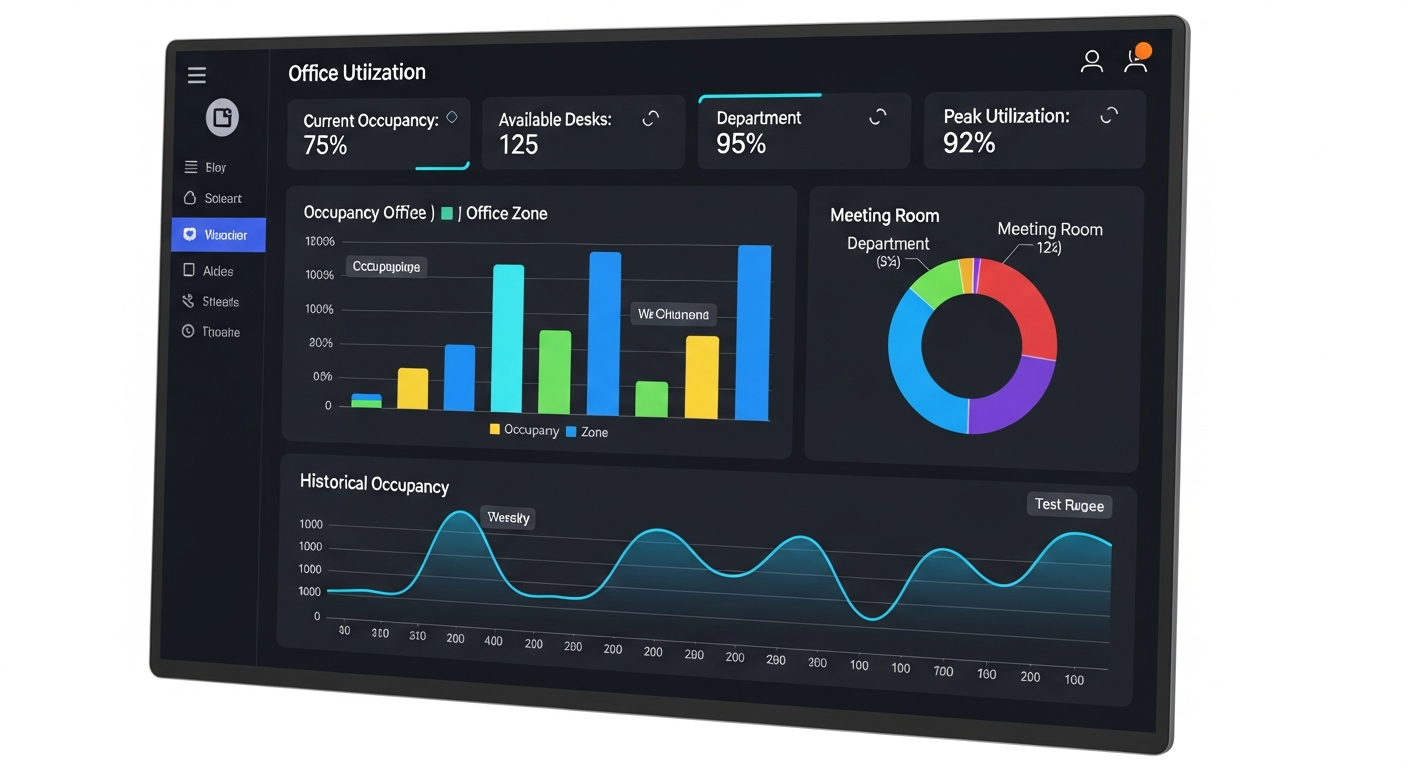
Modern utilization measurement demands real-time data collection capabilities that far exceed the accuracy and responsiveness of traditional manual surveys or badge swipe analysis. The organizations achieving the most significant optimization results invest in sensor networks, mobile booking applications, and integrated analytics platforms that provide continuous, accurate insights into space usage patterns. This technological foundation enables rapid identification of optimization opportunities and quick assessment of improvement initiatives.
The interconnected nature of these four metrics creates powerful analytical capabilities when tracked simultaneously. Occupancy patterns inform desk allocation strategies, while meeting room utilization data guides space reallocation decisions. Space efficiency metrics provide the financial framework for evaluating proposed changes, while desk utilization rates indicate whether current policies and systems effectively support employee needs.
Organizations that master this measurement foundation position themselves to make informed, strategic decisions about space optimization that deliver measurable improvements in both cost efficiency and workplace effectiveness. This data-driven approach forms the essential foundation for implementing the advanced strategies and technologies that drive sustained utilization improvements.
Why Traditional Space Planning Falls Short in 2026
The limitations of conventional space planning approaches have become glaringly apparent as organizations struggle to optimize their real estate investments in an era of dynamic work patterns and evolving employee expectations. These traditional methodologies, developed for stable, predictable work environments, consistently fail to deliver the flexibility and efficiency that modern businesses require, creating significant operational and financial disadvantages for organizations that continue relying on outdated practices.
Inaccurate Data Collection represents perhaps the most fundamental flaw in traditional space planning approaches. Most organizations continue to base critical real estate decisions on outdated employee surveys, incomplete badge swipe data, or visual estimates that capture only snapshot moments rather than comprehensive usage patterns. These methods consistently underestimate the variability in space usage that characterizes contemporary hybrid work environments, leading to planning decisions that optimize for assumptions rather than reality.
The consequences of this data inadequacy extend far beyond simple measurement errors. When organizations make multi-million-dollar real estate commitments based on inaccurate utilization data, they often create environments that serve theoretical needs rather than actual work patterns. This disconnect manifests in spaces that remain consistently underutilized, layouts that impede rather than support collaboration, and resource allocation that fails to align with business priorities. The challenge of accurate data collection has become a critical barrier to effective space optimization across industries.
Static Planning Mentality reflects another critical limitation of traditional approaches that assume work patterns will remain consistent over time. This mindset, rooted in decades of stable attendance and predictable space needs, simply cannot accommodate the fluid nature of hybrid work arrangements where daily occupancy may fluctuate by 40% or more. Traditional planning tools typically evaluate space requirements based on peak occupancy scenarios, creating significant overallocation that persists long after work patterns have evolved.
The static approach also fails to account for the seasonal, project-based, and cyclical variations that characterize many modern businesses. Organizations experiencing rapid growth, seasonal fluctuations, or project-based work patterns find that traditional planning creates either perpetual overcapacity during low-demand periods or insufficient space during peak requirements. This inflexibility prevents organizations from adapting their space allocation to changing business needs without major renovation projects or lease renegotiations.
Resistance to Change emerges as a significant obstacle when organizations attempt to implement flexible seating arrangements, hot-desking policies, or adaptive layouts that optimize space utilization. Traditional space planning often reinforces territorial behaviors and status-based allocation that conflicts with efficiency objectives. Employees accustomed to assigned seating and private workspace may resist changes that require adapting to shared or flexible arrangements, creating implementation challenges that undermine optimization initiatives.
Overcoming this resistance requires sophisticated change management approaches that traditional planning methodologies simply don’t address. Successful space optimization depends not just on physical layout changes, but on cultural shifts that embrace flexibility, collaboration, and shared resource utilization. Organizations attempting to improve utilization without addressing these behavioral factors often discover that even well-designed spaces remain underutilized due to employee reluctance to adopt new working patterns.
Slow Iteration Cycles represent a critical competitive disadvantage in environments where rapid adaptation provides significant business advantage. Traditional space planning typically involves lengthy design phases, extensive CAD development, and complex approval processes that can require weeks or months to evaluate alternative layout scenarios. This timeline prevents organizations from quickly testing optimization ideas or responding to changing business requirements with appropriate speed.
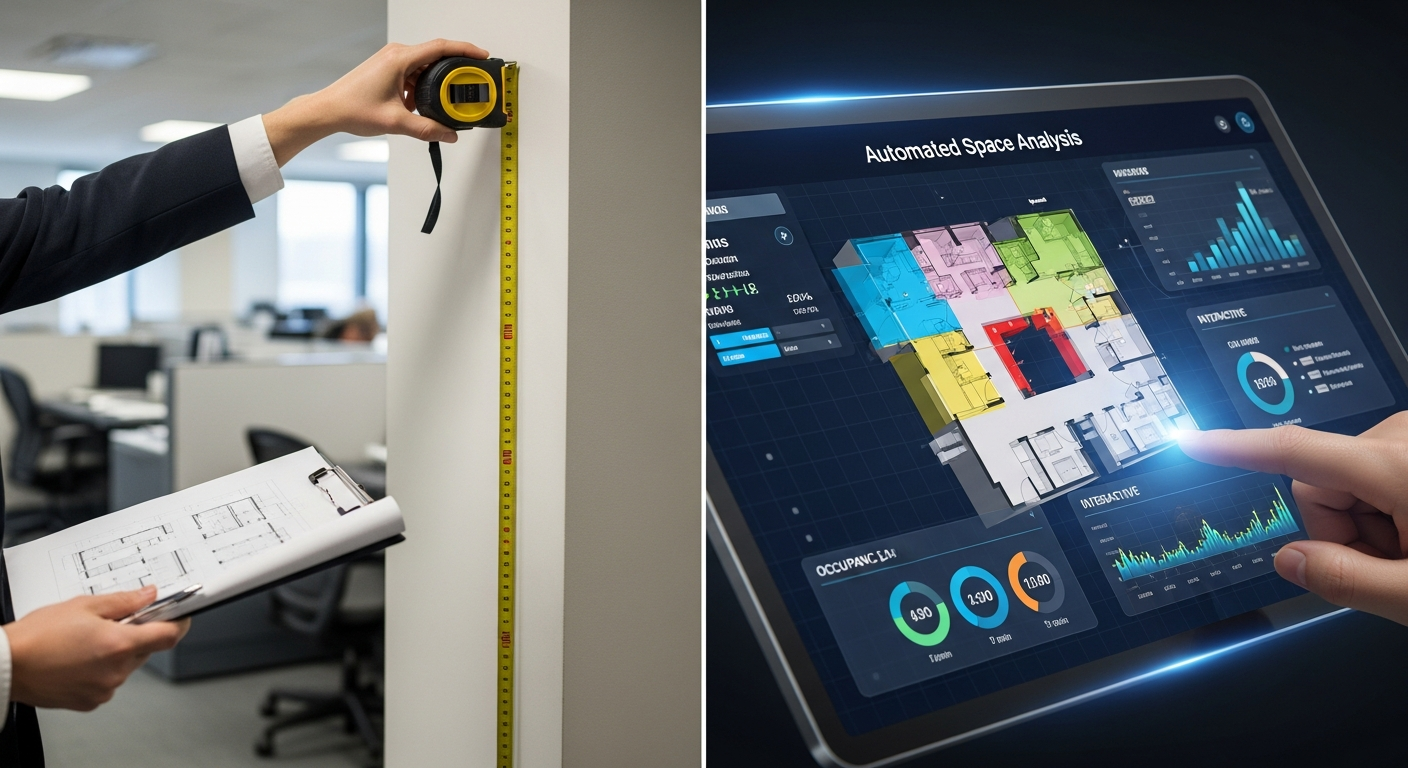
The inability to rapidly iterate design options means that organizations often settle for suboptimal solutions simply because exploring alternatives requires prohibitive time and resource investments. When space planning cycles extend across quarters rather than days or weeks, organizations lose opportunities to capture optimization benefits and may find that their final designs address outdated requirements rather than current needs.
Limited Scenario Analysis constrains traditional planning approaches to evaluating only one or two layout alternatives, preventing comprehensive exploration of optimization possibilities. Most conventional planning processes focus on incremental modifications to existing layouts rather than fundamental reimagining of space allocation strategies. This limitation means organizations rarely discover the dramatic improvement opportunities that emerge from more comprehensive scenario analysis.
Leading organizations now recognize that effective space optimization requires evaluating five to ten different layout scenarios to identify solutions that truly maximize utilization while supporting employee needs. Traditional planning methodologies lack the tools and processes needed for this level of analysis, constraining organizations to marginal improvements rather than transformational optimization results.
Disconnected Systems create information silos that prevent holistic understanding of space performance and optimization opportunities. Traditional approaches often rely on separate systems for space management, employee scheduling, meeting room booking, and facility maintenance, making it nearly impossible to develop integrated insights that drive strategic decision-making. This fragmentation means that optimization efforts address individual symptoms rather than systemic issues.
The organizations achieving the most significant utilization improvements have moved beyond these traditional limitations by embracing data-driven, technology-enabled approaches that provide the accuracy, flexibility, and analytical capabilities required for effective space optimization in 2026’s dynamic work environment.
Five Proven Strategies to Optimize Your Space Utilization
Organizations achieving exceptional space utilization results in 2026 share common strategic approaches that transcend industry boundaries and organizational sizes. These evidence-based methodologies have demonstrated consistent success across diverse work environments, providing actionable frameworks that any organization can implement to realize immediate and sustained improvements in space efficiency and employee satisfaction.
Implementing Flexible Layout Design represents the fundamental shift from static workspace allocation to dynamic environments that adapt to changing business needs and work patterns. This strategy involves transitioning from traditional cubicle farms and assigned seating to adaptable spaces featuring hot desks for focused work, collaborative huddle zones for team projects, quiet focus areas for deep concentration, and social spaces that support informal interactions and relationship building.
The most successful flexible layouts incorporate modular furniture systems that enable rapid reconfiguration based on evolving team structures or project requirements. Organizations implementing this approach typically designate 60-70% of their space for flexible use while maintaining some assigned seating for employees who require consistent workspace due to role requirements or equipment needs. This balance provides optimization benefits while accommodating diverse work style preferences and operational constraints.
Effective flexible design also requires careful attention to zone definition and wayfinding systems that help employees quickly identify appropriate spaces for their current activities. Leading implementations include clear visual cues, digital signage systems, and mobile applications that guide employees to available workspace options based on their planned activities and preferred working conditions.
Deploying Smart Desk Booking Systems addresses the coordination challenges that often prevent flexible layouts from achieving their optimization potential. These technology platforms enable employees to reserve specific workstations through mobile applications, ensuring that space allocation aligns with actual usage patterns while preventing the territorial behaviors that can undermine hot-desking initiatives.
The most effective booking systems integrate with calendar applications and project management tools to automatically suggest workspace options based on planned activities, meeting schedules, and collaboration requirements. Advanced implementations also incorporate preference learning algorithms that recommend spaces based on individual work style preferences and historical usage patterns, improving employee satisfaction while maintaining utilization efficiency.
Successful booking system deployment requires careful consideration of reservation policies that balance flexibility with utilization goals. Organizations achieving optimal results typically implement booking windows of 24-48 hours for standard workstations while allowing same-day reservations for specialized spaces. These policies prevent excessive advance hoarding while ensuring adequate planning capabilities for employees with predictable workspace requirements.
Redesigning Underutilized Areas transforms spaces that consistently show poor utilization metrics into high-value environments that support employee wellbeing and business objectives. This strategy typically involves converting seldom-used private offices, oversized conference rooms, and storage areas into wellness rooms, creative breakout spaces, collaboration zones, or specialized project areas that generate greater utilization and employee satisfaction.
Workplace utilization optimization research demonstrates that organizations implementing strategic space reallocation achieve 30-40% improvements in overall utilization while significantly enhancing employee engagement scores. These improvements reflect the alignment between redesigned spaces and actual employee needs rather than assumed requirements.
Effective space redesign requires comprehensive analysis of current utilization patterns combined with employee feedback about unmet workplace needs. Many organizations discover that their employees require more collaboration space, quiet work areas, or wellness facilities rather than additional traditional desks or conference rooms. Strategic reallocation addresses these gaps while improving overall space efficiency.
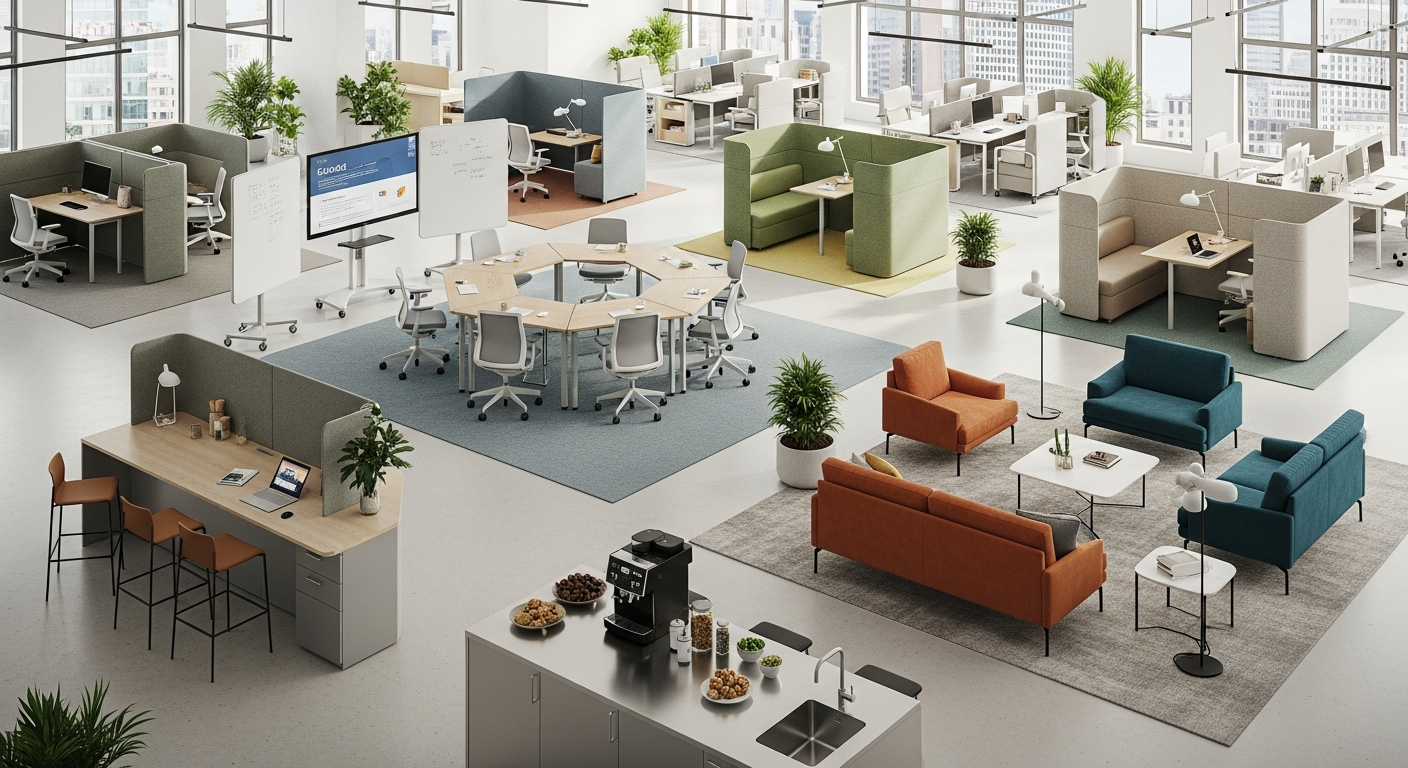
Aligning Space Design with Role Requirements recognizes that different types of work require different spatial configurations and that optimization involves matching space characteristics with actual work activities. This approach involves creating specialized zones for distinct work types: open areas that facilitate collaboration and communication, quiet zones optimized for focused individual work, creative spaces that support brainstorming and innovation, and technical areas equipped for specialized activities.
Successful role-based design requires detailed analysis of how different employee groups actually use workspace throughout typical work cycles. Sales teams may require collaborative areas with presentation capabilities and informal meeting spaces, while software developers might need quiet, distraction-free zones with specialized equipment configurations. Administrative staff may benefit from proximity to high-traffic areas and communication hubs, while creative teams might require flexible spaces that support diverse project activities.
This strategy also involves strategic location decisions that place frequently used resources in easily accessible areas while positioning specialized facilities to minimize disruption to other activities. Organizations implementing this approach typically achieve both improved utilization metrics and higher employee satisfaction scores as workspace better supports actual job requirements.
Building Continuous Feedback Loops ensures that space optimization efforts remain aligned with evolving business needs and employee preferences over time. This strategy combines quantitative utilization data with qualitative employee feedback to create comprehensive understanding of space performance and improvement opportunities. Effective feedback systems incorporate regular surveys, focus groups, observation studies, and digital feedback platforms that capture both utilization patterns and user experience insights.
The most successful organizations establish quarterly review cycles that evaluate utilization metrics against employee satisfaction scores, identifying areas where efficiency improvements may be creating unintended negative impacts on workplace experience. This balanced approach ensures that optimization efforts enhance rather than compromise employee engagement and productivity.
Continuous feedback also enables rapid identification and resolution of implementation challenges that can undermine optimization initiatives. When employees provide input about booking system difficulties, workspace configuration issues, or unmet facility needs, organizations can quickly adjust policies and designs to maintain both utilization efficiency and employee satisfaction.
Using Data to Drive Design Decisions represents the foundation that enables all other optimization strategies to deliver measurable results. This approach involves deploying occupancy sensors, analyzing badge access data, tracking booking system usage, and monitoring environmental conditions to create a comprehensive understanding of how spaces are actually used versus how they were designed to be used.
Data-driven design decisions eliminate the guesswork and assumptions that often undermine space planning initiatives. When organizations have accurate information about peak usage periods, collaboration patterns, and space preferences, they can make informed decisions about layout modifications, resource allocation, and policy adjustments that deliver predictable improvement results.
The most effective data utilization involves real-time monitoring capabilities that enable rapid identification of utilization changes and quick response to emerging optimization opportunities. Organizations with sophisticated data analytics can identify underperforming spaces within weeks of changes occurring, enabling proactive adjustments that maintain optimal efficiency levels.
These five strategies work synergistically to create workplace environments that maximize space efficiency while enhancing employee experience and supporting business objectives. Organizations implementing comprehensive approaches typically achieve 25-35% improvements in utilization metrics alongside measurable increases in employee satisfaction and operational flexibility.
The Role of Automation and AI in Space Optimization
The integration of artificial intelligence and automation technologies represents the most significant advancement in space optimization capabilities since the introduction of computer-aided design systems. These intelligent platforms are transforming space planning from a reactive, manual process into a proactive, data-driven discipline that continuously optimizes workplace environments based on real-time usage patterns and predictive analytics.
AI-Powered Workplace Management systems represent a fundamental evolution in how organizations approach space optimization challenges. These sophisticated platforms automatically analyze utilization patterns, identify underperforming areas, and generate optimization recommendations based on comprehensive data analysis that would require weeks of manual effort to complete. Advanced AI systems can process occupancy sensor data, booking patterns, environmental conditions, and employee feedback simultaneously to identify optimization opportunities that human planners might overlook.
The most advanced workplace management AI platforms incorporate machine learning algorithms that continuously improve their optimization recommendations based on implementation results and changing usage patterns. These systems can predict the impact of proposed layout changes, estimate utilization improvements from different design scenarios, and identify potential implementation challenges before they occur. This predictive capability enables organizations to make confident decisions about significant space investments based on data-driven projections rather than intuitive assumptions.
Leading AI workplace management systems also provide automated reporting and dashboard capabilities that translate complex utilization data into clear, actionable insights for decision-makers at all organizational levels. Facilities managers receive detailed operational recommendations, while executive teams access strategic summaries that connect space optimization initiatives to broader business performance metrics.
Smart IoT Sensor Networks provide the real-time data foundation that enables AI systems to deliver accurate and responsive optimization recommendations. These sensor deployments typically include occupancy detectors that track space usage patterns, environmental monitors that assess air quality and lighting conditions, and movement sensors that analyze traffic flow and collaboration patterns throughout workplace environments.
Modern sensor networks operate with remarkable sophistication, distinguishing between different types of space usage and providing granular insights into how employees actually interact with their work environments. Advanced sensors can differentiate between focused work activities, collaborative meetings, and social interactions, enabling optimization strategies that support specific work styles rather than treating all space usage as equivalent.
The integration capabilities of current IoT sensor networks extend beyond simple occupancy tracking to include energy management, security systems, and facility maintenance platforms. This comprehensive data integration enables organizations to optimize space utilization while simultaneously reducing operational costs, enhancing security, and improving facility performance across multiple dimensions.
Automated Design Iteration capabilities represent perhaps the most transformative aspect of AI-powered space optimization. Where traditional planning processes might evaluate two or three layout alternatives over several weeks, automated systems can generate and analyze dozens of design scenarios in minutes. This rapid iteration capability enables organizations to explore optimization possibilities that would be impossible to evaluate through manual processes.
Advanced AI innovations in office infrastructure now include platforms that can automatically generate layout alternatives based on specific optimization criteria such as collaboration requirements, cost constraints, or employee preference data. These systems incorporate sophisticated understanding of space planning principles, building codes, and ergonomic requirements to ensure that generated designs are both optimized and implementable.
The speed and comprehensiveness of automated design iteration enable organizations to continuously optimize their space allocation rather than treating layout design as a periodic project. When business requirements change or utilization patterns shift, automated systems can quickly generate updated design alternatives that maintain optimal efficiency under new conditions.
Platforms like qbiq.ai exemplify this automated approach by enabling organizations to optimize any space in minutes rather than weeks. These services integrate AI-powered analysis capabilities with automated design generation to provide comprehensive space optimization solutions that address both current utilization challenges and future scalability requirements.
Predictive Analytics capabilities enable organizations to anticipate space needs rather than simply responding to current utilization patterns. Advanced AI systems analyze historical usage data, business growth projections, seasonal patterns, and industry trends to forecast future space requirements with remarkable accuracy. This predictive capability enables proactive space planning that prevents utilization problems before they impact business operations.
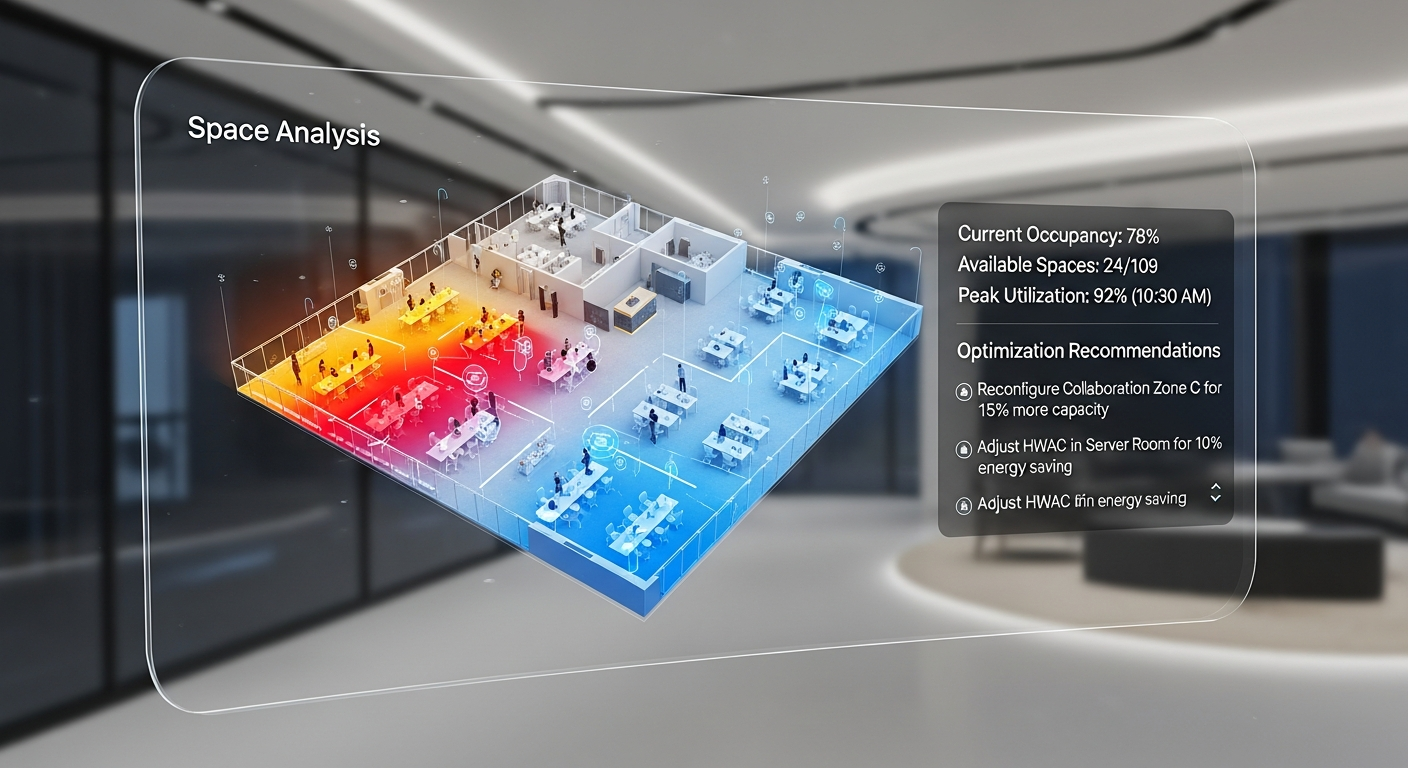
The most sophisticated predictive analytics platforms incorporate external data sources such as economic indicators, industry growth patterns, and local real estate trends to provide comprehensive forecasting that extends beyond individual organizational patterns. This broader analytical perspective enables strategic real estate decisions that align with long-term business objectives rather than short-term utilization fluctuations.
Predictive analytics also enable scenario planning capabilities that help organizations evaluate the space implications of different business strategies. Companies considering expansion, downsizing, or restructuring can model the space requirements associated with different strategic alternatives, enabling more informed decision-making about both business strategy and real estate commitments.
Integrated Data Visualization platforms transform complex utilization analytics into intuitive interfaces that enable stakeholders at all organizational levels to understand and act on space optimization opportunities. Modern visualization systems provide interactive dashboards that allow users to explore utilization data from multiple perspectives, identify trends and patterns, and simulate the impact of potential changes.
Advanced visualization platforms incorporate augmented reality and virtual reality capabilities that enable stakeholders to experience proposed layout changes before implementation. These immersive technologies help organizations evaluate design alternatives more effectively and build stakeholder confidence in optimization initiatives.
End-to-End Optimization represents the ultimate integration of AI and automation technologies into comprehensive space management platforms. These sophisticated systems connect data collection, analysis, design iteration, and implementation monitoring into seamless workflows that continuously optimize space utilization without requiring extensive manual intervention.
The most advanced end-to-end platforms incorporate automated purchasing and vendor management capabilities that can implement approved optimization changes with minimal human oversight. These systems can automatically order furniture, schedule installation services, and coordinate facility modifications based on approved design changes, dramatically reducing the time and effort required to implement optimization initiatives.
Organizations embracing these AI and automation capabilities position themselves to achieve space optimization results that far exceed what traditional planning methods can deliver, while simultaneously reducing the time and resources required to maintain optimal workplace environments.
Best Practices for Sustained Success in 2026 and Beyond
Achieving lasting improvements in space utilization requires more than implementing individual strategies or technologies; it demands a comprehensive approach that integrates measurement, technology, and organizational culture into a sustainable optimization framework. The organizations realizing the greatest long-term benefits from their space optimization investments share common practices that ensure continued success as business needs and work patterns continue evolving.
Starting with Data, Not Assumptions represents the foundational principle that distinguishes successful optimization initiatives from well-intentioned efforts that fail to deliver measurable results. Organizations must establish comprehensive baseline measurements of current space performance before implementing any changes, ensuring that improvement efforts address actual utilization challenges rather than perceived problems. This data-driven foundation enables accurate measurement of optimization results and provides the analytical framework needed for continuous improvement.
Effective baseline establishment involves collecting utilization data across multiple time periods and usage scenarios to account for seasonal variations, project cycles, and other factors that influence space requirements. Organizations that collect only snapshot data often optimize for atypical conditions, creating solutions that fail to address normal operating requirements. Comprehensive baseline data collection typically requires 60-90 days of continuous monitoring to establish reliable patterns that support informed decision-making.
The most successful organizations also establish clear success metrics before beginning optimization initiatives, defining specific targets for utilization improvements, cost reductions, and employee satisfaction enhancements. These predetermined success criteria provide objective evaluation frameworks that prevent optimization efforts from drifting toward subjective or unmeasurable goals.
Embracing Iterative Design acknowledges that effective space optimization represents an ongoing process rather than a one-time project. Organizations achieving sustained success plan for continuous adaptation rather than permanent solutions, recognizing that business needs, work patterns, and employee preferences will continue evolving regardless of current optimization efforts. This iterative mindset enables rapid response to changing requirements and prevents the stagnation that often undermines initial optimization investments.
Successful iterative design requires establishing regular evaluation cycles that assess space performance against business objectives and identify emerging optimization opportunities. Leading organizations typically implement quarterly reviews that examine utilization metrics, employee feedback, and business requirement changes to guide ongoing refinement efforts. These regular assessments enable proactive adjustments that maintain optimal performance rather than reactive responses to utilization problems.
The iterative approach also involves designing initial optimization implementations with future adaptability in mind. Organizations that choose modular furniture systems, flexible technology infrastructure, and adaptable layout frameworks position themselves to respond quickly to changing requirements without major reinvestment or disruption.
Prioritizing Employee Experience ensures that optimization efforts enhance rather than compromise workplace satisfaction and productivity. The most successful space utilization initiatives recognize that employee acceptance and engagement directly impact optimization results, making user experience a critical success factor rather than a secondary consideration. Organizations that achieve sustained utilization improvements consistently balance efficiency metrics with employee satisfaction indicators.
Effective employee experience prioritization involves incorporating user feedback into all phases of optimization planning and implementation. Leading organizations establish employee advisory groups that provide input on proposed changes, participate in design evaluation processes, and offer ongoing feedback about implemented modifications. This participatory approach builds stakeholder buy-in while ensuring that optimization efforts address real employee needs.
The most successful organizations also invest in change management and communication strategies that help employees understand the benefits of optimization initiatives and adapt successfully to new workplace arrangements. Clear communication about optimization goals, implementation timelines, and expected benefits helps build employee support while reducing resistance to necessary changes.
Integrating Technology Gradually enables organizations to build optimization capabilities systematically without overwhelming existing operations or creating implementation challenges that undermine success. Rather than attempting comprehensive technology deployment simultaneously, leading organizations implement sensor networks, analytics platforms, and automation tools in phases that allow for learning, adjustment, and confidence building before expanding deployment scope.
Gradual technology integration typically begins with pilot implementations in specific areas or departments that provide proof-of-concept validation before broader organizational deployment. These limited-scope pilots enable organizations to identify implementation challenges, refine deployment processes, and demonstrate success results that build stakeholder confidence in expanded technology adoption.
Future workplace trends indicate that organizations with systematic technology adoption strategies achieve better long-term results than those attempting rapid, comprehensive implementations. Phased deployment approaches also enable organizations to distribute technology investments across multiple budget cycles while maintaining momentum toward comprehensive optimization capabilities.
Planning for Scalability ensures that current optimization investments support future growth and adaptation requirements rather than creating constraints that limit organizational flexibility. Successful organizations design their space optimization initiatives with consideration for potential expansion, contraction, or restructuring scenarios that may require significant changes to space allocation and utilization patterns.
Scalability planning involves choosing technology platforms, design frameworks, and policy structures that can accommodate significant changes in organizational size, structure, or business model without requiring complete system replacement. Organizations that prioritize scalability often achieve lower long-term optimization costs while maintaining greater strategic flexibility.

The most effective scalability strategies also include provisions for geographic expansion or consolidation, recognizing that successful organizations may need to optimize space across multiple locations or integrate previously separate facilities. Technology platforms and processes designed with multi-location capabilities enable consistent optimization approaches across distributed organizational structures.
Measuring ROI Holistically provides the comprehensive evaluation framework needed to assess optimization success across multiple organizational dimensions. Rather than focusing exclusively on real estate cost reductions, leading organizations track productivity indicators, employee satisfaction metrics, and operational flexibility measures that capture the full value generated by optimization initiatives.
Holistic ROI measurement typically includes quantitative metrics such as cost per employee, space utilization percentages, and productivity indicators, combined with qualitative assessments of employee satisfaction, collaboration effectiveness, and workplace culture impacts. This comprehensive approach enables organizations to identify optimization strategies that deliver the greatest overall value rather than simply the lowest costs.
The most sophisticated ROI measurement frameworks also incorporate leading indicators that predict future optimization results based on current trends and patterns. These predictive metrics enable proactive adjustments that maintain optimal performance rather than reactive responses to declining utilization or satisfaction scores.
Organizations implementing these best practices position themselves to achieve sustained space optimization results that adapt to changing business requirements while continuously delivering measurable improvements in efficiency, employee satisfaction, and operational flexibility. This comprehensive approach ensures that space optimization investments generate lasting value rather than temporary improvements that decline over time.
The Strategic Transformation of Space Utilization
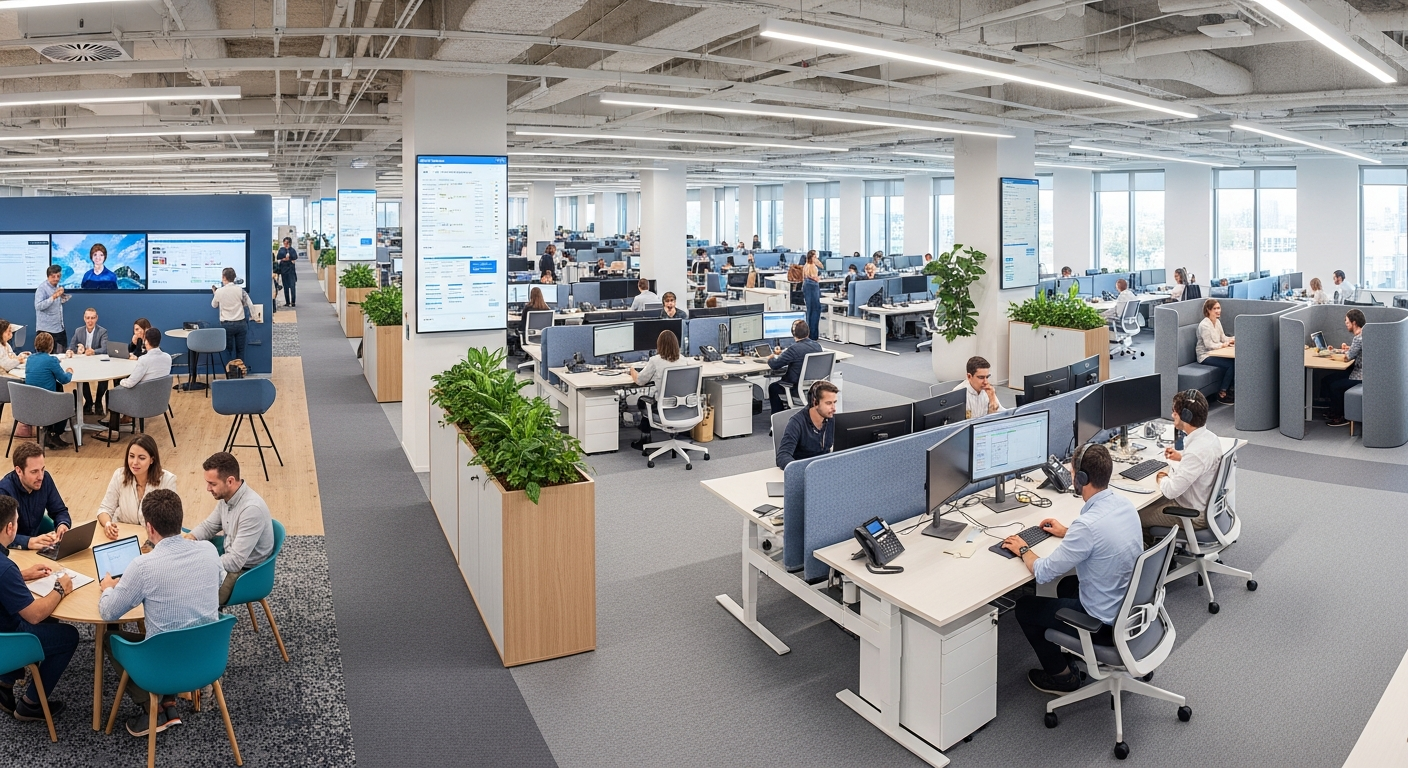
The evolution of office space utilization from a simple occupancy metric to a sophisticated strategic business capability represents one of the most significant shifts in workplace management over the past decade. Organizations that recognize and embrace this transformation are discovering that intelligent space optimization delivers far more than cost savings—it creates competitive advantages through enhanced operational flexibility, improved employee satisfaction, and strategic agility that enables rapid response to changing market conditions.
The data-driven, technology-enabled approaches outlined throughout this guide represent the new standard for space utilization excellence. Organizations continuing to rely on manual, assumption-based planning methods will find themselves increasingly disadvantaged against competitors who leverage AI-powered analytics, automated design iteration, and real-time optimization capabilities. The gap between leaders and laggards in space utilization is widening rapidly, making 2026 a critical year for organizations to modernize their approach to workplace optimization.
The financial implications alone justify immediate action for most organizations. With commercial real estate representing 10-15% of total operating expenses for many companies, the 25-35% cost reductions achievable through optimized utilization translate to substantial bottom-line improvements. More importantly, these cost savings come alongside enhanced employee experiences and improved operational flexibility rather than through compromise or reduction in workplace quality.
The strategic benefits extend well beyond financial returns to encompass talent attraction, retention, and productivity advantages that compound over time. Organizations with optimized, flexible work environments consistently rank higher in employee satisfaction surveys and experience lower turnover rates among high-performing staff. In competitive talent markets, these workplace advantages can determine an organization’s ability to attract and retain the personnel needed for business success.
The technological foundation for space optimization excellence is now readily accessible to organizations of all sizes. Cloud-based analytics platforms, affordable sensor networks, and automated design services have eliminated the barriers that previously limited advanced space optimization to large enterprises with substantial technology budgets. The democratization of these capabilities means that competitive advantage now depends on implementation speed and strategic commitment rather than technology access or financial resources.
Looking ahead, the organizations that establish space optimization leadership in 2026 will be best positioned to adapt to whatever workplace changes emerge in subsequent years. Whether future trends involve increased remote work, expanded collaboration requirements, or entirely new work patterns, the measurement systems, analytical capabilities, and adaptive frameworks established through comprehensive optimization initiatives provide the foundation for rapid response to changing conditions.
The transformation from traditional space planning to intelligent optimization represents more than operational improvement—it reflects a fundamental shift toward data-driven business management that positions organizations for success across all operational dimensions. Companies that master space utilization optimization develop capabilities and perspectives that enhance decision-making throughout their operations, creating value that extends far beyond real estate efficiency.
The choice facing organizations today is not whether to optimize space utilization, but how quickly and comprehensively to implement the strategies and technologies that drive measurable results. The organizations that move decisively in 2026 will establish advantages that compound over time, while those that delay action will find themselves increasingly challenged by competitors with superior operational efficiency and workplace environments.
Ready to transform your office space utilization with automated architectural intelligence? Discover how qbiq’s AI-powered platform enables you to optimize any space in minutes, not weeks. Explore qbiq’s automated architectural technology and unlock the full potential of your office space today. Experience the difference that data-driven, automated space planning can make for your organization’s efficiency and bottom line.






.png)


